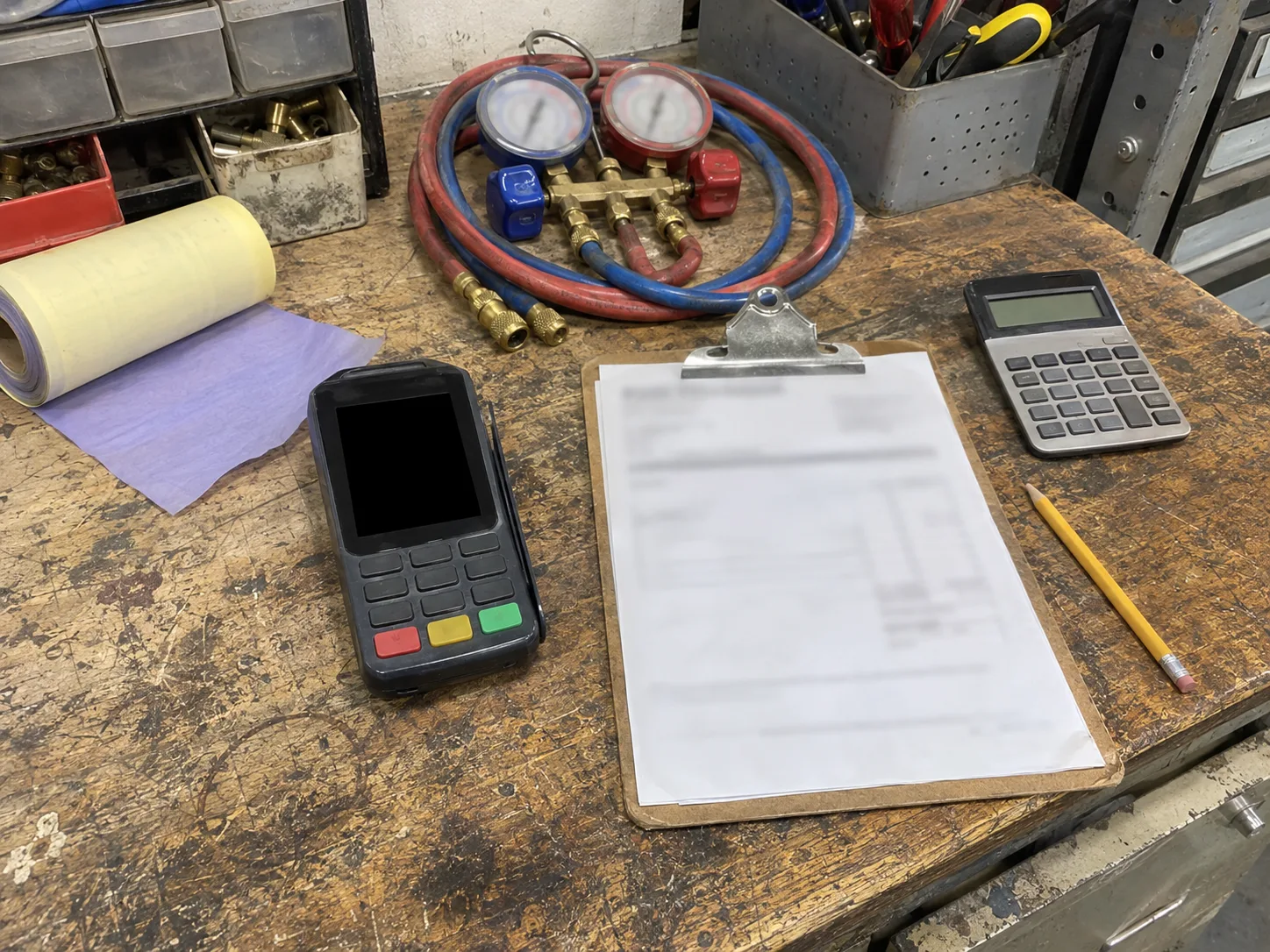
TL;DR: A Visa surcharge is limited to the lower of your actual merchant discount rate for that card or 3%. You must notify your processor 30 days before starting, surcharge credit cards only, and follow state law.
An HVAC shop can charge a credit card surcharge in many states, but “just add 3%” is not the rule. Visa limits the surcharge to the lower of your merchant discount rate for that card or 3%. Debit cards and prepaid cards cannot be surcharged. Choosing “credit” on a debit card at the terminal does not change that.
Visa also requires notice to your card processor, called your acquirer, at least 30 days before you start. The surcharge must be entered in Field 28 of the transaction. It must be disclosed as a merchant fee at the point of entry, at the point of sale or transaction, and on every receipt. The receipt must list the surcharge separately.
The 3% cap is not a guaranteed 3%
Consider the difference between a repair and a replacement. On a hypothetical $14,000 replacement invoice, 3% is $420. On a hypothetical $250 repair, 3% is $7.50. That is arithmetic, not data about any shop’s processing costs.
The actual limit is lower than those figures if your merchant discount rate for that card is lower than 3%. If the rate is 2.4%, you cannot charge a full 3% on that card. You also cannot apply the fee to debit or prepaid cards.
Visa lets you surcharge at the brand level, meaning all Visa credit cards, or at the product level, meaning specific Visa credit card types. You cannot use both approaches.
Your processor has a reason to watch this closely. Visa says an acquirer can face an immediate US $1,000 fine when a merchant is identified as surcharging improperly. That is why your processor may require forms, system changes, or proof that your disclosures are in place before allowing the program.
State law can remove the surcharge option
Visa’s document says that, as of February 15, 2024, Visa understands Connecticut, Maine, Massachusetts, Oklahoma, and Puerto Rico prohibit surcharging. It also says Colorado, Minnesota, New Jersey, and New York have surcharge requirements.
Visa says its understanding may contain errors and is not legal advice. These lists can change. You must confirm the current rule for the state where your shop operates with your processor and with a lawyer or your state attorney general’s office before starting.
If your state is on Visa’s prohibited list, a credit card surcharge is off the table. You can still decide whether to absorb the card cost in your pricing or use a compliant cash discount structure.
That decision matters most on replacement leads, where a card fee can be hundreds of dollars instead of a few dollars on a repair call. The same issue applies when a customer pays a deposit by card. Review the card cost alongside any deposit limits your state sets.
A cash discount must appear in the price
Visa allows a discount for paying another way, but the pricing has to be displayed correctly. Show the card price only, or show the card price and cash price side by side.
Do not show one price and then add a fee at the end when the customer chooses a card. Visa can treat that as a surcharge under its surcharge rules.
That distinction changes how you write an estimate. A compliant cash discount is part of the displayed pricing. A surcharge is a separate merchant fee with its own disclosure and receipt requirements.
You have three basic choices:
- Absorb the card cost and build it into your prices.
- Display a compliant cash discount price.
- Add a compliant credit card surcharge where state law allows it.
The monthly processor statement usually makes the choice feel real. Owners commonly describe the same pattern: a heavy install month arrives, several replacement jobs are paid by card, and the processor statement jumps while the repair calls barely move it. A fee that looks minor on a $200 repair becomes a visible margin leak on a replacement invoice. A lender fee creates the same kind of margin leak on financed jobs.
Put the payment policy on the estimate
Whatever option you choose, put it on the written estimate before the customer signs. Do not wait until the final invoice to introduce the policy.
For a surcharge, call your processor first because the 30 day notice comes before the program starts. Ask what setup it requires for Field 28, how the fee will appear on receipts, and how the terminal distinguishes credit from debit and prepaid cards.
Then put the payment treatment where the customer can see it before approving the work. Stating fees on the phone before the visit follows the same basic rule. The customer should know the financial terms before the service decision, not after the work is complete.
Dial 72 flags replacement lead calls and texts you a call summary right after the call. That gives you a natural callback window before the estimate visit. Use that callback to explain how your shop handles card payment on a large job, so the issue is on the table before you write the estimate.
This week, call your processor, confirm your state’s current rule, choose one pricing method, and add that method to your written replacement estimate. If you surcharge, give the 30 day notice and set up the required disclosures before charging the first fee.