TL;DR: HVAC repair cost is the first question many callers ask, and most homeowners pay $150 to $650 for a repair, with a national average of $350 in 2026, according to Fixr. On the phone, quote your diagnostic fee and explain that the repair price comes in writing after diagnosis, before work starts.
What the public hvac repair cost guides actually say
Fixr says most homeowners pay $150 to $650 for HVAC repairs, with a national average of $350 in 2026. Its full range runs roughly from $100 to $3,000, with severe issues costing more than $5,000.
Those figures are context for you as an owner. They are not numbers to read to every caller.
The guides disagree at the high end. Fixr lists compressor repairs at $1,000 to $3,000 or more. American Standard Air, using figures pulled from Forbes, lists compressors at $2,500 to $5,000. Your own price book governs what your shop charges and what your team can honor.
The public ranges still show why one phone number can create trouble:
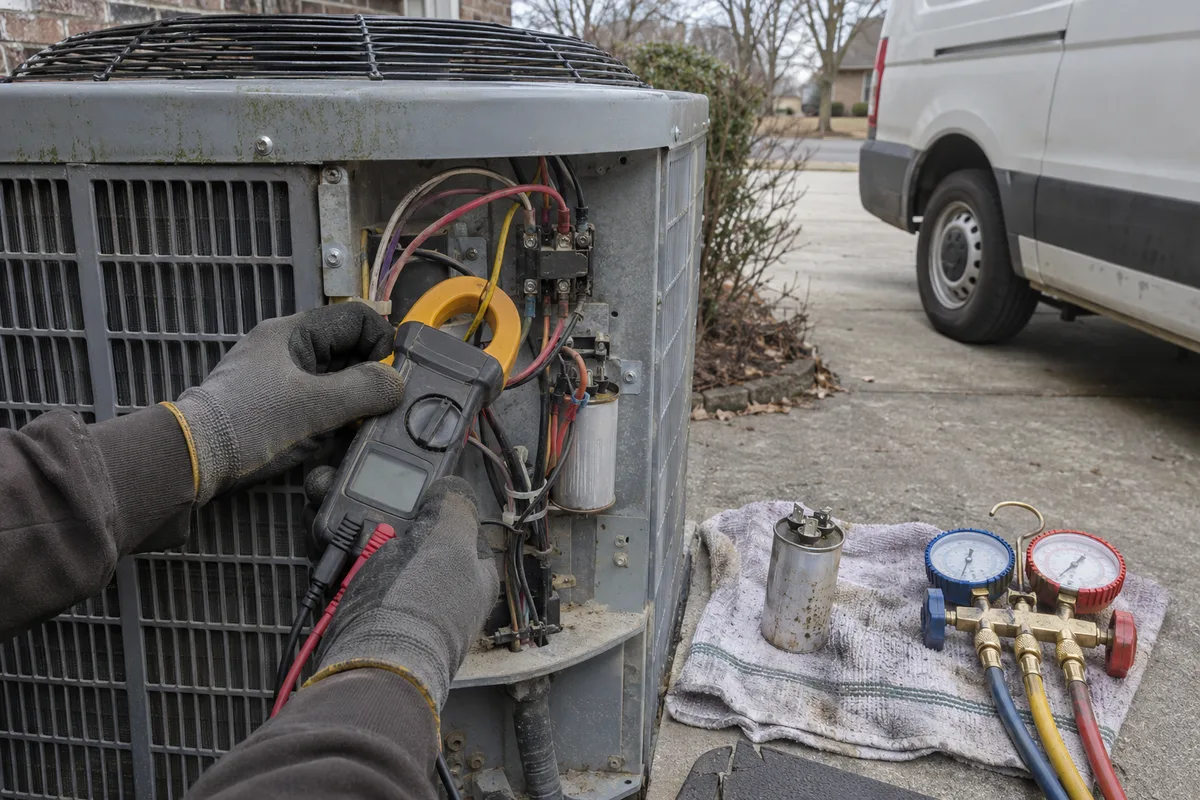
- Capacitor: $100 to $400
- Leak repair and recharge: $200 to $1,500
- Furnace blower motor: $300 to $900
- Heat exchanger replacement: $1,000 to $3,500 or more
- AC repair: $350 to $1,800
A caller asking for “the cost of a repair” is asking before anyone has seen the system. A single number at that point is a guess. Too low, and you have an argument at the door. Too high, and the caller hangs up and calls the next shop.
Quote the visit first, the repair second
Start with the diagnostic or service fee. Tell the caller what it covers and whether your shop credits it toward the repair. Fixr lists diagnostic fees at $75 to $200. American Standard Air lists average service call fees at $50 to $200, with many companies applying the fee to the repair.
Then explain the next step plainly: the technician diagnoses the system, the shop provides the repair price in writing, and no work starts until the customer approves it.
That is the answer to “how much does HVAC repair cost?” before a technician has inspected the equipment. You are giving the caller a real price for the visit without pretending you know the repair.
Use your existing diagnostic fee policy so the wording stays consistent between the phone, the office, and the technician.
When the caller wants a number now
Ask two or three questions before giving any range from your own price book:
- What is the system doing?
- How old is the system?
- Was there a recent noise, smell, or tripped breaker?
If the caller describes a small repair, you can explain that a failed capacitor is usually a smaller repair than a compressor. Use only ranges your shop has approved and would honor. Never read a public guide’s range as if it were your quote.
The caller may need a replacement conversation when the possible repair is large and the system is old. Flag that lead for a senior technician or comfort advisor. Use the process in winning replacement leads so a possible replacement does not get treated like an ordinary repair call.
Your office also needs one clear rule: a range is not a quote. The final price depends on what the technician finds and what the customer approves.
If your shop uses different pricing for flat-rate work and time and materials, the phone team needs that distinction ready before the call. Keep the language aligned with your flat-rate versus time and materials policy.
After-hours and emergency calls
Tell callers about after-hours pricing before dispatch. Fixr says after-hours calls cost 50% to 100% more. American Standard Air says emergency rates can reach double to triple the regular hourly rate.
The labor figures in both guides run from $75 to $150 per hour. Those figures do not give your shop’s rate. They show why a caller at night should hear the after-hours policy before agreeing to a visit.
An emergency call also needs a clear escalation path. The person handling the call should know whether to contact the on-call technician and what information to pass along. Review the wording in HVAC emergency service and keep it in the phone script.
Do not promise a repair price, arrival time, or outcome that the technician cannot back up.
What the office should write down
Shops that read back their own call notes tend to see the same pattern. The callers who walk away are rarely the ones who heard a fee. They are the ones who got a vague “it depends” with nothing concrete, or a flat refusal to talk about price.
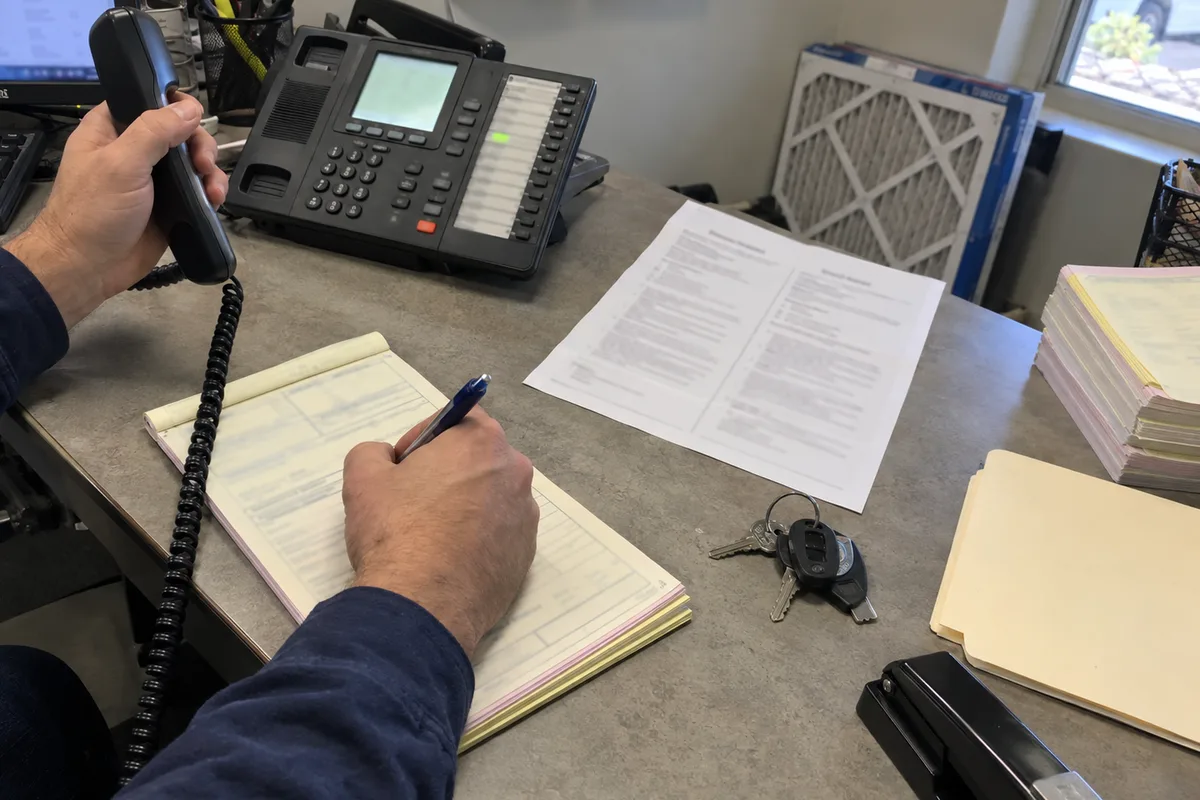
Write down the caller, the symptom, the system age if the caller provides it, the noise, smell, or breaker detail, the diagnostic-fee wording used, and anything said about repair pricing. Mark whether the call sounds like a routine service visit, an emergency, or a possible replacement lead.
Dial 72 answers 24/7, so the “how much for a repair?” call at 9 p.m. gets your diagnostic-fee wording and the same screening questions every time. You receive a text summary with the caller, symptom, and what was said about price. The morning dispatcher can book it or flag a possible replacement. Emergency calls go to the on-call person.
Dial 72 does not invent prices. It says what your shop told it to say. Prepare that language in advance with prep your AI receptionist, then put the approved diagnostic fee, after-hours policy, screening questions, and repair-range rules in the script.