
TL;DR: Set one diagnostic fee policy, state it on the phone before the visit is booked, and put the same wording in the confirmation text. The fee pays for the truck, the technician’s time, and the diagnosis, whether or not the customer approves a repair.
The fee pays for skilled work, not just a truck roll
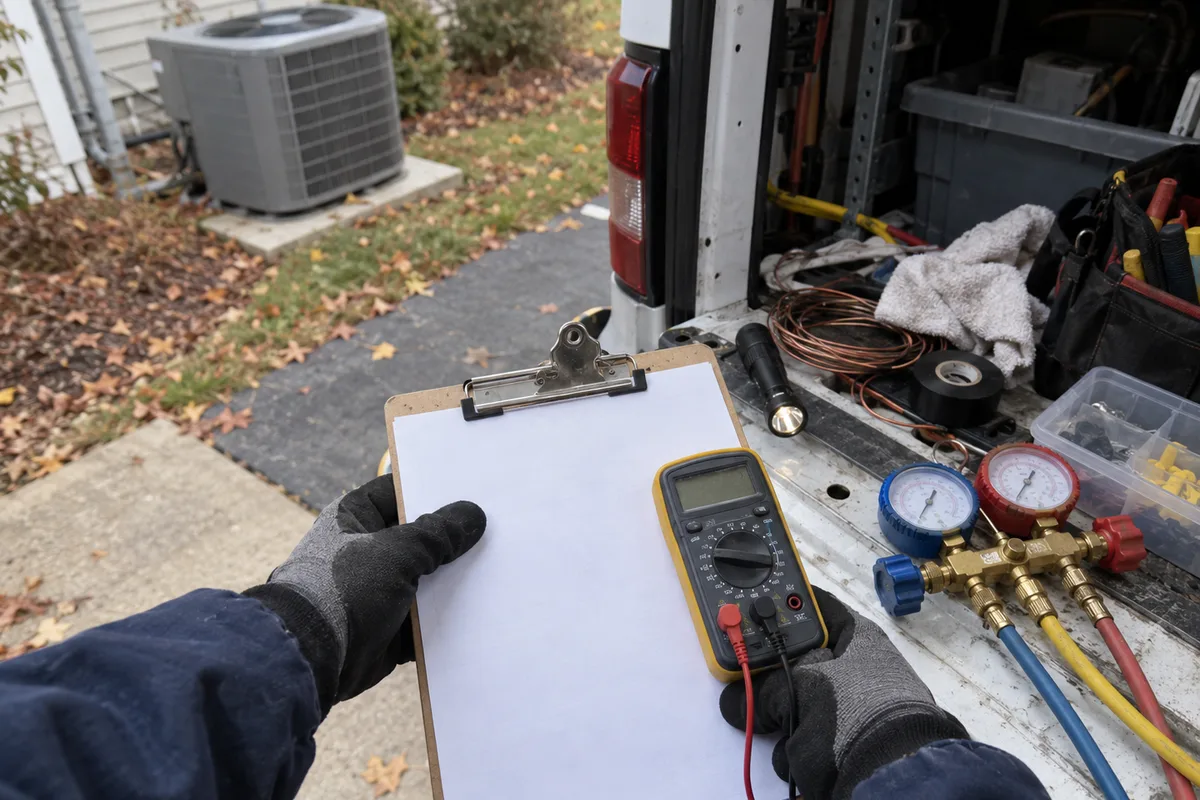
A diagnostic fee, service call fee, trip charge, or diagnostic visit pays for three things: the truck, the technician’s time, and the diagnosis itself. Finding the cause of a system problem is skilled work, even when no repair follows.
If your shop treats diagnosis as free, the cost does not disappear. It usually shows up somewhere else, most often in repair pricing. That makes the fee less visible, not less real.
When shops read back their notes on disputed visits, the pattern is usually clear. The disputes almost never start with the fee being too high. They start with the fee being mentioned for the first time at the door.
A caller who heard the fee and what it covered on the phone, then booked anyway, rarely argues about it when the technician arrives. That is why the office call is where the policy starts.
Pick one fee structure and use it every time
You have three common structures to choose from.
- A flat fee credited toward the repair if the customer approves it.
- A flat fee that is never credited.
- A fee waived only when the customer approves the repair.
The shop decides which structure fits its pricing. The important part is consistency. Pick one, use it every time, and describe it in one sentence.
Your office team needs a sentence that clearly says whether the fee is credited, never credited, or waived after repair approval. Write that sentence down. Give it to every dispatcher, receptionist, and technician.
Inconsistent exceptions are what customers remember. They are also what technicians end up arguing about at the door. If a policy changes from one call to the next, your team cannot defend it cleanly.
The phone call is where the fee belongs
Say the fee once, early, on the call. Say it in the same breath as what it covers, before the booking is final. Do not wait until the technician arrives. Do not wait until the invoice.
The office can say the fee amount, explain the selected structure, and state the visit scope. Then ask what the system is doing. This gives the caller a direct answer while moving the call toward a useful booking.
Price shoppers often begin with, “How much to come out?” Answer with the diagnostic fee and what it covers. Then ask about the problem. Do not quote a repair price for a problem nobody has seen.
Put the same wording in the written confirmation text. The customer should see the fee before the appointment, not discover it from a technician standing in the home.
Use the same discipline for the rest of the call flow. The questions to prepare an AI receptionist can help you write down the questions and answers your office needs to handle consistently.
Define what the customer receives
A fee is easier to defend when the visit has a defined scope. The customer should know what the diagnostic visit includes and what it does not include.
Your stated scope can include:
- Arrival and a safety check
- Running the system
- Finding the cause of the problem
- A written repair option with the price before any work starts
The repair itself is not included. Parts are not included. Say that plainly.
The technician should explain what was found, even if the customer declines the repair. The customer leaves knowing what is wrong and what the options are. That is the work the fee paid for.
Keep the service call separate from maintenance. A maintenance visit has its own expected work, which is why your office and technicians should use a written standard such as what a maintenance visit should include.
Answer the objection without apologizing
The common objection is simple: “Why pay if you can’t fix it today?”
Answer it directly. The diagnosis is the work being paid for. The customer leaves knowing what is wrong and what the options are.
Do not apologize for the fee. Do not bury the answer in a long explanation. State the scope, explain what is excluded, and let the customer decide whether to book.
If the customer declines the repair, the diagnostic work still happened. The technician inspected the system, found the cause, and provided the repair option. Your written findings also give the customer something useful to discuss with the next decision maker in the household.
Members and emergencies need written rules
Decide in advance how the diagnostic fee works for maintenance plan members. Many shops waive or discount it. That is a shop decision.
Whatever you choose, write it down for the office and the receptionist. Members should be handled the same way every time. A plan benefit that one dispatcher knows and another does not know creates the same door dispute as an unclear fee policy.
A no-heat call in cold weather is different from a routine price-shopping call. A household with medical equipment is not the moment to negotiate the fee on the phone. Dispatch first, then explain the fee while the technician is on the way. The cost of a missed no-heat call makes the urgency clear.
You also need a process for no-shows and reschedules. Put the fee policy next to the rules for how you handle no-shows and reschedules, so the office does not improvise when the schedule changes.
When the diagnosis shows an old system is failing, the written findings are the start of a replacement conversation. A clear diagnosis gives the customer a reason to consider replacement instead of leaving the visit with only a vague warning. Train the team to pass those opportunities along using your process for winning replacement leads.
Make the script visible to every caller
Bella, Dial 72’s AI receptionist, answers calls 24/7. By design, she never quotes a price over the phone. That means the diagnostic fee wording is a script the shop owns.
Write down the one-sentence version of your fee and what it covers. Give it to whoever answers. Bella books the visit straight into the shop’s calendar while the caller is on the line, sends the caller a confirmation text, and texts the shop a call summary after every call.
The office can see what the caller described and follow up on the fee and scope before the technician rolls. Bella recognizes maintenance plan members and flags replacement inquiries as high-value leads so the owner can call back personally.
Bella does not state or negotiate the diagnostic fee. Your shop’s written policy does that.
Track what happens after the call
Record how many diagnostic visits turn into approved repairs. Also record how many customers decline after hearing the fee on the phone.
A shop that never looks at those two outcomes cannot tell whether the fee is too high, too low, or badly explained. The record does not replace judgment, but it shows where the process is losing customers.
Start this week with three actions. Choose one fee structure and write its one-sentence explanation. Add the fee and scope to the booking script and confirmation text. Then give the policy to every person who answers the phone, schedules the visit, or walks through the customer’s door.
