
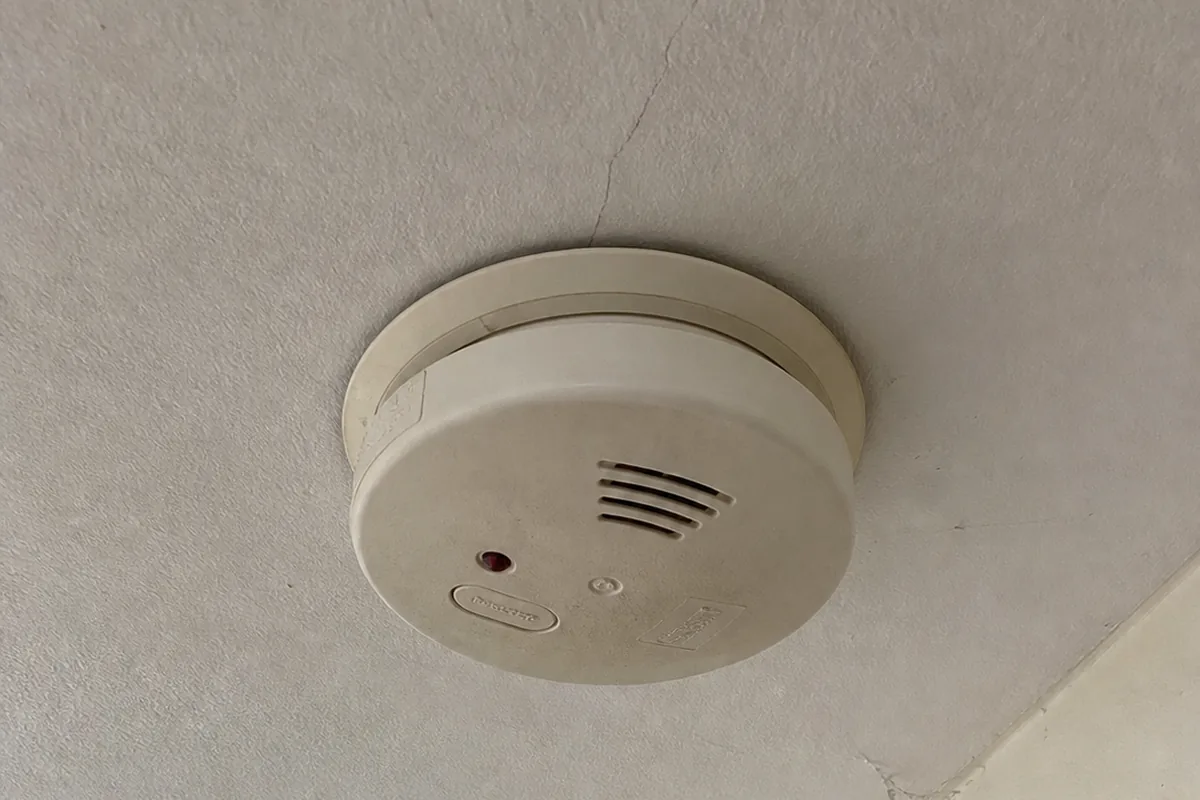
You are not a fire-alarm contractor. But for a lot of homeowners, you are the only person who ever opens the panel on the appliance that can produce carbon monoxide. That puts CO alarms in your orbit whether you install them or not, and the standard that governs them moved.
NFPA 720, the old standalone standard for carbon monoxide detection in dwelling units, was withdrawn in 2018. Its requirements were incorporated into NFPA 72, the National Fire Alarm and Signaling Code. The current edition of NFPA 72 is 2025. For an HVAC shop, the practical question is not who pulls wire for a living. It is what you should know, what you should look for, and what you should write down.
What actually moved
NFPA 720, Standard for the Installation of Carbon Monoxide Detection and Warning Equipment, was withdrawn by the NFPA Standards Council on August 14, 2018. NFPA states explicitly that NFPA 720 requirements have been incorporated into NFPA 72. The separate standard no longer exists, so any documentation, permit comment, or inspection response that still cites NFPA 720 is pointing at a withdrawn document.
NFPA 72 itself is the active standard. Its current edition is 2025, and its scope covers fire alarm systems, emergency communications, mass notification, and carbon monoxide detection and warning equipment. Within the code, single- and multiple-station alarms and household signaling systems are addressed in Chapter 29, and that is where the residential carbon monoxide detection requirements appear in recent editions.
That is the standard side. What gets enforced in the field is the edition of NFPA 72 that the local jurisdiction has adopted through its building or fire code. The International Building Code, International Fire Code, and International Residential Code reference NFPA 72 for fire alarm and CO detection requirements, but the enforceable text is the edition and amendments adopted locally. A contractor should confirm the adopted edition rather than assuming the 2025 standard is already the law in every city.
What to look for on a furnace or boiler call
You do not need to become an alarm contractor. You do need to be able to spot a problem that could later be traced back to your invoice. On every call that involves combustion equipment, make a quick visual check part of your routine:
- Is a CO alarm present? In most dwellings that require them, alarms should be located outside sleeping areas, on every occupiable level including basements, and in sleeping rooms where the adopted code or manufacturer instructions require it.
- Is it expired? CO alarms have a listed service life, often 7 to 10 years from manufacture, and most units print a replacement date on the back or side. An expired alarm is not a working alarm.
- Does it respond to the test button? A failed test button is a failed device. Note it.
- Is it a listed product? Look for a listing mark from a recognized testing laboratory. Unlisted devices should be treated as unreliable.
- Where is it relative to the appliance? Manufacturer instructions and the adopted code determine placement. A CO alarm installed where the manufacturer forbids it, or missing from a required location, is a finding worth recording.
The exact distances and mounting heights are in NFPA 72 and the alarm manufacturer’s installation instructions. Do not guess them from memory. If your shop wants a written basis for what to check, the manufacturer’s instructions and the adopted code edition are the two documents that matter.
Why this lands on an HVAC contractor
Many winter CO incidents in homes involve combustion appliances or blocked venting: a cracked heat exchanger, a blocked flue, a backdrafting water heater, or an appliance running in a space with insufficient combustion air. The CDC reports that unintentional, non-fire-related carbon monoxide poisoning kills more than 400 people a year in the United States, sends more than 100,000 to emergency departments, and hospitalizes more than 14,000. Not all of those incidents involve furnaces; the CDC categories include vehicles, generators, grills, and other sources. But heating season is when the numbers rise, and your techs are in those houses.
The customer does not draw a bright line between “the person who fixed the furnace” and “the person who should have warned me about the alarm.” If your technician sees a missing or expired alarm and says nothing, the next contractor who enters that house may not see it either. A dated note on the invoice that says “CO alarm missing outside master bedroom, customer advised” takes thirty seconds and creates a record that you were the one who flagged it.
What not to do
Do not install CO alarms unless your shop is qualified and licensed to do so in that jurisdiction. Alarm installation involves low-voltage wiring, ceiling and wall penetration, and sometimes interconnect requirements that fall outside an HVAC license. If you are not the right trade, say so plainly and recommend the customer call an electrician or fire-alarm contractor.
Do not promise that an alarm will save anyone’s life. Alarms are warning devices, not guarantees. Phrase your notes carefully: “CO alarm tested and responded,” “CO alarm past replacement date, customer advised,” or “No CO alarm observed in required location, customer advised.”
Do not let a clean combustion reading become an excuse to skip the alarm check. A furnace that is running well today can run differently tomorrow. The alarm and the appliance are two separate lines of defense.
Make it a standard part of the fall tune-up
The combustion-analysis post already covered why recorded readings matter. Add one more field to your heating-season checklist: CO alarm status. The cost is zero. The value is a dated record that shows your shop treated carbon monoxide as a system problem, not just a burner problem.
If you want the conversation to be repeatable, put the same language on every invoice line: “CO alarm observed / not observed / expired / tested OK.” That consistency is what turns a good intention into evidence.
And if the call that brings you into the house is a no-heat emergency at 9 p.m., the alarm check is probably not the first thing on your mind. Getting the house warm is. The reason to capture that call correctly, with the right triage and the right notes, is so the follow-up maintenance visit happens at all. See how it works, or check pricing if your after-hours calls are still going to voicemail.
Quick answers
What happened to NFPA 720? NFPA withdrew it in 2018 and incorporated its carbon monoxide alarm requirements into NFPA 72.
Where do CO alarm requirements live now? In NFPA 72, the National Fire Alarm and Signaling Code. The current edition is 2025. The enforceable edition is the one your local jurisdiction has adopted.
Does an HVAC contractor have to install CO alarms? Generally no, unless your local license or scope of work includes it. You do need to know enough to spot a missing or failed alarm and document it.
What should a technician write down? Presence, location, expiration date, test response, and whether the customer was advised. Specific placement requirements come from NFPA 72 and the manufacturer’s instructions for the installed alarm.
Is a working CO alarm a substitute for combustion testing? No. Alarms and combustion analysis are two separate safety checks. One does not replace the other.
