
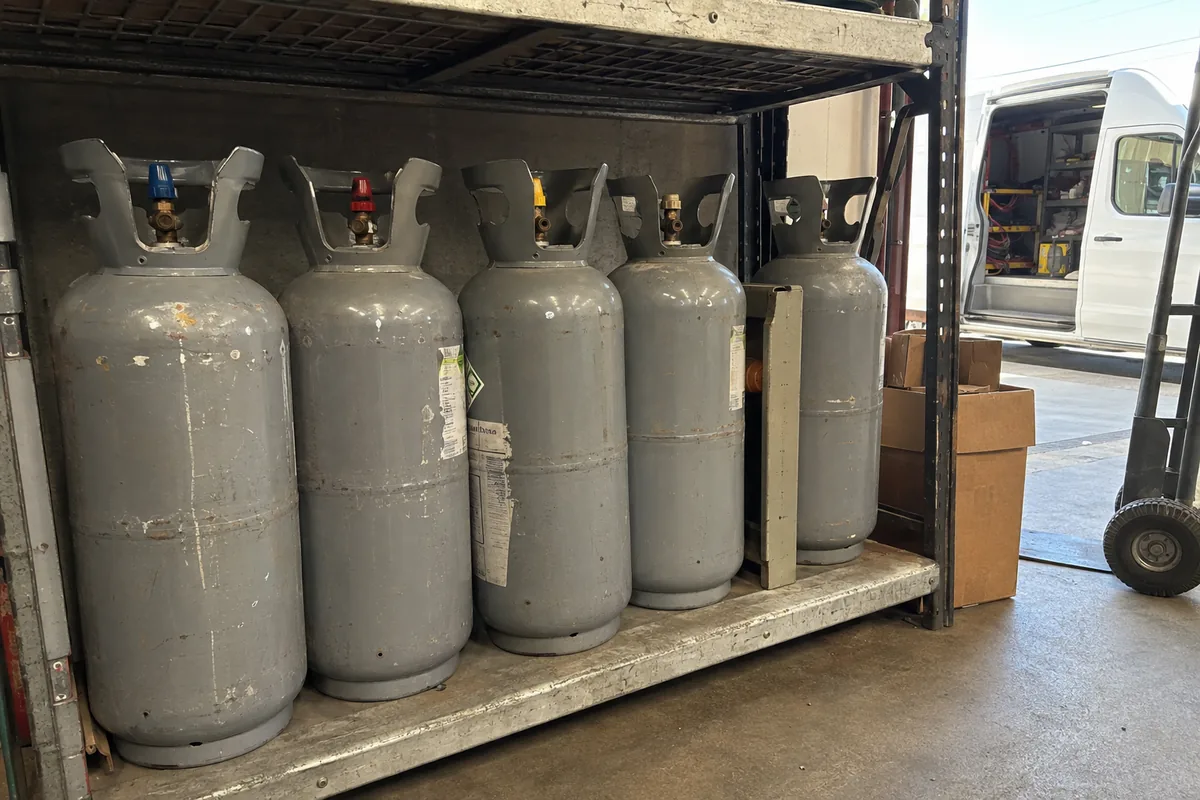
On June 25, 2026, ACCA, HARDI, and PHCC announced they had filed a legal challenge to portions of a new EPA rule on hydrofluorocarbon refrigerants. The rule itself, EPA’s Technology Transitions Reconsideration Rule, was finalized in May 2026 and took effect on July 27, 2026. The challenge is not about halting the refrigerant transition. It is about a set of commercial-refrigeration deadline extensions that the trade groups believe will destabilize the refrigerant market and raise costs for residential contractors who never asked for the change.
That matters because refrigerant supply is not split by sector the way job tickets are. The HFCs used in supermarket racks, remote condensing units, and cold storage warehouses draw from the same national allocation pool as the HFCs a residential tech uses to charge a leaking split system. When one sector gets to keep using more of a capped commodity for longer, every other sector feels it in price and availability.
What the reconsideration rule actually did
EPA published the original Technology Transitions Rule in October 2023 under the American Innovation and Manufacturing Act. That rule restricted the use of high-GWP HFCs in specific sectors and subsectors, with compliance dates that began phasing in on January 1, 2025. After the rule was finalized, EPA received petitions and other requests from companies and trade associations asking for relief in certain subsectors, citing barriers such as lack of ready alternatives, safety concerns, and economic burden.
The Technology Transitions Reconsideration Rule, finalized in May 2026, grants additional flexibility in several subsectors. The changes include extended compliance deadlines and relaxed GWP limits for supermarket refrigeration systems, remote condensing units used in retail food, refrigerated transport, cold storage warehouses, and certain industrial process refrigeration equipment, including chillers used in semiconductor manufacturing. The rule also contains provisions intended to prevent stranded inventory of residential and light-commercial air conditioning and heat pump equipment.
The stranded-inventory provision is the part ACCA, HARDI, and PHCC support. It addresses the concern that pre-2025 R-410A equipment and other higher-GWP inventory would become unusable before it could be installed. For a residential shop, that relief is meaningful. It means pre-2025 equipment can still be installed while supplies last, a point this blog covered when the R-410A installation deadline moved in 2026. See our earlier breakdown of that change for the timeline.
What the trade groups are challenging
The legal challenge, filed June 25, 2026, targets the commercial-refrigeration deadline extensions, not the stranded-inventory relief. ACCA, HARDI, and PHCC argue that allowing new commercial refrigeration systems to continue using higher-GWP HFCs for longer violates the AIM Act and threatens to destabilize the refrigerant market.
The core economic argument is straightforward. The AIM Act sets statutory caps on HFC production and consumption, so the total supply of HFCs is finite and shrinking. When the rule extends deadlines for major commercial refrigeration applications, it increases demand for HFCs within a capped market. Higher demand against constrained supply means higher prices.
The trade groups cited EPA’s own analysis in their announcement. EPA’s economic and environmental impacts memo for the rule projects potential HFC price increases of 12 to 24 percent by 2029 as a result of the additional demand. That projection appears in EPA’s own Analysis of Economic and Environmental Impacts, not in a vendor blog. The memo states that the increase in quantity demanded is large enough to affect overall HFC prices.
The joint press release from HARDI, PHCC, and ACCA is available through PHCC and HARDI. Both state that the groups support the residential and light-commercial relief but oppose the commercial-refrigeration extensions.
Why a commercial-refrigeration rule reaches a residential shop
A residential HVAC contractor does not install supermarket racks. But the refrigerant market does not sort itself by end use at the distributor counter. R-410A, R-448A, R-449A, R-513A, and the other HFC blends covered by the rule are part of a single allocation system. When EPA allows more HFC demand in one sector, the remaining supply must stretch across every sector that still uses those refrigerants.
The practical effects for a residential shop are not abstract.
Leak repairs and top-offs become more expensive. Most residential service work that involves refrigerant is not a full system replacement. It is a leak search, a repair, and a recharge. If bulk HFC prices rise because commercial refrigeration demand is larger than expected, the per-pound cost passed to the contractor and the homeowner rises with it.
Inventory decisions get harder. Shops already manage two refrigerant eras at once: R-410A systems that will be in the field for years, and A2L systems using R-454B or R-32 for new installations. See our A2L readiness post for what that already means for tooling and training. A price squeeze on HFCs adds a third variable to the same calculation.
Customers notice price volatility. A homeowner who needs a pound of R-410A in 2027 may pay more than the same charge cost in 2025, not because the shop raised its margin, but because the underlying commodity is more expensive. Shops that can explain that with a source document, EPA’s own memo, are in a better position than shops that have to shrug and say “refrigerant got expensive.”
What the rule did not change
It is worth separating what moved from what stayed put, because refrigerant news is easy to conflate.
The manufacturing transition for new residential and light-commercial AC and heat pumps did not reverse. Manufacturers still cannot build new systems using R-410A or other restricted higher-GWP refrigerants for that subsector. Every new unit coming off a line today uses a lower-GWP refrigerant, which for most residential equipment means an A2L like R-454B.
The stranded-inventory relief also did not undo the A2L transition. It only gave shops more runway to install equipment that was already built before the cutoff. Once that inventory is gone, the only new equipment available will be the lower-GWP, A2L-class products.
EPA’s Section 608 technician certification requirements remain in place. Nothing in the reconsideration rule changes who must be certified, what it covers, or how recovery and leak repair are documented. For the recovery side of the work, see our post on EPA evacuation minimums.
What a shop should do now
The legal challenge will work its way through whatever administrative or judicial process applies. The rule, however, is already in effect. Shops should plan around the rule as it stands today while watching the challenge the way they watch any regulatory change: as information that could move again.
Do not stockpile refrigerant based on fear. Buying bulk HFCs ahead of price movement is a commodity trade, not an HVAC business, and it carries storage, transport, and liability risks that most shops are not set up to manage. The better move is to understand your real usage, track prices, and avoid promising customers a fixed per-pound refrigerant price far into the future.
Document leak repairs and recoveries carefully. Section 608 already requires proper recordkeeping for leak repair and refrigerant recovery. A tight supply market makes that documentation more valuable, not less. Shops with clean records of what was recovered, what was added, and why the repair was necessary are in a stronger position if prices spike and customers question invoices.
Keep state rules in mind. A few states have their own HFC regulations that are stricter than the federal floor. Federal relief does not automatically override those state rules. If you work across state lines, confirm that your local requirements match the federal change before assuming the federal rule controls the job.
Watch the trade associations, not just the blogs. ACCA, HARDI, and PHCC are the ones in the room for this fight. Their press releases and policy pages will carry the first reliable updates on the challenge and any resulting stays or revisions. The HVAC trade press, including ACHR News and Contracting Business, will cover it too, but the primary filings and association statements are the better source for action.
Use the EPA memo as a teaching tool. The next time a homeowner asks why a refrigerant charge costs what it costs, you can point to a federal document that explains the supply squeeze in plain terms. That is more credible than any explanation invented in the moment.
The larger picture
The refrigerant transition was never going to be one rule and then stability. It is a series of rulemakings, court challenges, state adoptions, and market responses. The 2026 reconsideration rule gave residential contractors something they wanted, more time to install existing inventory, while the same rule created new pressure in the HFC market through the commercial-refrigeration extensions. The trade groups’ challenge is an attempt to unwind the second part without losing the first.
For a shop, the immediate takeaway is practical. The transition to A2L refrigerants is still happening. R-410A inventory still has a runway. And HFC refrigerant costs may face upward pressure over the next few years because demand across the whole economy is being reshaped by the same rule. Planning around all three of those facts at once is the job.
Quick answers
What did EPA finalize in May 2026? The Technology Transitions Reconsideration Rule, which took effect July 27, 2026. It extends compliance deadlines and relaxes limits for several commercial-refrigeration subsectors while also providing stranded-inventory relief for residential and light-commercial AC and heat pumps.
What are ACCA, HARDI, and PHCC challenging? The commercial-refrigeration deadline extensions, arguing they increase HFC demand against a capped supply and will raise refrigerant prices.
Where does the 12 to 24 percent price increase projection come from? EPA’s own Analysis of Economic and Environmental Impacts for the rule, which projects potential HFC price increases in 2029 relative to the baseline scenario.
Does the rule change R-410A installation deadlines? The stranded-inventory provisions in the rule continue to allow installation of pre-2025 higher-GWP equipment while supplies last. It does not reverse the manufacturing transition to lower-GWP refrigerants for new equipment.
Does this affect residential HVAC contractors directly? Indirectly, yes. Residential AC servicing draws from the same national HFC supply as commercial refrigeration. Higher demand and constrained supply in one sector can raise prices and tighten availability for all sectors.
What should a residential shop do? Track the challenge, document leak repairs and recoveries carefully, avoid speculative stockpiling, confirm state rules, and use EPA’s own analysis to explain refrigerant cost pressure to customers.
