TL;DR: A 3 amp fuse that keeps blowing is doing its job. It protects the 24 V transformer from a short on the low-voltage side. Match the rating, never upsize it, and use the timing of the blow plus one-circuit-at-a-time isolation to find the wire or coil that is shorting. A new board goes in only after the field wiring tests clean.
When a furnace keeps eating its 3 amp fuse, the board is usually the victim, not the cause. The fuse sits between the transformer and everything on the 24 V side: the thermostat, the cable to the outdoor unit, the contactor coil, the safety switches. A short anywhere on that circuit opens it.
So a new fuse, or even a new board, only buys time. The short is still there, and it will open the next fuse the moment the right circuit closes.
What the fuse is telling you
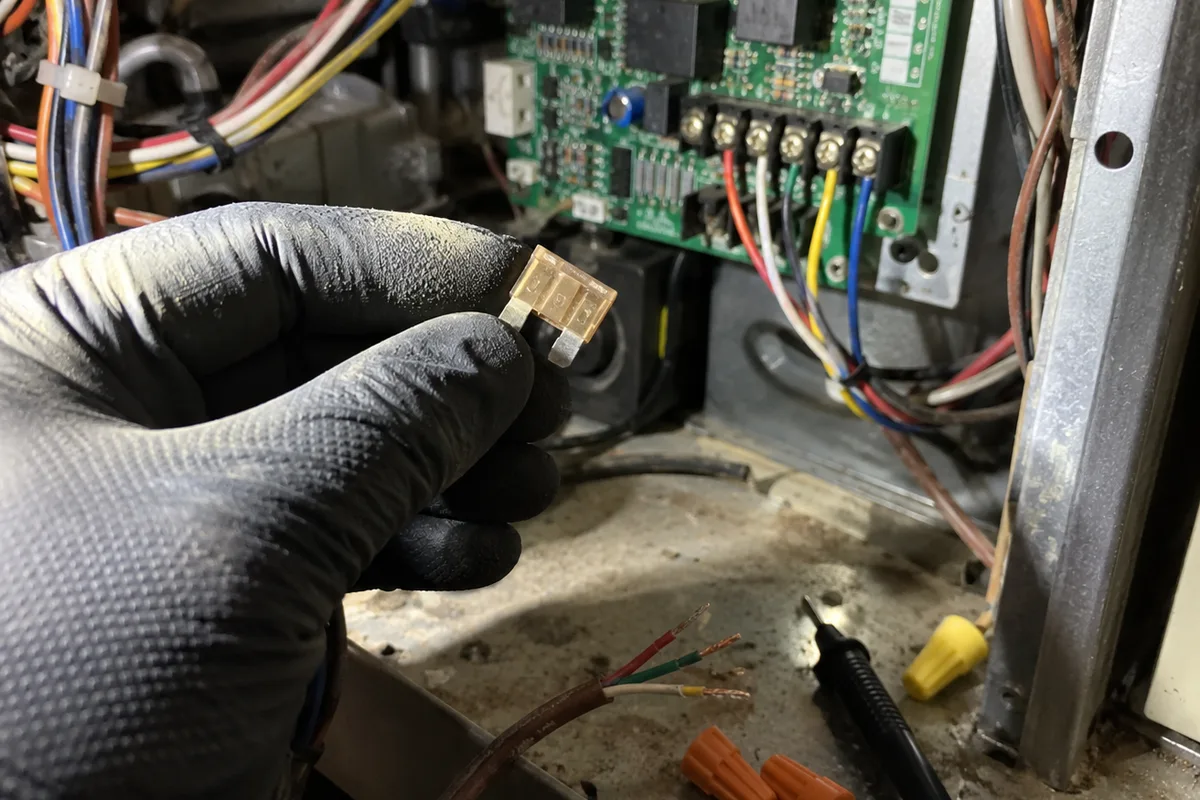
White-Rodgers puts it plainly in the instructions for its 50V51-843 universal furnace control. The control’s only serviceable part is an automotive type fuse, which protects the low voltage transformer from damage if the output is short-circuited. If the fuse has opened, the instructions say to remove whatever caused the short and replace the fuse with only a 3 amp automotive type fuse. The same diagram labels the transformer as a 24 VAC Class II transformer.
Two rules follow from that.
First, use the exact rating and type printed on the board or in that unit’s manual. Ratings and fuse types vary by manufacturer and board.
Second, never drop in a bigger fuse to make it hold. That removes the protection the fuse exists for and lets the short cook the transformer instead. It is the same logic as never upsizing a breaker past the nameplate MOCP to stop a nuisance trip.
Many boards also show a flash code or status light for an open fuse or a 24 V fault. Codes differ by manufacturer, so read the chart on the door or in the manual rather than going from memory.
When it blows tells you where to look
The timing narrows the search before you touch a meter.
- Only on a cooling call: suspect the Y circuit, meaning the outdoor contactor coil or the cable running to the condenser.
- Only on a heat call: suspect the W side and the components that energize during the heating sequence.
- Right at power-up, with the thermostat disconnected: suspect the furnace’s internal wiring or the board itself.
- Intermittent, worse with blower vibration or wind: look for bare insulation that touches metal only some of the time.
Isolate the short one circuit at a time
- Kill power.
- Disconnect the thermostat and outdoor unit wires at the board.
- Install a fuse of the correct rating and power up.
- If it holds, reconnect one circuit at a time: R and C to the thermostat, then G, then W, then Y to the outdoor unit. Call for each one.
- When the fuse blows, the last circuit you added contains the short.
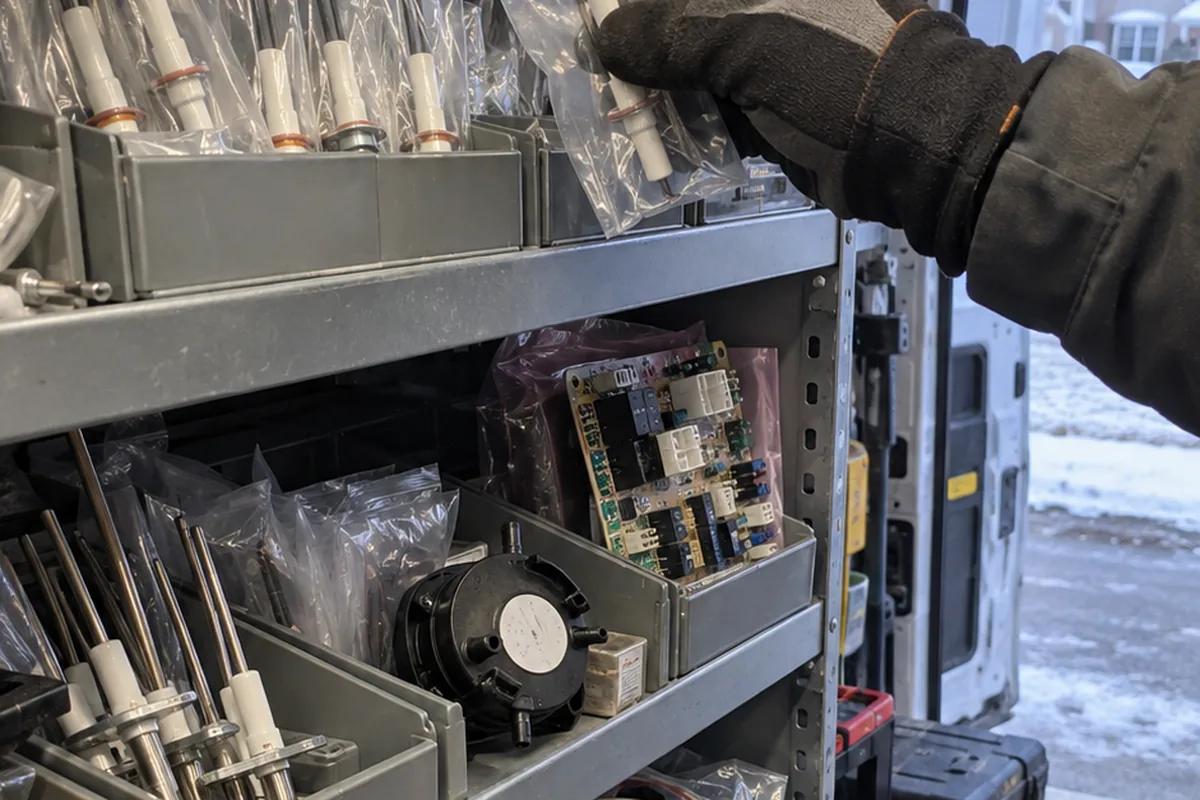
With power off, an ohmmeter from each conductor to C and to ground will show a dead short directly. Some techs carry resettable low-voltage breakers in the same rating to stand in for the fuse while isolating, so they are not burning a fuse on every test. Either way, carry enough of the right fuses; they belong on the list of what to stock on the van before the first cold week.
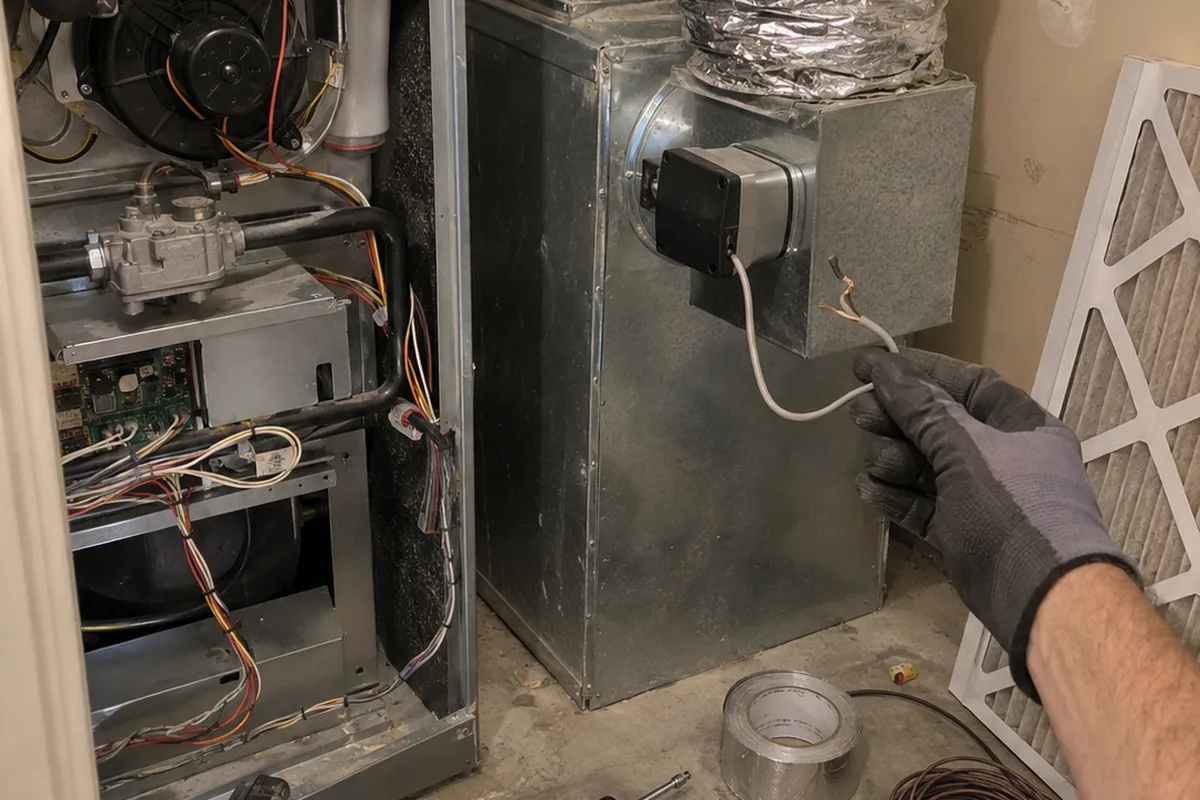
On a cooling-call blow, walk to the condenser and look at the cable entry before anything else. It is the fastest check on the job.
Where the short usually is
- The thermostat cable to the outdoor unit. Rubbed through where it enters the condenser cabinet, chafed on the cabinet edge, pinched under the service panel, or nicked by a string trimmer or mower along the wall.
- Rodent damage to thermostat wire in attics, crawlspaces and garages.
- A staple through the cable, or wire pinched behind the thermostat subbase where R touches C.
- A shorted coil: the outdoor contactor, a relay, a zone damper, or the condensate safety switch and pump wiring. The float switch sits on the 24 V circuit, which is the whole point of condensate overflow protection, and a wet or damaged one can short it.
- Accessories added later: humidifier solenoids, zone panels, and smart thermostat C-wire adapters with a wire landed on the wrong terminal. On heat pumps, the same kind of miswire shows up in aux heat lockout wiring.
One callback pattern is worth knowing. It is a no-heat call in the first cold week, and the ticket from last spring says “replaced fuse,” sometimes “replaced board.” The real short was the thermostat cable to the condenser, rubbed through at the cabinet entry, and it only shorts when the cable moves. The fuse held for months because the AC sat idle. It blew again when the system started cycling for heat, or the first time someone brushed the cable. The fix that sticks is writing on the ticket where the short was found, not just “replaced fuse.”
What should the office ask on the first call?
“The thermostat went blank” and “nothing happens when I turn up the heat” are classic blown-fuse calls. A few questions help the tech arrive with the right suspicion: when did it stop, did it happen when the heat or AC kicked on, and has there been any recent work, landscaping along the house, or a new thermostat installed?
Dial 72 answers the shop’s line 24/7 and texts the shop a call summary with those answers, so the tech rolls already thinking low-voltage short and carrying fuses. A no-heat call from a vulnerable caller can be escalated to the on-call tech instead of waiting in the queue, which matters given what a missed no-heat call costs. Routine calls book straight onto the shop calendar, in English or Spanish.
Write down where the short was
A blown 3 amp fuse is a symptom. Find the circuit, find the wire or coil, fix it, then replace the fuse with the rating the board calls for. If the field wiring and every component on it test clean and the fuse still opens with everything disconnected, then the board is the problem. Note the location of the short on the ticket so the next tech does not start from zero.