The first cold week empties the parts shelf
The first cold week is when furnaces that sat idle for months are asked to run. Calls arrive at once. The shelf empties faster than it does during ordinary service weeks.
Dispatchers who read back a week of no heat tickets in November tend to find the notes say the same three things: “clicking then nothing,” “runs a few seconds then quits,” and “blower never starts.” Those descriptions map directly to the ignition or gas valve, the flame sensor, and the inducer or pressure switch.
That pattern is useful before the truck leaves. It tells you which parts deserve space on the van before the technician has opened the furnace.
The ignition sequence points to the failed part
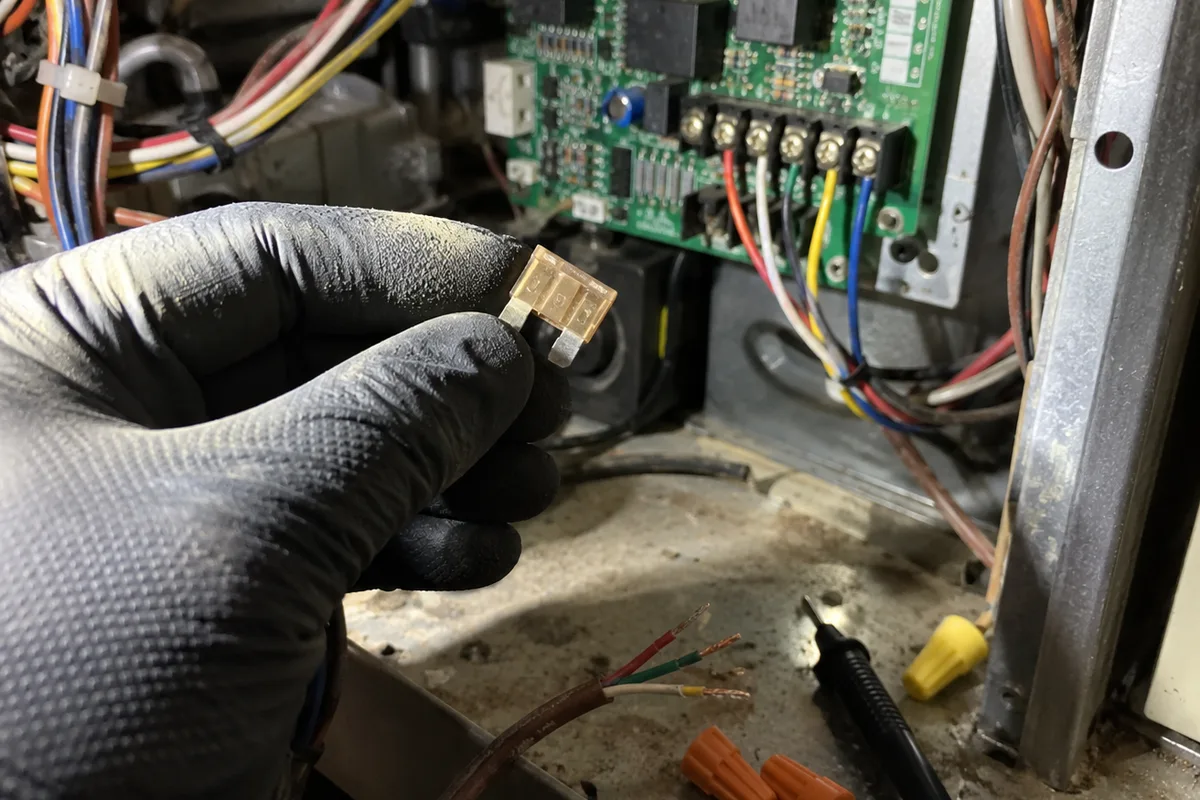
A gas furnace with an integrated control board runs a fixed sequence. The board checks the safeties first. The inducer starts and clears the heat exchanger. The pressure switch must close to prove draft. Then the hot surface igniter, or spark igniter, heats. The gas valve opens. The flame sensor must prove flame with a tiny microamp signal. The indoor blower starts after a delay.
If one step fails, the board retries and then locks out. That is why no heat calls tend to cluster around the step where the sequence stopped.
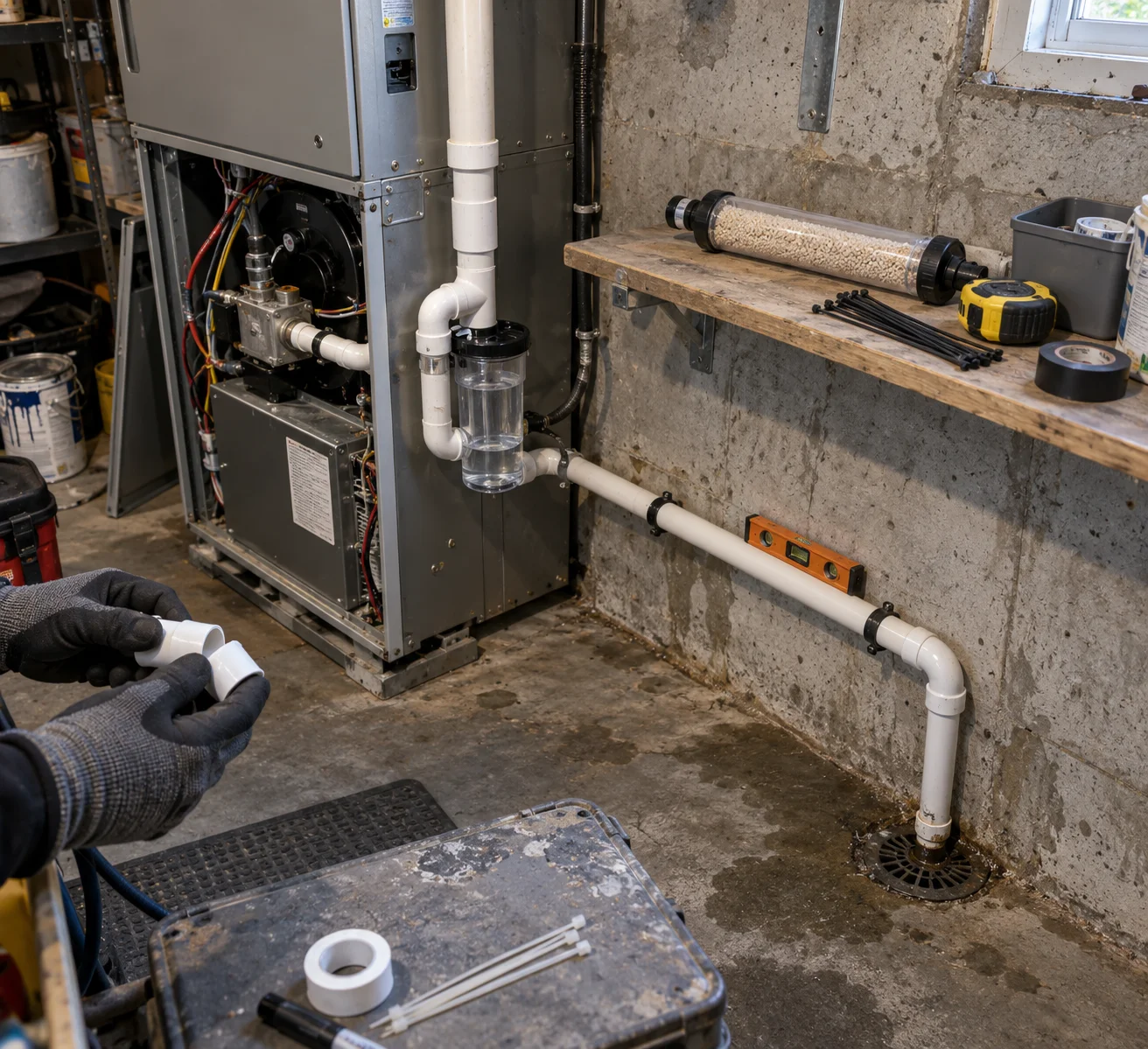
A furnace with no inducer operation points toward the inducer assembly or motor, its related wiring, or the control board. If the inducer runs but the pressure switch will not close, do not treat the switch as the automatic answer. Blocked intake or exhaust, a condensate trap problem, or an inducer problem can cause the same symptom. The condensing furnace condensate drain article covers the trap angle.
An igniter that does not glow, or a spark igniter that does not perform its part of the sequence, stops the furnace before gas ignition. A flame sensor problem looks different. The furnace lights, then shuts off after a few seconds because the board does not receive the required microamp signal.
Flame sensors fail cheaply and often
A dirty flame sensor is a common reason a furnace lights and then shuts off. Oxide film on the rod reduces the microamp signal.
Cleaning the rod lightly with fine abrasive is standard. Do not attack it aggressively. A replacement flame sensor is cheap and worth carrying because the cleaning may not solve the problem, and the part takes little space on the van.
The customer may describe this failure as “it runs a few seconds then quits.” That description is not a diagnosis by itself. It tells the technician where to look in the sequence. The flame sensor needs to be checked after the furnace lights, along with the signal that proves flame.
Gas furnace work also requires combustion testing after the repair. Use the combustion analysis article as the shop reference for that part of the call.
The control board gives a code, not a universal answer
Control boards show diagnostic LED flash codes. The meaning differs by manufacturer.
The legend on the furnace door or in that model’s installation manual is the authority. Do not assume one brand’s codes apply to another. A blinking light can narrow the next check, but only when the code is read against the correct furnace information.
Keep a universal control board in stock if your shop can use one properly across the equipment you service. It can save a parts run when the board is the failed step. The furnace brand, model, wiring, and board application still need to be checked before installation.
Four small parts can save a truck day
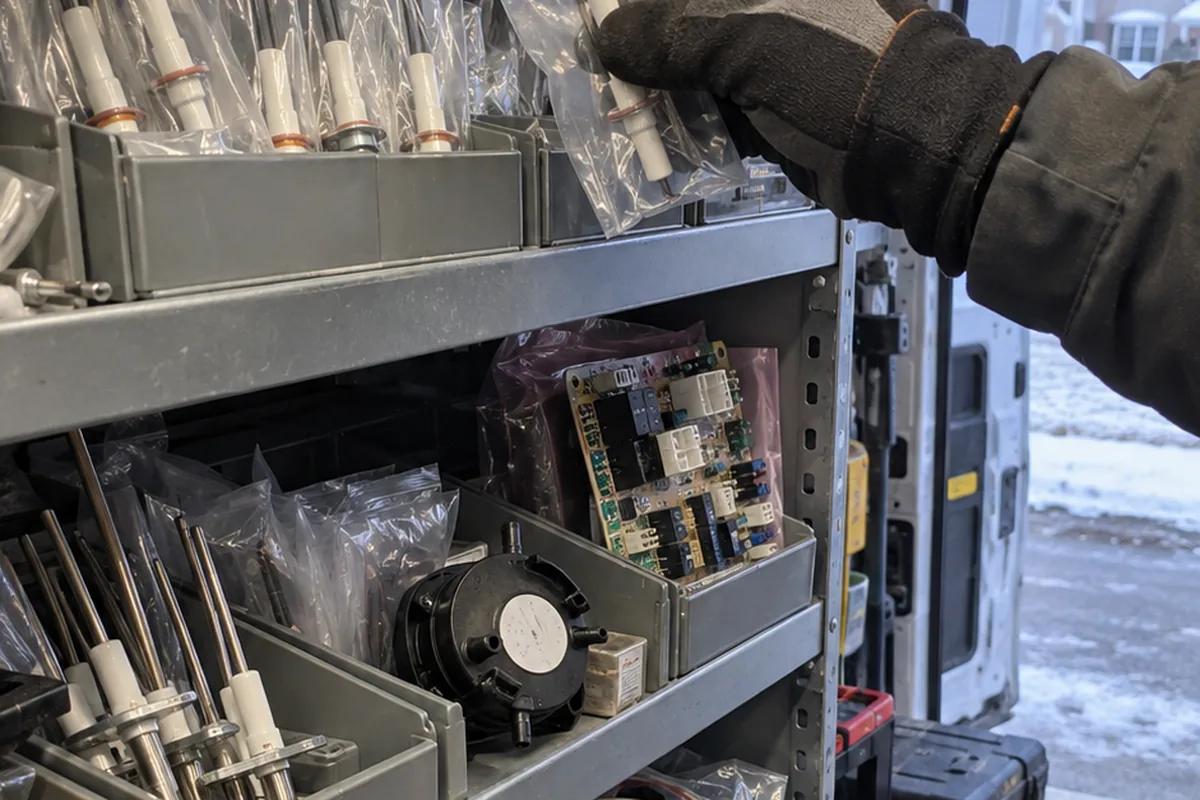
Your cold week van stock should start with hot surface igniters and spark igniters used by the equipment your shop services. Add flame sensors, pressure switches, and a universal control board. If the shop can afford it, carry an inducer assembly or motor as well.
Pressure switches deserve special caution. Carrying the part helps only when the switch itself is the problem. If the intake or exhaust is blocked, the condensate trap is restricted, or the inducer is failing, replacing the switch does not correct the cause.
A second trip for a parts run costs a truck day. During a call surge, that lost day affects the next no heat customer as well as the current job. Put the cost into your own numbers with the call surge cost math and cost of a missed no heat call articles.
Ask three questions before the truck rolls
Get the furnace brand and model. Ask whether the thermostat is blank or calling. Ask what the customer hears or sees: clicking, a blinking light, or nothing.
Dial 72 asks those questions when it answers a no heat call, then texts the summary to the owner or on call tech right away. The tech can read the summary and decide what to load before rolling. Dial 72 does not diagnose the furnace or give repair advice to the caller.
If the caller reports a carbon monoxide alarm sounding or a gas smell, Dial 72 escalates the call to the on call contact as an emergency instead of booking it. For shops reviewing after hours coverage options, that handoff belongs in the call process.
Before the first cold week, check the van against the ignition sequence. Load the igniters, flame sensors, pressure switches, and control board first. Add the inducer assembly or motor if the shop can afford it. Have dispatch collect the brand, model, thermostat status, and customer observations on every no heat call. Then send that summary to the technician before departure.