
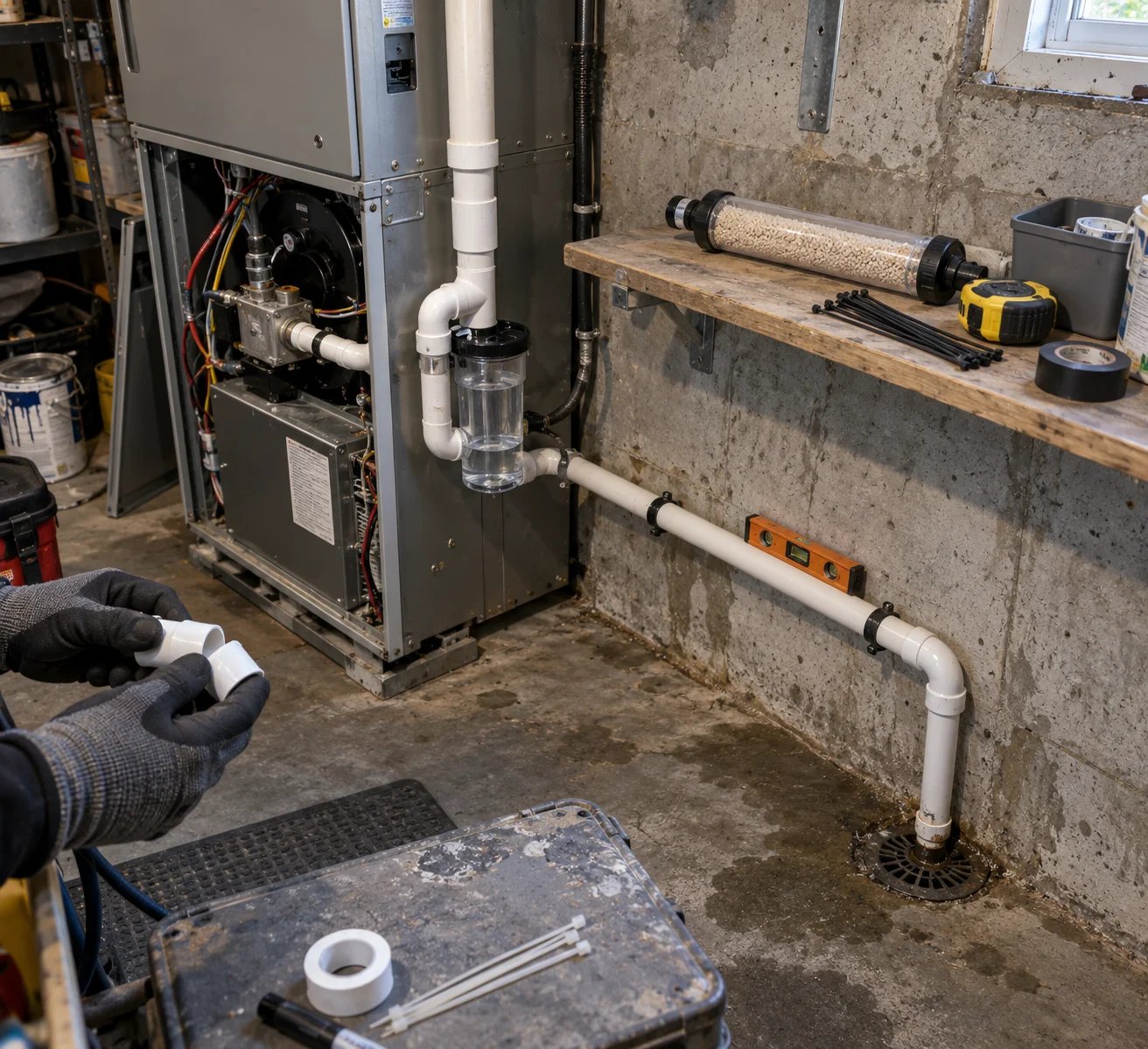
TL;DR: A condensing furnace condensate line must discharge to an approved fixture or disposal area, use approved corrosion-resistant material, match the appliance drain connection size, and slope at least 1/8 unit in 12 horizontal. A no-heat call may be a clogged, flat, or frozen condensate path that is backing up into the pressure switch circuit.
A condensate problem can shut down the furnace
The call shops tend to get during a cold snap sounds simple: “It won’t stay on.” The furnace cycles or locks out. The homeowner may also mention water at the furnace.
A recurring pattern is a condensate trap or drain line that is clogged, flat, or routed through an unconditioned space. The backup reaches the pressure switch circuit, and the furnace stops operating. This is a pattern, not a claim that condensate is the most common cause of every no-heat call.
On a condensing furnace, that drain is not an afterthought. It is part of the installation requirements.
IFGC Section 307.2 covers the condensate drain
The International Fuel Gas Code, Section 307.2, covers condensate disposal for condensing appliances. That includes condensing furnaces, boilers, and water heaters. The requirement appears in the 2024 IFGC Chapter 3 material discussed in ICC’s Building Safety Journal Code Corner.
The section says the liquid combustion byproducts from condensing appliances must be collected and discharged to an approved plumbing fixture or disposal area, following the manufacturer’s instructions.
That gives you the destination requirement. The code also sets requirements for the piping itself.
The drain needs three specific installation details
First, the condensate piping must be made from approved corrosion-resistant material. The piping cannot be smaller than the drain connection on the appliance.
Second, the piping must slope toward the point of discharge. The minimum slope is 1/8 unit vertical in 12 horizontal, which is a 1 percent slope.
Third, concealed condensate piping must have its termination marked. The marking must show whether the piping connects to the primary drain or the secondary drain.
The slope requirement has a reason. ICC’s commentary explains that the slope prevents water and air traps that would impede drainage. A line can look connected and still fail to drain if it has a flat section or a low spot.
The marking requirement matters on the next service call. If a concealed run ends at a drain without identification, the next tech has no way to tell whether it serves the primary drain or the secondary drain.
Acidic condensate is why material matters
Condensate from fuel combustion can be acidic. ICC’s commentary describes weak solutions of hydrochloric and sulfuric acids formed from impurities in the fuel and combustion air.
That is why the piping must be corrosion resistant. Copper is a bad fit for acidic condensate. PVC is the common field choice, but the code requirement is approved corrosion-resistant material, not a statement that the section names PVC.
Section 307.2, as quoted, says nothing about a neutralizer. Whether one is needed comes from the furnace manufacturer’s installation manual and the local plumbing code or sewer authority. Check both before assuming either way.
A furnace change-out creates a new drain
The old 80 percent furnace had no condensate line. Replacing it with a condensing furnace creates a new drain that must be routed, sloped, and landed somewhere approved.
That is where the item gets missed. The equipment is sitting in the old location, but the new appliance has a new liquid discharge requirement. The route may pass through a wall, near other piping, or through an unconditioned space. Every part of that route still has to drain.
The same change-out may also involve the cellular core PVC furnace vent, the vent termination clearances, and combustion air in a confined space. If the change-out affects another fuel-burning appliance, check the orphaned water heater vent issue too.
Cooling condensate is a separate concern. Float switches and secondary protection address overflow protection on cooling condensate, not the fuel combustion condensate requirements in Section 307.2.
Check the drain before you leave the job
Confirm the condensate line is made of approved corrosion-resistant material.
Compare the pipe size with the appliance drain connection. It must not be smaller.
Check the full route for a continuous slope of at least 1/8 unit in 12 horizontal toward the discharge point. Look for flat sections, low spots, and any portion routed through an unconditioned space.
Confirm that the discharge reaches an approved plumbing fixture or disposal area. Follow the furnace manufacturer’s instructions.
If the piping is concealed, mark its termination to identify the primary drain or secondary drain.
Check the installation manual and local plumbing code or sewer authority for any neutralizer requirement.
The first call should carry the water detail
Dial 72 answers the shop phone 24/7 and texts the owner a call summary. When a caller says the furnace shuts off or reports water at the furnace, the summary can carry what the caller said the furnace was doing and whether water is visible.
The call can also be escalated as an emergency. That gives the tech a useful starting point before arriving. The truck may need a trap cleanout, not just a hot surface igniter.
Dial 72 does not diagnose the furnace. It captures the caller’s report and flags the urgency so the shop can send the right response.
On a condensing furnace change-out, install and check the condensate drain as a code item, then make sure the shop hears “shuts off” and “water at the furnace” before the tech rolls.
