TL;DR: BAAQMD may move the zero-NOx water heater deadline from January 2027 to January 2028, but the change is not approved. The Board is scheduled to vote on November 4, 2026, so quote Bay Area work under the 2027 date until then.
The Bay Area water heater rule may slip to 2028. It has not slipped yet. The Air District released draft amended Rule 9-6 language on July 14 that would delay the residential requirement from January 2027 to January 2028 and add exemptions.
Until the Board votes, the adopted date remains 2027. Public comment closes November 1 at 6 p.m. The Board of Directors is scheduled to consider the amendments on November 4, 2026.
Rule 9-6 covers gas water heaters under 75,000 Btu/hr
BAAQMD Rule 9-6 covers natural gas water heaters under 75,000 Btu/hr. The original rule sets a zero-NOx requirement beginning in 2027.
The July draft would move that date to January 2028. It would also create three proposed exemption categories:
- Low-income property owners who participate in Medi-Cal or CalFresh, or who spend at least 28 percent of their income on mortgage and taxes.
- Space-constrained properties without adequate room or ventilation.
- Electrical limitations, including panels below 100 amps, insufficient capacity, or lines longer than 50 feet.
The district says the extra year would provide time to create an exemption request system and conduct more outreach to retailers, distributors, contractors, and the public.
Staff are expected to revise the language before the vote. The final text may differ from the July draft.
Do not carry the water heater proposal over to furnaces. Furnaces are covered separately under Rule 9-4, which has a 2029 compliance date for zero-NOx furnaces. The July draft concerns water heaters only.
Contractors see an emergency replacement problem
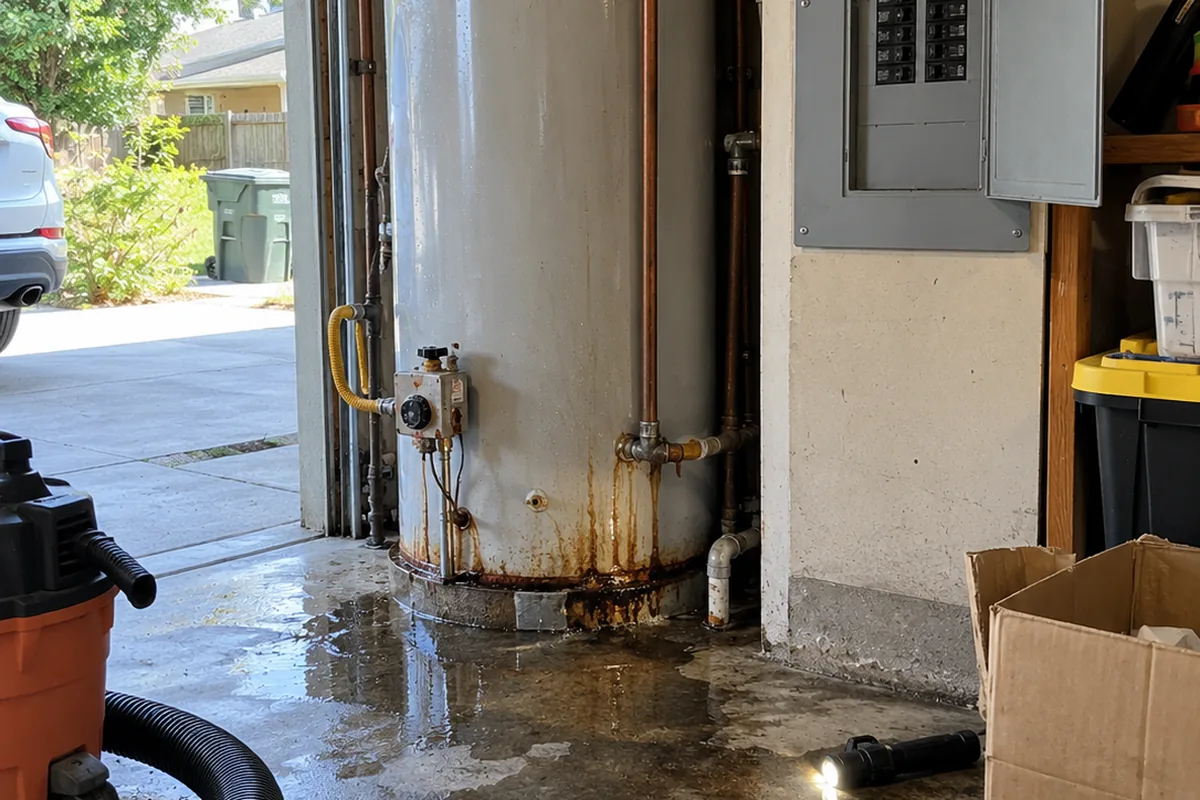
Shops describe a common winter pattern. A no-hot-water call comes in early in the morning. The water heater is well past its expected life and leaking at the base. The customer wants a replacement that day.
The proposed exemption questions would have to be asked during that urgent call. What size is the electrical panel? Is there enough capacity? Does the property have adequate space and ventilation? Does the owner meet the income or benefit requirements?
That is the concern raised by PHCC of California CEO Whitney Squire in an August 17, 2026 letter. PHCC asked the district to let contractors complete qualifying emergency replacements immediately, with property owners receiving exemption certificates afterward. It also asked to let contractors and distributors keep non-compliant water heaters in stock for qualifying emergency and exempt installations.
PHCC requested an exception for buildings with obsolete or hazardous Zinsco and Federal Pacific Electric panels. It also asked the district to align the compliance timeline with federal DOE efficiency standards.
The group objected to proposed contractor reporting about sale price and sales tax, calling that information competitively sensitive. It also said the draft does not match how replacements happen in the field.
“Most people don’t replace a water heater on a schedule, they replace it because it just failed and their family needs hot water restored,” Squire said.
That puts weight on the first call. Shops that already say the diagnostic fee on the phone, not at the door have the habit of setting expectations before the truck rolls, and the same habit covers asking the panel question.
Clean-air advocates want the 2027 date to hold
The Bay Area Clean Air Coalition urged the district not to delay Rule 9-6 in a March 6, 2026 letter. SPUR is a member of the coalition.
The coalition argued that a delay would “prolong harmful air pollution and weaken the market shift toward cleaner appliances.” It said the rule had received “years of preparation and stakeholder engagement” and “must move forward on schedule to protect public health, reduce NOx emissions, and maintain regulatory certainty.”
That letter came before the district released the July draft. It was not a response to the proposed July language.
The two sides are asking for different fixes. Contractors want exemptions that work during emergency replacements and do not force shops to hold the wrong equipment or disclose sensitive pricing. Clean-air advocates want the district to preserve the existing schedule and keep the market moving toward zero-NOx equipment.
A similar local appliance rule survived a federal preemption challenge on July 2, 2026. In Rinnai America Corp. v. South Coast Air Quality Management District, the Ninth Circuit upheld South Coast AQMD’s Rule 1146.2 zero-NOx standard. That is a different district and a different rule. The decision does not decide anything about BAAQMD Rule 9-6.
Quote every Bay Area job as if 2027 still applies
For work quoted this winter, use the adopted 2027 date. Do not stock up based on a possible delay. Do not promise a customer that the deadline will move.
Add a note to every quote with the quote date, equipment type, and whether the customer might qualify for an exemption. Record the facts that matter under the draft, including panel size, electrical capacity, line length, available space, ventilation, and any income or benefit information the customer voluntarily provides.
Ask the electrical-panel question early in every Bay Area water heater call. Panel capacity and run length are listed in the draft exemption criteria. A panel below 100 amps, insufficient capacity, or a line exceeding 50 feet could matter if that language survives the vote.
For a leaking or failed unit, document the emergency facts clearly. When a furnace swap leaves a water heater on an oversized vent, see the orphaned water heater vent rules. If costs or the rule change after you quote, the same discipline applies as with open replacement quotes written before October’s price letters.
If you want to affect the rule, submit comments through the district’s comment tool by November 1 at 6 p.m. Then check the final language after the November 4 vote before changing your sales script, inventory plan, or exemption process.
Dial 72 answers 24/7, including after hours, and texts your shop a call summary. For a no-hot-water call, that summary can include the caller’s address, what the caller says the equipment is doing, and whether the call is flagged as an emergency. The tech sees the location and urgency before the first callback. Dial 72 also flags calls that look like replacement leads. If you are still comparing ways to cover nights and weekends, see after-hours HVAC coverage options.
Dial 72 does not interpret the air district rule or tell callers whether they qualify for an exemption. Your shop decides that. Have the answering team capture the panel, space, and urgency details, then have your staff make the compliance decision under the rule that is actually in effect. Shops outside the Bay Area should treat this as a preview of how a local air district rule can land on a replacement call, not as a rule that applies to them.