
TL;DR: Do not confirm an old replacement quote until you re-check distributor cost on the actual model numbers. October 2026 price changes took effect on October 1, 5, 12, 16, 19, and 31, so a quote can be correct on October 3 and short on October 20.
A homeowner gets a replacement quote in late summer, says, “we’ll think about it,” then calls after the first cold morning of fall and says, “go ahead with that quote.” The quote is six to eight weeks old. One or two rounds of price letters have landed since it was written. The person answering the phone usually has no idea the quote is old.
That callback can turn into an install booked at the wrong cost.
Manufacturer prices rose again before October arrived
The U.S. Bureau of Labor Statistics reported an index of 324.8 in August 2026 for the industry “Air-Conditioning, Refrigeration, and Forced Air Heating Equipment Manufacturing,” series PCU333415333415. The index was 312.6 in August 2025, a rise of about 3.9% in twelve months.
The index dipped to 309.8 in September 2025 and stood at 311.9 in December 2025. From December 2025 to August 2026, it rose about 4.2%. Those are separate measurements over separate periods. The 4.2% increase is more than the 3.9% twelve month increase, which means all of the year’s increase, and then some, came in 2026 itself.
The August 2026 figure is preliminary, and the BLS revises recent months. The PPI measures prices manufacturers receive. It does not measure what a distributor charges your shop. Use it as a direction, not as a line item for a specific replacement quote.
October changes hit on six different dates
ACHR News published its “HVAC Price Increase List: October 2026” on October 7, 2026, based on manufacturer announcements. Most October changes on the list fall around 3% to 6%.
Aeris Metals announced an average 12.9% increase on linesets effective October 5. Robertshaw announced increases of up to 15% on some products effective October 12, although most of its items were unchanged and several decreased. Panasonic announced increases of 3.7% to 4.0% on products affected by tariffs effective October 19. Regal Rexnord announced a 2.5% increase on select motors, parts, and accessories effective October 1.
The effective dates on that list are spread across October 1, 5, 12, 16, 19, and 31. That is the problem with treating October as one price period. Your quote can be right on the 3rd and short on the 20th.
A bundled lineset can erase the margin on a good equipment price
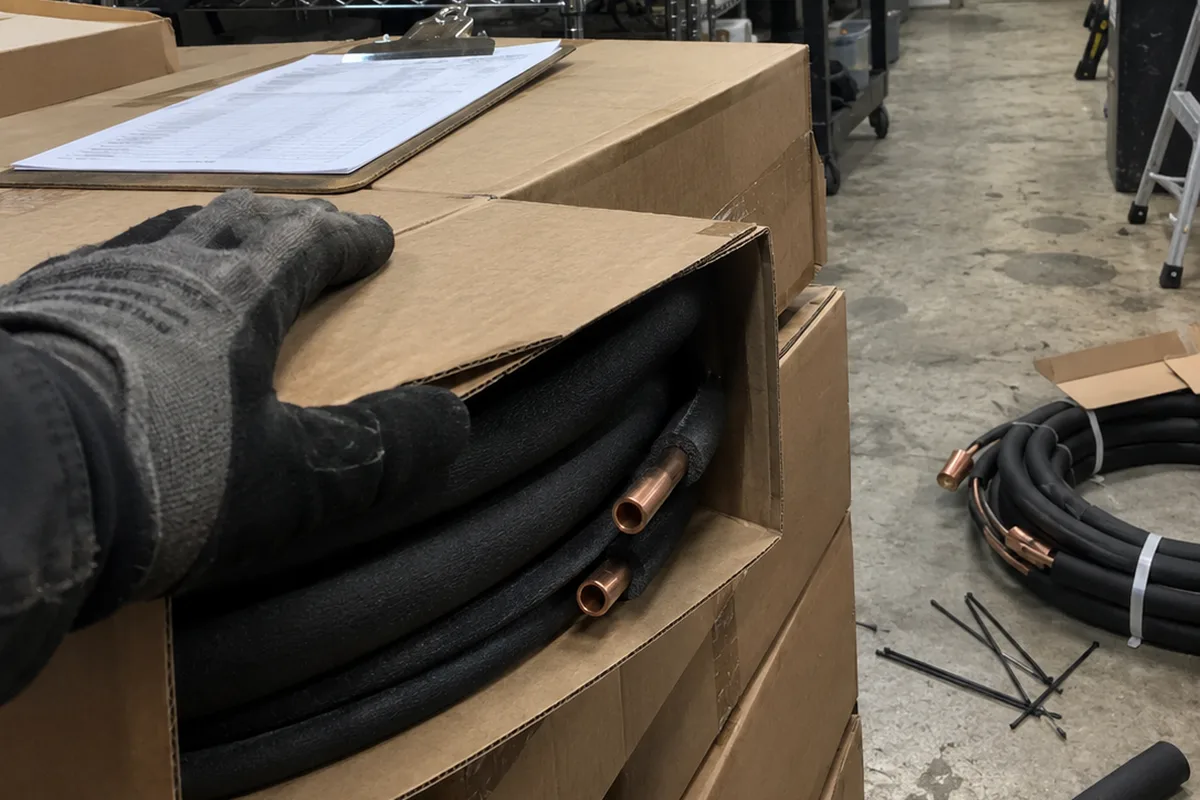
Equipment is not the only part of a replacement quote that can change. Linesets, motors, parts, and other accessories can move separately from the condenser or other equipment.
A quote can keep the same equipment cost and still lose margin because the bundled lineset costs more when you order it. Before you assume an existing lineset can stay in place, use the guidance in this article on reusing the line set. If the quote includes a new lineset, check that item separately when you re-check the equipment.
Do not treat the equipment model as the only number that matters. The actual model numbers for every quoted item belong in the review.
Every replacement quote needs a visible expiration date
Put an expiration date on every replacement quote. Print it where the customer sees it.
Choose a window your shop can actually hold while manufacturer price letters arrive month after month. Do not use a window your team cannot honor. The date needs to tell the customer that accepting the quote later may require a new price check.
When a customer calls to accept an older quote, the expiration date gives the office a clear reason to pause. The customer is not being told that the shop changed its mind. The quote reached the date printed on the document, and the shop must verify current cost before confirming the work.
Re-check cost before you promise an install date
Before confirming an install from an older quote, re-check distributor cost on the actual model numbers. Check the equipment, lineset, and accessories included in that job.
If the price changed, call the customer before the install date. Do not wait until the crew arrives at the door. A price conversation at the door puts the homeowner and the technician in the worst possible position.
A new price check does not change the other job requirements. Equipment registration and warranty paperwork still apply regardless of when the quote was written. Keep those steps in the process, and use the guidance in this warranty registration article when the job moves forward.
Software only helps when someone updates the price book
Estimating software can store price books. It cannot apply a price letter that nobody entered.
When manufacturer announcements arrive, someone needs to update the price books your team uses. The software is useful after that work is done. See this review of three HVAC estimating software products for the role estimating tools can play in the process.
The office also needs a way to identify an old quote before booking the job. The callback saying “go ahead” is not a routine service visit. It is a replacement lead tied to an existing quote, and it should go to whoever prices replacement jobs.
Dial 72 answers 24/7, texts the owner a call summary after each call, and flags replacement leads. When that “go ahead” call comes in at night or on a Saturday, the owner receives a text marking it as a replacement lead on an existing quote. The owner can re-check pricing before anyone confirms an install date. This article on winning replacement leads covers that lead type.
Dial 72 does not price jobs or provide quote numbers. Your shop decides the price.
Put an expiration date on the quote, review distributor cost before confirming an old one, and route every callback on an existing replacement quote to the person who prices jobs. Do those three things before the next cold morning turns an August number into an October promise.
