
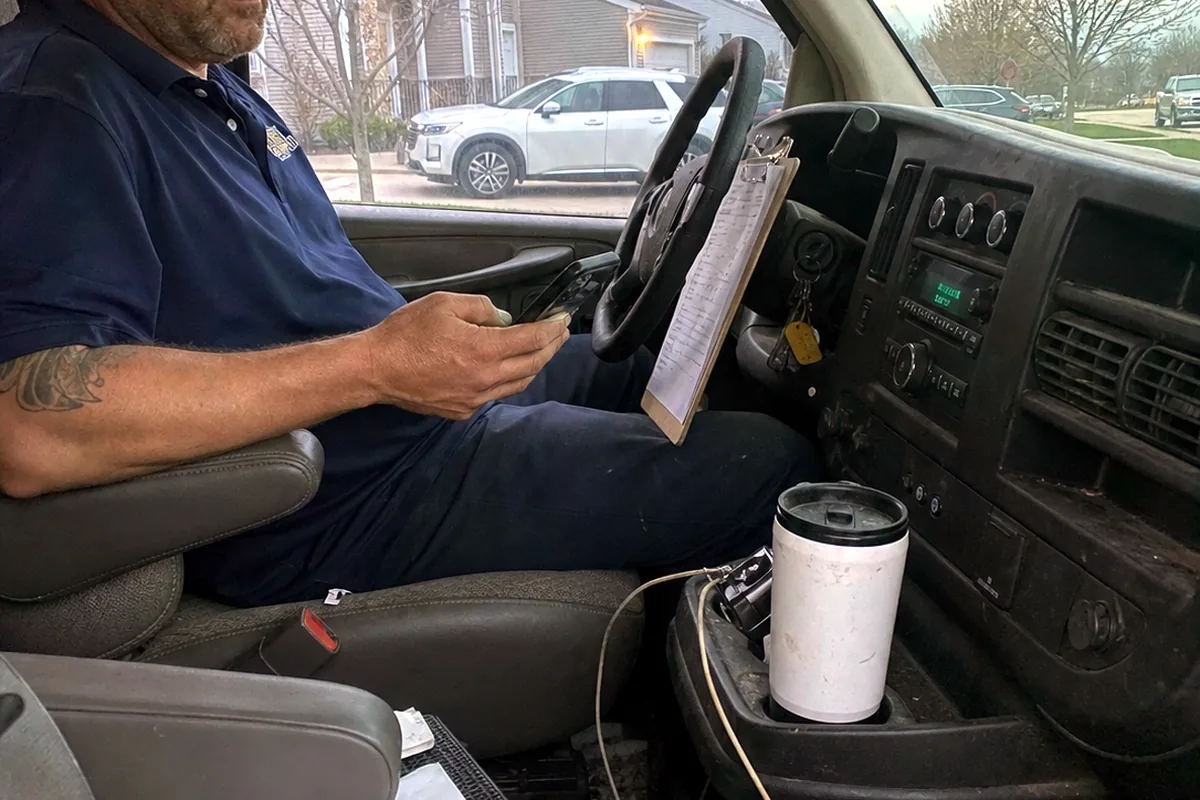
A one-truck operator doesn’t have a front desk. He is the front desk, between jobs, in the driver’s seat, one hand on the wheel and one eye on a phone that’s been buzzing since he pulled a filter out three hours ago.
That’s the shape of the problem for most solo HVAC operators, and it’s worth walking through what actually happens when one of them fixes it.
The setup: one guy, one truck, every hat
This particular shop is a single-truck residential operation. The kind of business where the owner quotes the job, does the job, invoices the job, and answers the phone about the job, usually all in the same afternoon. He doesn’t have an office. His “dispatch board” was a notes app.
Nights were the problem. He’d wrap a job at 6, drive home, and find three missed calls and a voicemail from someone whose furnace had been out since lunch. By the time he called back at 7:15, they’d already booked with a competitor.
He wasn’t losing business because he was bad at the work. He was losing it because a phone that rings while your hands are in a heat exchanger is a phone that doesn’t get answered, and a caller with no heat doesn’t wait for a callback.
What changed the week he went live
He signed up for the Starter tier and kept his existing number. No new line to give out, no equipment to install. Bella started answering that week.
The mechanics were simple: every call got picked up in under a second, day or night. True emergencies (a no-heat call with kids in the house, a total system failure) got escalated to him immediately by text, so he could call back from the job site if it genuinely couldn’t wait. Everything else got booked straight into a slot he’d already blocked off, with the system type, symptoms, and address captured up front instead of a rambling voicemail he’d have to replay twice.
The first 30 days, by the numbers
Using the shop’s own average ticket values (close to the industry figures of $180 for a routine call and $900+ for a genuine after-hours emergency), the first month looked like this:
- 11 after-hours calls that historically would have hit voicemail were answered and triaged the same night.
- 7 of those were routine enough to book straight into the calendar with no callback needed.
- 4 were real emergencies, escalated immediately, worked into the schedule the next morning instead of lost entirely.
- Rough math on jobs that wouldn’t have existed otherwise: north of $4,000 in a single month, before counting the maintenance plans and referrals those same customers generate later.
The bigger change was less visible than the dollar figure. He stopped dreading his phone. Calls that used to interrupt a job now show up as a text summary he reads on his own time, after the job, in the truck, whenever he actually has a hand free.
What didn’t change
He’s still the only tech. Bella doesn’t diagnose a system or quote a repair. That’s still entirely his job, in person, same as before. What changed is that every call that used to depend on him physically answering a ringing phone now gets handled the moment it comes in, whether he’s on a roof or asleep.
For a one-truck shop, that’s the whole ballgame: you can’t add hours to a day, but you can stop losing the calls that arrive during the hours you’re already working.
See how the triage logic works on how it works, or check what Starter costs before your next slow night turns out not to have been so slow after all.
