
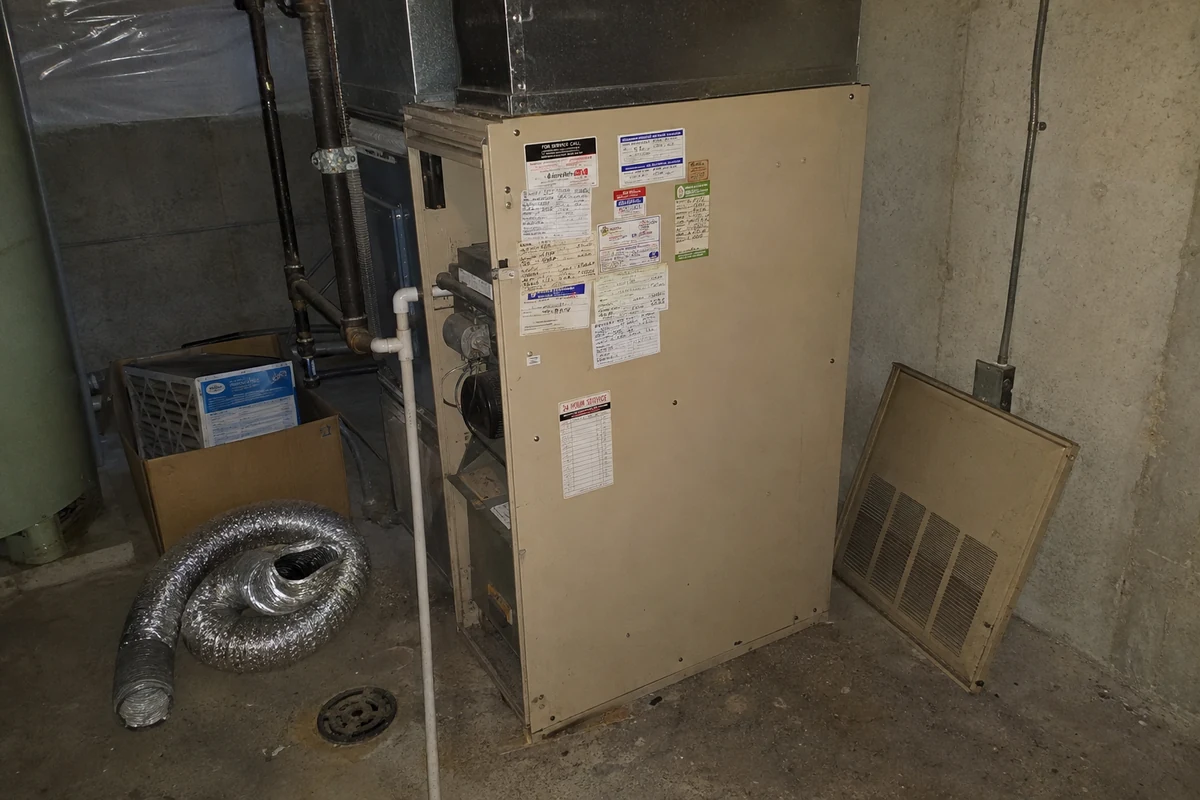
A furnace fails on the first genuinely cold night. The homeowner is on a maintenance agreement and had a visit six weeks earlier. They want to know what they paid for.
You pull the ticket. It says filter replaced, burners cleaned, system operating normally. Three lines. No measurements, no readings, no notes about the part that just failed. Whatever the tech actually did that day, the record does not defend it, and you are now having a conversation about a refund instead of a repair.
That gap has a fix that costs nothing. There is a national consensus standard defining the minimum a residential HVAC maintenance inspection has to include, it carries an ANSI designation, and it is free from ACCA. Most shops selling maintenance agreements have never opened it.
What the standard actually is
The document is ANSI/ACCA 4 QM, Maintenance of Residential HVAC Systems. The current edition was published April 3, 2019. It went through the ANSI five year review and was reaffirmed without changes, approved by ANSI on August 7, 2024 and announced by ACCA on September 16, 2024. The correct citation today is ANSI/ACCA 4 QM - 2019 (R2024).
ACCA describes it as “a nationally recognized, manufacturer-endorsed set of minimum tasks that should be performed for HVACR equipment maintenance inspections.” Three words in that sentence are doing real work.
Minimum. This is a floor, not a program. It is what a maintenance inspection has to cover to be called one.
Manufacturer-endorsed. The tasks were developed through a consensus process that included equipment manufacturers. That matters when a warranty conversation turns into an argument about whether the system was maintained.
Inspection. Not cleaning. The standard is built around inspecting and evaluating, then recommending corrective action. Those are separate activities, and conflating them is the single most common failure in how maintenance gets sold and delivered.
The standard prescribes inspection tasks, offers recommended corrective actions, and provides checklists covering typical residential systems. The reaffirmation process itself is worth understanding: ANSI requires that an approved standard be reviewed every five years and then reaffirmed, revised, or withdrawn. As ACCA’s David Bixby has described the cycle, reaffirmation means the review found no changes were needed. The 2024 action confirmed the 2019 text still reflects consensus.
The distinction that decides whether you get paid twice
Read the standard’s structure and one thing becomes obvious. Inspection is what the agreement buys. Corrective action is what gets quoted.
A tech who finds a capacitor reading below tolerance has completed an inspection task correctly. Replacing that capacitor is a corrective action, and it is a separate line with a separate price. A shop that has internalized this sells a maintenance visit that is genuinely profitable on its own, because the visit is not secretly a labor subsidy for whatever repairs turn up.
A shop that has not internalized it does one of two things. It bundles repairs into the agreement price and loses money on every system that actually needs something. Or it skips the measurements, finds nothing, and delivers a visit that was worth less than the customer paid. The three line ticket at the top of this post comes from the second failure.
ACCA’s own technical staff have been direct that the standard is a starting point rather than a service offering. Donald Prather, ACCA’s Technical Services Manager, put it this way when the 2019 edition was released: “ACCA members usually provide a more comprehensive maintenance plan than what’s detailed in the QM Standard, but as equipment evolves, it is important to check for updates to ensure existing maintenance plans meet the updated minimum requirements.”
That is the correct way to use it. Your agreement should exceed the standard. The standard is what you can point to when someone asks whether your definition of maintenance is just something you made up.
Where the value actually sits
The tasks in the standard are not exotic. Any competent tech does most of them. The difference between a shop that meets it and a shop that thinks it does is almost always documentation of measured values rather than performance of the work.
“Checked refrigerant charge” is not a record. A measured superheat or subcooling value, written down next to the outdoor ambient and the indoor conditions at the time, is a record. Twelve months later it is also a baseline, which means the next visit can detect a slow leak by comparison rather than by waiting for the system to stop cooling.
The same logic runs through the rest of the visit. A static pressure reading taken across the air handler tells you whether the duct system is strangling the equipment, and it is the number that turns “the filter was dirty” into a diagnosis. On gas equipment, an actual combustion analysis produces numbers a service sticker cannot fake, which is a topic worth its own treatment and gets one in our post on combustion analysis. Electrical readings on contactors, capacitors, and motor amperage drift in a direction over time, and the direction is the finding.
None of this is slower than what a rushed tech already does. It is the same visit with the numbers written down. What it produces is a maintenance history that has diagnostic value, defends the agreement, and supports a warranty claim if one comes.
The standard’s limits, stated honestly
ANSI/ACCA 4 QM has real critics inside the trade, and the criticism is worth knowing before you build a program on it.
The main objection is that a minimum task list invites checkbox behavior. A tech under time pressure can complete every listed item superficially and produce a compliant, useless visit. The standard defines what to look at. It cannot make anyone look carefully.
The second limit is that maintenance cannot repair a design problem. A system that was oversized at the outset will short cycle no matter how well it is maintained, and no inspection task fixes an equipment selection made years ago. That is a load calculation and selection issue, covered in our posts on Manual J and Manual S. Maintenance keeps a correctly specified system performing. It does not rescue an incorrectly specified one.
The third is scope. 4 QM is residential. Light commercial and commercial work falls under ANSI/ASHRAE/ACCA 180, a different document with a different structure. If you run both sides of the business, they are not interchangeable.
The rest of the family
4 QM sits inside a set of ACCA standards that cover the equipment lifecycle, and the maintenance conversation is easier when you know which document owns which stage.
ANSI/ACCA 5 QI is the installation counterpart, the HVAC Quality Installation Specification. Its status is currently in motion: ACCA put it out for a 45 day ANSI public review that ran from October 10 to November 24, 2025, with the text unchanged from the 2015 edition, for the purpose of regaining its ANSI designation as a new American National Standard. Worth tracking if you cite it in proposals.
ANSI/ACCA 9 QIvp covers verification protocols, the methods for confirming an installation met the specification.
ANSI/ACCA 2 (Manual J), ANSI/ACCA 3 (Manual S), and ANSI/ACCA 1 (Manual D) handle load calculation, equipment selection, and duct design.
The current designations and review status for all of these are published on ACCA’s ANSI standards page. Check it before quoting a year in a customer facing document, because reaffirmations change the citation even when the text does not change.
What to do before the season lands
- Download 4 QM and read the checklists. It is free through ACCA. Compare it against the form your techs actually fill out. The differences are your gap list.
- Separate inspection from correction in your pricing. If your agreement silently absorbs repairs, you are pricing a maintenance visit as an insurance product without the actuarial work. Decide which one you are selling.
- Require measured values, not adjectives. Change the form so it will not accept “good” or “OK” in a field that should hold a number. This is the single highest return change available.
- Cite the standard in your agreement language. “Meets or exceeds ANSI/ACCA 4 QM - 2019 (R2024)” is a defensible claim you can support, and most competitors cannot say it.
- Fix the citation year. If your marketing references a 2019 or older designation, update it to the reaffirmed form.
The part that reaches your phone
Maintenance season is a scheduling problem before it is a technical one. Agreements come due in clusters, the fall renewal calls land in the same weeks as the first no heat calls, and both arrive while your techs are already booked.
The two call types also need different handling. A renewal or a scheduling call can wait for a callback. A no heat call in a house with an infant cannot, and the difference has to be caught on the first call rather than discovered in a voicemail the next morning. Sorting that in the moment, when the office is already at capacity, is the job Dial 72 does. If your maintenance renewals are currently going to voicemail during the busiest weeks of your year, that is the version of this problem worth pricing out. See pricing.
Quick answers
What is ANSI/ACCA 4 QM? The consensus standard defining minimum inspection tasks for maintenance of residential HVAC systems. Current edition published April 3, 2019, reaffirmed by ANSI on August 7, 2024, cited as ANSI/ACCA 4 QM - 2019 (R2024).
Does it cost anything? No. ACCA makes the standard available as a free download.
Is it mandatory? No. It is a voluntary consensus standard, not a code or a regulation. Nobody inspects you against it. Its value is as a defensible definition of what maintenance means, which matters in warranty disputes and in competitive proposals.
Does meeting it make my maintenance program good? It makes it complete at the minimum level. ACCA’s own position is that a real program should exceed it. Treat it as the floor you build on, not the product you sell.
What covers commercial work? ANSI/ASHRAE/ACCA 180, Standard Practice for Inspection and Maintenance of Commercial Building HVAC Systems. Different document, different scope.
What is the fastest change I can make this week? Stop accepting words where numbers belong. A maintenance form that requires measured readings turns your service history into a diagnostic asset instead of a stack of paper nobody can use.
