
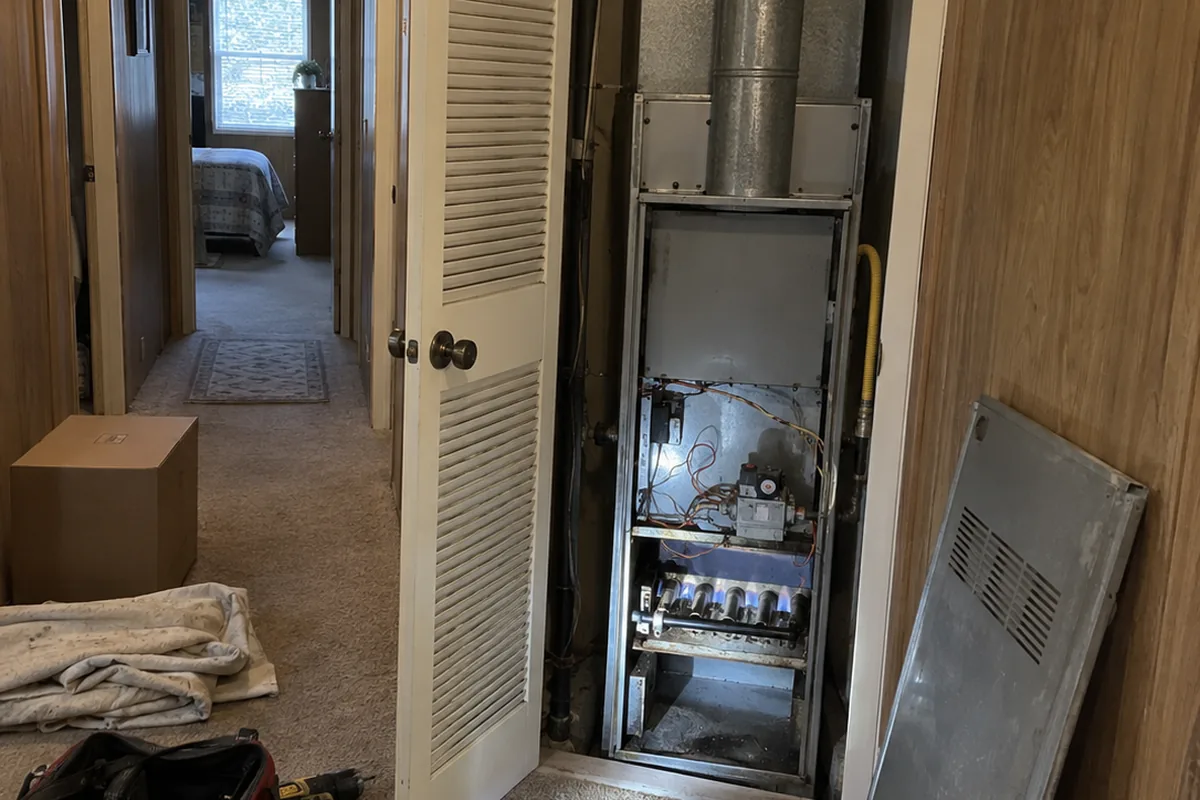
The first question is whether the home is manufactured
Early in heating season, the caller rarely says “manufactured home furnace.” They say “the furnace in the hall closet quit” or “the heater under the vent in the hallway.” The address or the words “mobile home” or “park” come out later, if at all.
That timing matters. The tech who arrives expecting an upflow furnace in a basement, with a standard furnace on the truck, can lose the trip and the day. A furnace replacement in a manufactured home is not automatically a like-for-like swap with a site-built furnace.
The equipment question has to be answered before dispatch.
Ask whether the home is a manufactured home. Ask where the furnace sits. The answer may change what you load, what parts you need, and whether the replacement furnace is approved for that installation.
Dial 72 answers 24/7 and texts the shop a call summary after every call. Shops set their own triage rules. A no-heat call can go to the on-call tech, while another call books a slot on the calendar. Dial 72 can ask the questions your shop tells it to ask, including whether the home is manufactured and where the furnace sits. That answer appears in the summary text, so the tech knows what to load before leaving.
Dial 72 also answers in English and Spanish.
HUD Code requires the furnace to separate combustion from the home
Manufactured homes are built under 24 CFR Part 3280, the Manufactured Home Construction and Safety Standards, commonly called the HUD Code. The heating system was designed around that standard.
Section 3280.707 requires heat producing appliances, along with the vents, roof jacks, and chimneys needed to install them, to be listed or certified for residential use by a nationally recognized testing agency. Fuel-burning heat producing appliances, other than ranges and ovens, must be of the vented type and vented to the outside.
Section 3280.709(d) adds another requirement. Fuel-burning appliances covered by that section must be installed so the combustion system is completely separated from the interior atmosphere of the home. The allowed approaches are a direct vent, sealed combustion appliance, or an appliance inside an enclosure completely isolated from the interior air with sealed openings.
That means a furnace pulling combustion air from the room where it sits does not meet this design. The combustion air inlets and flue gas outlets must be listed or certified as components of the appliance. The vent and combustion air parts are not generic pieces to choose from the shelf.
This is different from the combustion air questions you may ask for a site-built furnace closet. Combustion air math for a site-built furnace closet does not replace the manufactured home design, which solves combustion air by sealing it off.
The return air path may run through the whole house
The return side creates another difference on the call.
Section 3280.715(b)(1) requires the home to provide for return of circulating air from all rooms and living spaces, except toilet rooms, back to the furnace. Under 3280.715(b)(4), rooms separated by doors need permanent openings that cannot be closed. The standard allows a door undercut from 2 to 2 1/2 inches from the floor to the bottom of the door for this purpose.
Many manufactured homes do not have ducted returns in every room. The return path runs through the home. A closed bedroom door, a blocked opening, or a changed closet arrangement can interfere with that path.
Section 3280.709 also requires a forced air appliance and its return air system to be designed and installed so negative pressure from the circulating fan cannot affect its own combustion air supply or another appliance’s combustion air supply. That is one reason the return arrangement cannot be treated as a minor detail after the new furnace is set.
The duct system was designed around the original furnace. Section 3280.715 requires duct joints and seams to be mechanically secured and substantially airtight. The standard ties that term to a static pressure test with registers sealed, with duct static pressure at least 80 percent of furnace casing pressure. That is a different reference point from duct leakage testing on site-built work.
The furnace listing controls the vent kit and the installation
Section 3280.709(a) requires each appliance to be installed according to its listing and the manufacturer’s instructions. The appliance must be secured in place. It must also be accessible and removable for servicing and replacement.
For the tech, the practice is direct. Check the replacement furnace installation instructions for approval for manufactured home installation. Use the vent and roof jack kit listed for that furnace. Confirm the return air path. Confirm that the furnace is secured. Check that a downflow closet installation matches the furnace instructions.
A standard site-built furnace pulled from the truck may not be listed for this use. The correct question is not whether the furnace can physically fit. It is whether the furnace and its required vent, combustion air components, and installation match the listing.
DOE treats “mobile home gas furnaces” as a separate federal product class from non-weatherized gas furnaces. The DOE 2023 consumer furnace rule sets 95% AFUE for both classes for units manufactured starting December 18, 2028. That rule is under legal reconsideration. The separate class still confirms the point: a manufactured home furnace is its own product category, not a regular furnace with a different label. See the DOE furnace rule and its mobile home gas furnace class.
Run combustion analysis at startup on the replacement. The combustion analysis process for a gas furnace belongs in the startup work, along with checking the installation against the listing.
Ask these questions before the truck rolls
The HUD Code governs how the home was built. After the home is sold and set, who permits and inspects a replacement varies by state and local jurisdiction. Check with the local authority before scheduling the work.
Then change the intake:
- Add “manufactured home?” to the no-heat questions.
- Ask where the furnace sits.
- Keep a listed replacement option and its vent kit identified with the supply house.
- Confirm the local permit authority.
- Check the downflow closet arrangement, return air path, vent kit, and furnace securing before leaving.
- Record the furnace model and listing in the job file.
Use the installation record practices for quality HVAC work to document what was installed. Do not send a standard furnace just because it fits the opening. Get the home type and furnace listing settled on the phone, then load the equipment and listed components the job actually calls for.
