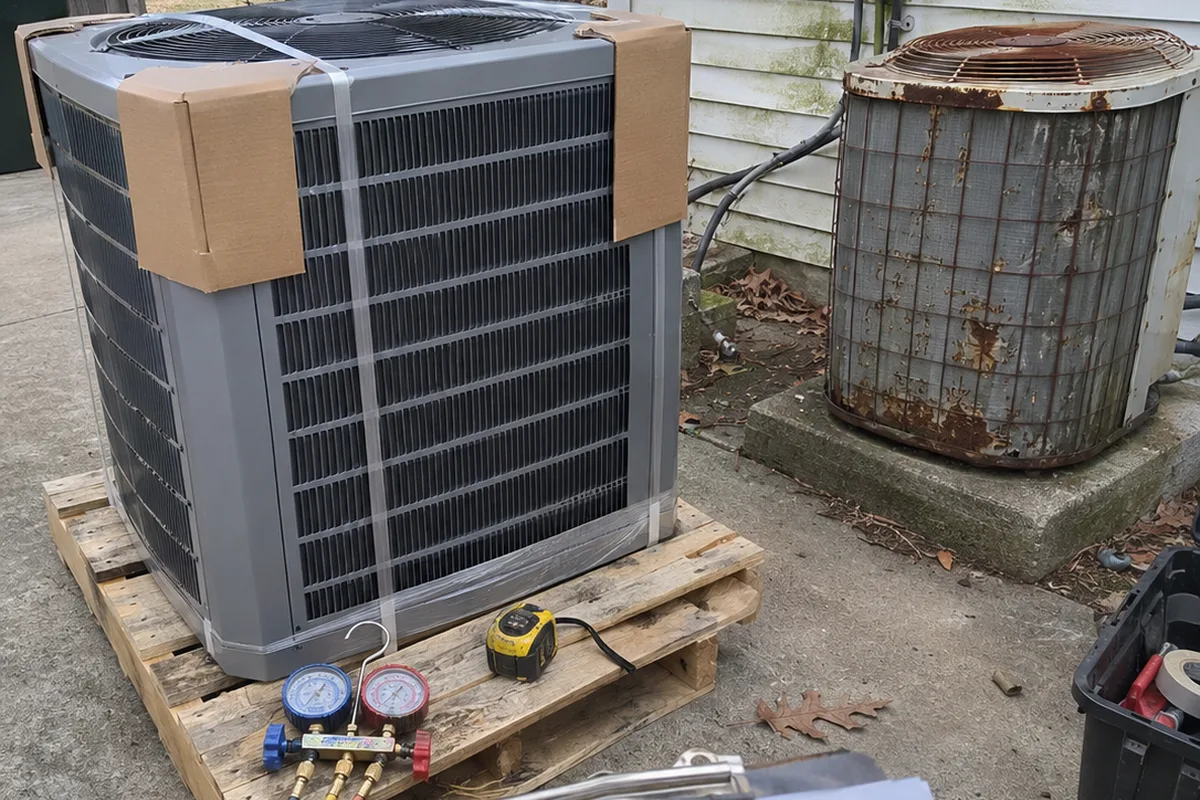
TL;DR: Pick a written policy before the online-equipment call comes in. If you install it, use signed terms covering workmanship, equipment warranty claims, labor pricing, and the manufacturer’s current warranty rules.
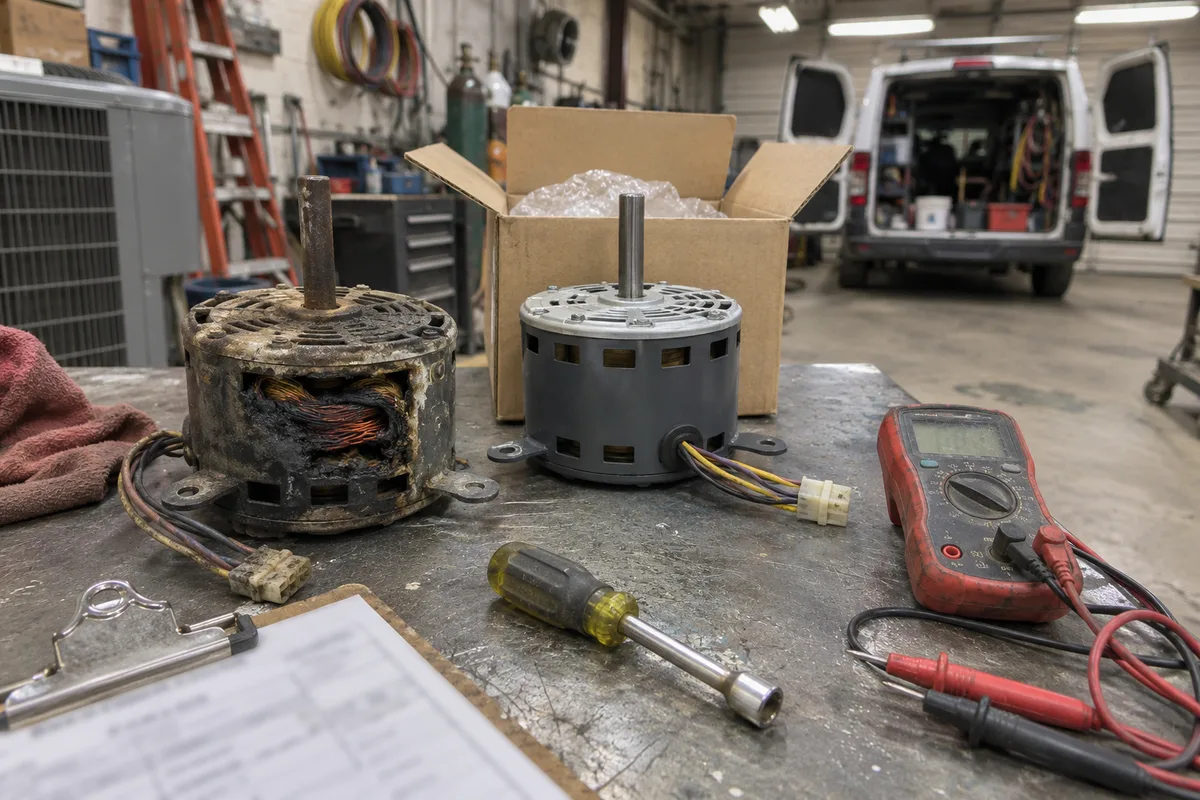
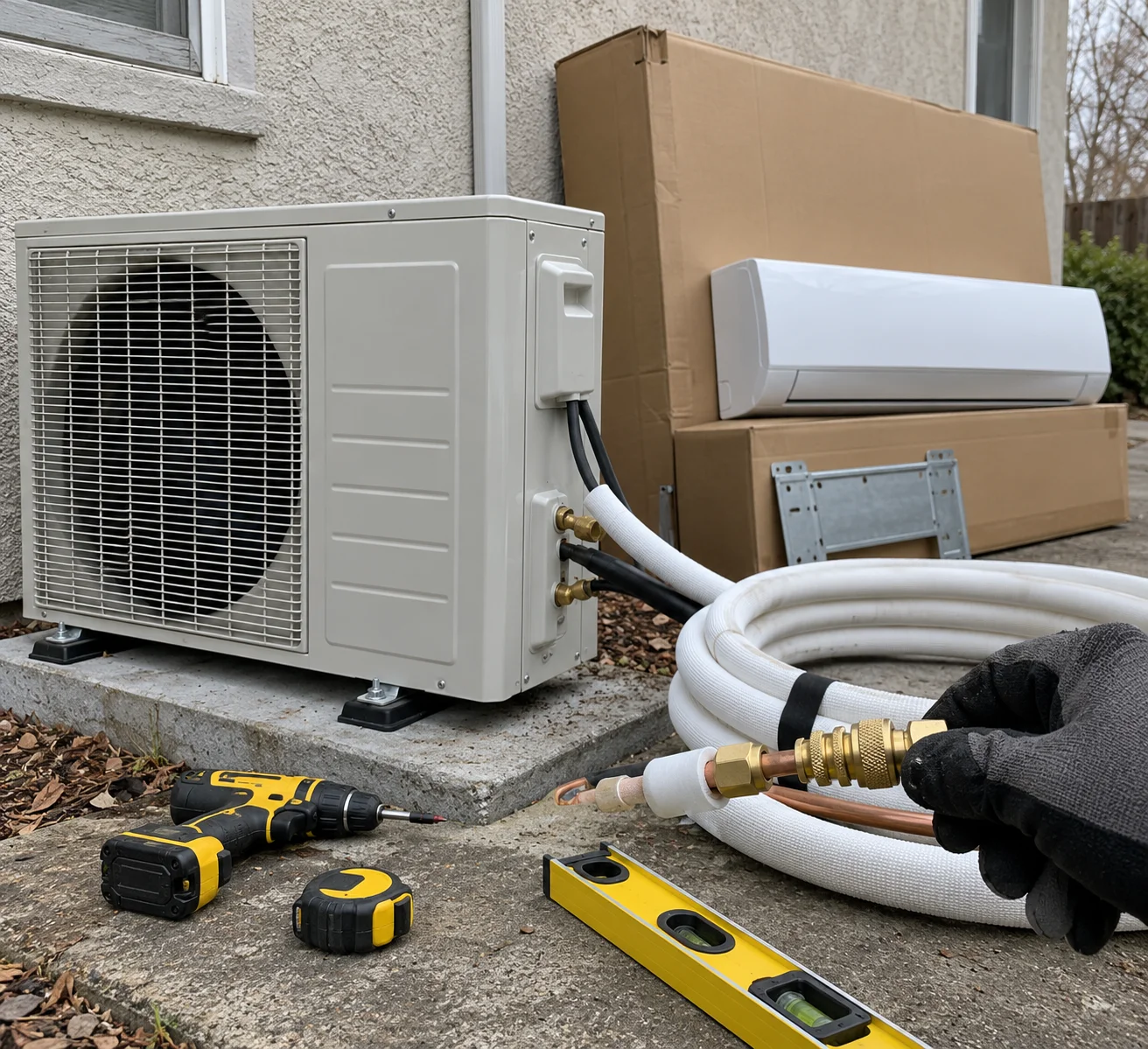
A common version of this call starts with relief. The homeowner says they “found a deal” and only needs “someone to hook it up.” Then you learn they do not know the model number, or whether the new unit matches the old one.
Your answer cannot be improvised. Decide whether you will install homeowner-provided equipment, then give the person answering the phone the exact policy.
Goodman does not ban every online purchase
Goodman’s posted “Policy Concerning Online Sales to Consumers” says no warranty coverage is offered on Goodman equipment purchased online, through web-based auctions, by telephone, or through other electronic means unless the unit is installed by a dealer following all applicable federal, state, and local codes, policies, and licensing requirements.
That is conditional on who installs the equipment. It is not a flat ban on every online buyer.
Goodman says the policy is necessary to make sure the equipment is installed properly. The company also says noncompliance could lead to violations of law punishable by fines. The posted page has a 2022 footer and no date on the policy itself.
The same company’s FAQ says that after registration, “you are free to use any licensed contractor to maintain your system and perform work in accordance with the limited warranty.” That covers maintenance and warranty work after registration. It does not settle the question of online purchases.
Warranty terms differ by brand and by document. Read the actual warranty for every brand you sell before agreeing to the job. The registration window can also affect coverage, as explained in the registration window that doubles a warranty.
Contractors have two reasonable answers
Some contractors decline the work because the installer owns the outcome in the homeowner’s mind.
Christopher Roth, president of Climate Control Experts in Phoenix, told ACHR News in 2017, “we have decided not to install owner-provided equipment for one simple reason: warranty responsibility.” He added, “It’s a blurry line, and we don’t want to be in the middle.”
Kim Madden, vice president of Custom Climate Heating & Air in Mt. Pleasant, South Carolina, made the customer-accountability point plainly. If you install the system, customers “will hold you accountable for the quality and performance of that system regardless of who provided the equipment.” She also said most manufacturers will not honor warranties when the equipment was not bought through the regular distributor-to-dealer channel.
That side of the argument has three practical concerns. You own the result even if someone else bought the box. Warranty fine print can leave you in the middle. The equipment margin is gone.
The other side says customers will buy online either way. A refusal sends the job to another contractor. Labor can be priced to cover the lost equipment profit, and the visit can create an opportunity to sell a maintenance agreement.
David Borowski of Direct Energy’s Success Academy argued that contractors are “not going to influence or change the course of this business.” He said installation can gain customers without added marketing cost and create opportunities for accessories, maintenance agreements, and extended warranties.
He also cautioned that most OEM warranties default to a five-year parts warranty when products are sold online. His recommendation was a new sales contract that either omits warranty service or posts a fee for optional warranty coverage.
Brian Feenie of Clyde S. Walton Inc. said contractors can recoup lost equipment profit by raising labor charges.
The poll points to terms, not silence
An ACHR News reader poll titled “Homeowners who buy online” received 1,571 votes. It was an unscientific reader poll with no stated date.
The results were:
- “Politely decline”: 27%, or 431 votes
- “Do the install”: 15%, or 229 votes
- “Do the install with a warranty disclaimer”: 58%, or 911 votes
The poll does not prove what your shop should do. It does show why a written policy matters. Most respondents chose installation with terms attached, while others chose a clear refusal.
If you decline, say so before scheduling a truck. If you install, put the terms in front of the homeowner before anyone touches the unit. The same basic policy parts apply either way: what you will do, a labor-only warranty on your workmanship, the homeowner’s responsibility for equipment warranty claims, and a signed agreement.
The phone call should quote the visit and the scope you can actually confirm, not promise a repair outcome from incomplete information. See why you should quote the visit, not the repair, on phone calls.
Give the answerer three questions
Write the policy once. Give it to whoever answers the phone.
The answerer should ask:
- Who supplied the equipment?
- What brand and model is it, if known?
- Is the homeowner replacing a unit that is not working right now?
The third question separates a planned replacement lead from an emergency call. It also tells you whether the homeowner has time to confirm the model, match the equipment, check permits, and review warranty terms.
The first two questions expose the biggest unknowns early. A homeowner who bought the equipment may not know whether the indoor and outdoor components match. Do not quote a full installation from a description that leaves those facts open.
Your policy should also state that you will check the manufacturer’s current warranty terms and local licensing and permit rules before agreeing to the work. If the job moves forward, the customer signs before installation begins.
If the homeowner is replacing a failed furnace or air conditioner, treat the call as a replacement lead. The 19-year-old furnace call and replacement quotes show why the first conversation needs a clear path to the next step. Deposit rules may also apply in some states, as covered in the HVAC replacement deposit rules.
Make the policy part of every after-hours call
Dial 72 answers 24/7 and texts the owner a call summary after each call. A call about online equipment can be flagged as a replacement lead.
Give the answerer your policy line and the three questions. Then the text summary can arrive with who supplied the equipment and what model the homeowner reported, before anyone quotes.
That is the change to make this week: choose decline or install-with-terms, write the policy, train the answerer to use it, and require the customer’s signature before work starts. When the caller says, “I already bought the unit online,” your shop should already have an answer.