TL;DR: The deduction follows the date equipment starts working in the business, not the date you sign paperwork or receive an invoice. For tax years beginning in 2026, Section 179 allows up to $2,560,000, with the deduction reduced once qualifying property exceeds $4,090,000.
The first working day controls the deduction
Dec. 31, 2026 is about six weeks away. If you are planning to buy a service van, recovery machine, vacuum pump set or other tool, the date that matters is when the item is placed in service.
That means the deduction follows the date the item starts working in the business. A van on order that arrives Jan. 5 belongs to the next year. Your CPA should confirm how the rule applies to the specific purchase and your business.
The IRS says depreciation starts when you first use property in your business. The same timing applies when deciding which taxable year gets the Section 179 deduction. Signing the purchase order in December does not decide the year by itself.
The IRS discusses this timing in the Instructions for Form 4562.
The 2026 Section 179 ceiling is $2,560,000
The One, Big, Beautiful Bill Act, Public Law 119-21, signed July 4, 2025, raised the Section 179 expensing limits.
For tax years beginning in 2026, the maximum Section 179 deduction is $2,560,000. Section 179 lets a business deduct the cost of qualifying equipment in the year it is placed in service instead of depreciating that cost over several years.
The limit starts phasing down when the total cost of Section 179 property placed in service in 2026 exceeds $4,090,000. The deduction is reduced dollar for dollar by the amount above that threshold, and the reduction cannot take the deduction below zero.
For a shop with 1 to 15 trucks, those ceilings are far above what the business usually buys in one year. The ceiling is rarely the constraint. The purchase date, classification and the business’s taxable income (see what small HVAC companies actually make) are more likely to decide how the deduction works.
These figures come from IRS Revenue Procedure 2025-32, section 4.24.
A sport utility vehicle has a separate $32,000 limit
The same IRS section caps the cost of any sport utility vehicle that can be taken into account under Section 179 at $32,000 for 2026.
Do not assume every work vehicle falls into that category. A heavy pickup or van is not necessarily an SUV for this purpose. Ask your CPA how the specific vehicle is classified before you treat the full purchase price as Section 179 property.
The classification question matters before you compare a new vehicle with other purchases, decide how much to finance or build the year’s equipment list. Keep the vehicle paperwork with the purchase records so the CPA can review the actual vehicle and its use.
If you are also reviewing how your shop tracks fixed assets, your accounting software and records should show the purchase date, delivery date and date the item first went to work.
A box on the shop floor is not the same as in service
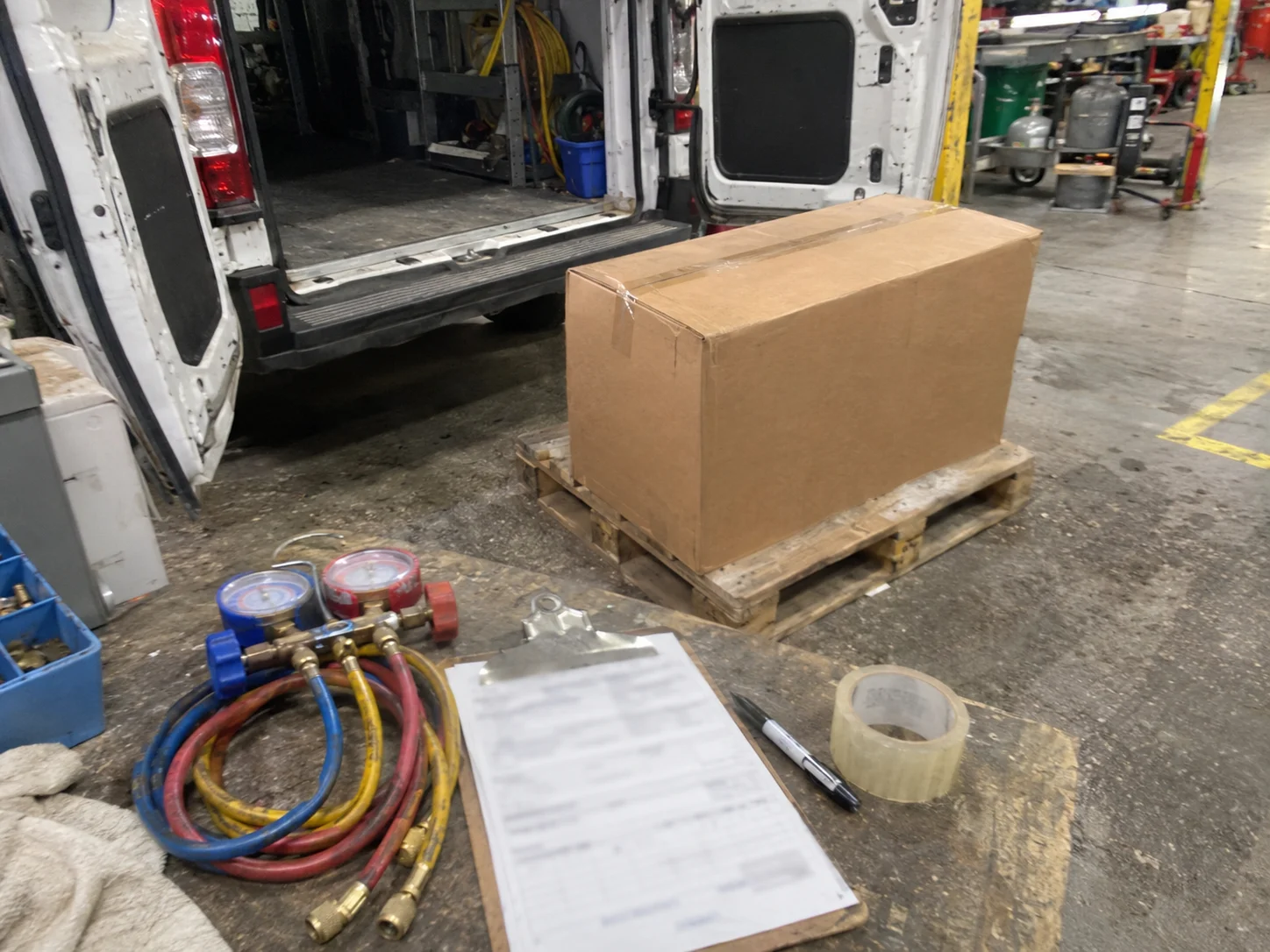
A pattern worth watching for in small shops is the owner finally finding a quiet hour for paperwork in the same week the new recovery machine is still in a box on the shop floor.
A unit that is boxed, unused and not yet on a job is not yet in service in the plain language of the IRS wording. The simple habit is to write down the date each purchase was first used on a real job.
For example, if the machine arrives in December but stays boxed until the first January call, the January use date may put it in the next taxable year. If the machine is used on a real job in December, record that first-use date and give it to the CPA. Do not rely on the invoice date or a memory six months later.
The same recordkeeping applies to a van. Keep the delivery date, then record the first date it was used in the business. That may also help with stocking the van as part of putting it into regular service.
Ask the CPA these questions before buying
Before year end, take the purchase list and the in-service records to your CPA. Ask:
- Is this vehicle a sport utility vehicle for the Section 179 rules, or is it classified another way?
- Should the business consider Section 179, 100% bonus depreciation, a lower bonus allowance or regular depreciation?
- Does the business’s taxable income limit the Section 179 deduction?
- Does financing instead of paying cash change anything for this purchase?
- What date does the CPA want documented as the placed-in-service date?
- Should the file include the delivery date and the first-job date?
- What state tax rules apply?
The Form 4562 instructions say the OBBBA reinstated the 100% special depreciation allowance for certain qualified property acquired and placed in service after Jan. 19, 2025. A taxpayer can elect a lower allowance for the first tax year ending after that date. Property acquired before Jan. 20, 2025 and placed in service in 2025 was limited to 40%.
The right choice depends on the purchase, the business and the tax return. This is planning information, not tax advice. Your CPA will check the taxable income limit and the treatment that fits the shop.
Do the paperwork while the purchase is still fresh
Owners who spend December evenings on paperwork can read Dial 72 call summaries by text in one pass instead of listening to voicemail. Dial 72 answers a shop’s calls 24/7, texts the owner a short call summary after every call and flags likely replacement leads.
A flagged replacement lead is the kind of job that justifies the equipment the shop is buying. It also gives you another reason to keep the purchase and first-use records tied to the work the shop actually performs.
The busiest months for calls are not the quiet months for paperwork. Before Dec. 31, list every planned purchase, confirm when each item will actually start working, save the delivery and first-job dates, and send the list to your CPA. Then review related planning, such as replacement jobs and recurring revenue, while the records are still current.