
TL;DR: A no-show is often a reschedule that reached nobody. Capture access details at booking, remind the customer the day before, and give them a live way to reschedule before the truck rolls.
Fall tune-up bookings create the empty slots you are trying to prevent
Urgency predicts attendance. A customer with no heat is waiting at the window. A heating tune-up booked weeks ahead in September for mid October has no urgency, and that appointment is easy to forget.
Fall tune-up season fills your calendar with low-urgency visits booked far in advance. Those are the appointments most likely to go empty. The fix starts before the appointment reaches your dispatch board.
Use three labels for three different problems:
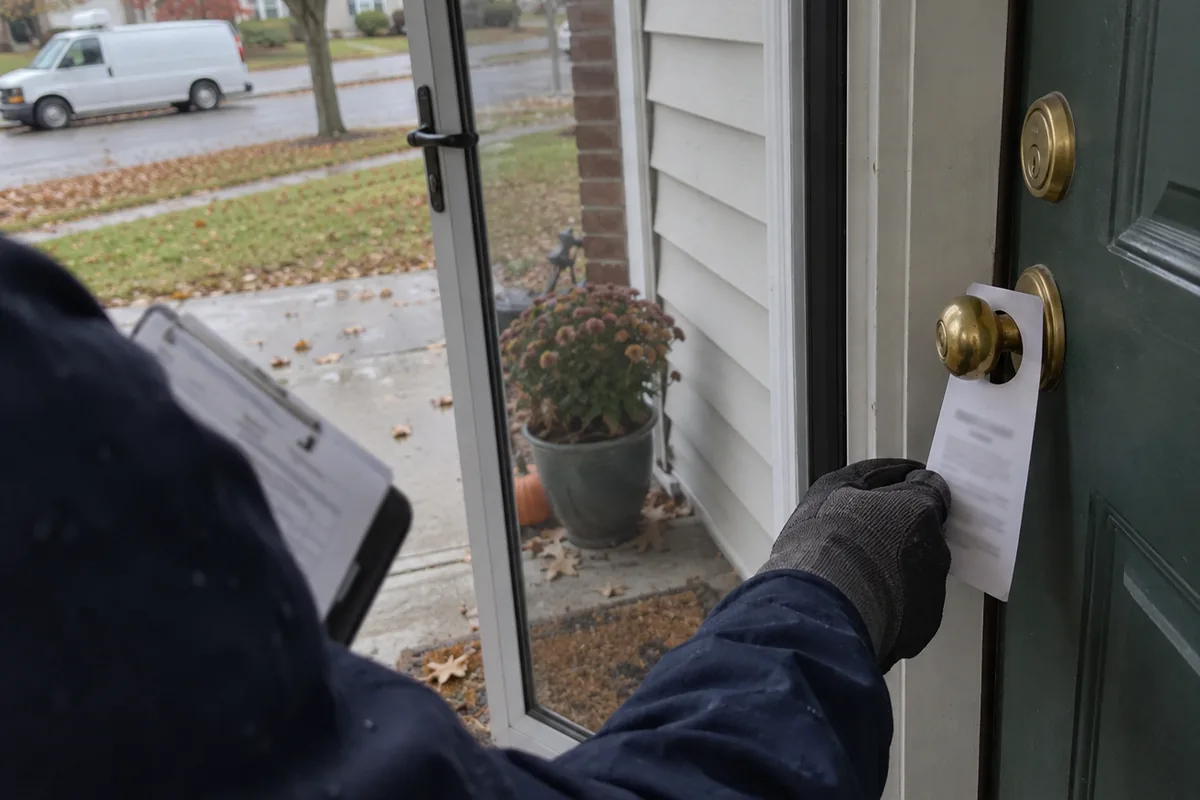
- A no-show means the tech arrives and nobody is home or nobody answers the door.
- A late cancel means the customer cancels after the schedule is built for the day.
- A reschedule means the customer still wants the visit, just not at that time.
A shop that calls all three a no-show cannot fix any of them. A missed no-heat call has a different cost and response than an empty tune-up slot. See what a missed no-heat call costs when you are setting your office priorities.
Booking details decide whether the visit can happen
Ask the questions that determine whether your tech can actually do the job while the customer is still on the phone.
Confirm the arrival window. Ask who will be home and whether that person is an adult who can authorize work. Get gate codes and ask about dogs. Confirm where the equipment is located, such as the attic, crawl space, garage, or closet, and whether the equipment is reachable.
Capture the best number to text. Then send a written confirmation of the date and arrival window right away.
This is also when you state your missed-appointment policy. If your shop charges a trip fee for a missed appointment, tell the customer at booking and put it in the confirmation text. Set your own fee, but do not make the first mention at the door.
Your booking rules also need to be clear to anyone answering the phone. The questions to prepare an AI receptionist include the rules and details callers need before an appointment is placed on the calendar.
A reminder should make rescheduling easy
Send a reminder the day before. Tell the customer to reply or call if the time no longer works.
The point is not to guilt the customer into keeping the appointment. The point is to surface the reschedule before the truck rolls. A simple reply gives your office a chance to move the visit and fill the opening.
Send an on-the-way text when the truck leaves for the stop. That message should come from the tech or the office. It gives the customer one last clear notice that the visit is happening now.
When shops line up empty slots against their call logs, the same shape shows up. The reschedule call came in after hours the night before, or before 7 in the morning on the day of the visit, and it went to voicemail or rang out. The customer did not cancel on purpose. They tried once, got nobody, and figured the shop would sort it out.
The after-hours call can save the next morning’s slot
The reschedule call usually comes when the office is closed. The homeowner checks a work schedule in the evening or calls early the morning of the visit. If nobody answers, many customers do not leave a message or call back. They simply are not home.
An answered reschedule call turns a dead truck roll into an open slot the shop knows about in advance. Review ways to cover the phone after hours against the hours when these calls reach you.
Bella, Dial 72’s AI receptionist, answers calls 24/7, including the 9 p.m. “can we move tomorrow” call. She books directly into the shop’s calendar while the caller is on the line, captures details, and sends a confirmation text to the caller. After every call, a call summary is texted to the shop, so the office sees first thing that a slot opened up. On the Growth plan, appointment reminders and two-way texting are included.
The tech needs one wait policy at the door
Give your tech a written policy for every missed appointment. The steps should be the same each time:
- Knock.
- Call.
- Send a text.
- Wait the set number of minutes your shop chooses.
- Leave a door hanger or note.
- Record the time in the job record.
Do not leave this to personal judgment at the door. Consistency lets the office apply a trip fee fairly and speak with the customer calmly later. It also gives you a clear record of what happened when the customer says nobody came.
A flex list gives the open slot somewhere to go
Keep a short flex list. Put customers on it when they say any day this week works, including maintenance plan members waiting on a tune-up and customers who asked for an earlier slot.
When a reschedule or late cancel opens a spot, call down that list first. These customers have already given you permission to look for a different opening. You are not starting from a cold call while your truck waits.
The flex list works best when the office updates it during booking. Ask whether the customer has flexibility before you close the call, then record the answer where dispatch can see it.
Your log should show why the slot went empty
Track each empty slot as one of three labels: no-show, late cancel, or reschedule. Add how far ahead the appointment was booked and how the customer reached you.
A few weeks of simple logging can show whether the issue is far-out tune-up bookings, a particular lead source, or the reminder step. Do not record only that the truck rolled away without a job. Record the point where the appointment broke.
Review the log with your call records. If reschedule calls keep landing after hours, the office needs after-hours coverage. If customers forget far-out tune-ups, change the booking and reminder process. If access details are missing, fix the booking questions.
A missed maintenance visit is a relationship to keep
Treat a maintenance plan member who misses a tune-up as a relationship to keep, not a fee to collect. The maintenance visit is what keeps the agreement renewing.
Call the member, make rescheduling easy, and place the visit on the calendar with the same access details and reminder steps. Your team should also know what the maintenance visit includes. Use what a maintenance visit should include to keep that work clear for the office and the tech.
Start this week by adding the booking questions, the day-before reminder, the on-the-way text, and the written door policy to your process. Label every empty slot correctly, answer the after-hours reschedule call when it comes in, and call your flex list before the truck’s next opening goes unused.
