
TL;DR: Under the 2021 IECC, every supply and return duct outside conditioned space needs R-8 insulation when it is 3 inches in diameter or larger. The same R-8 and R-6 numbers remain in the 2024 IECC, but the section is renumbered to R403.3.3.
The attic is no longer the dividing line for duct insulation
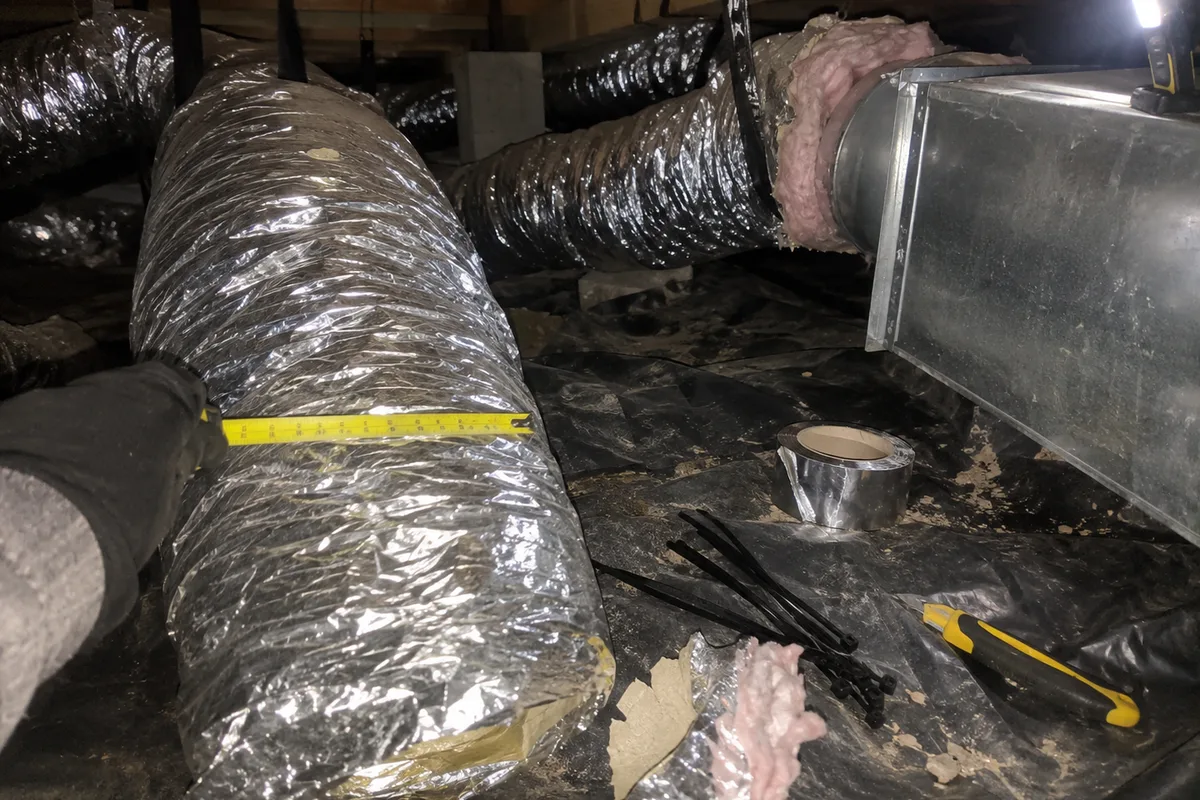
A crawl space, garage, or unconditioned basement duct now gets the same insulation requirement as an attic duct under the 2021 IECC.
Section R403.3.1 covers supply and return ducts located outside conditioned space. Ducts 3 inches in diameter and larger need at least R-8. Ducts smaller than 3 inches need at least R-6.
The old location split is gone. Under the 2018 IRC and 2018 IECC, attic ducts 3 inches and larger needed R-8, but ducts in other portions of the building only needed R-6. Smaller ducts had separate requirements too. The exception was for ducts or portions of ducts completely inside the building thermal envelope.
The 2024 IECC keeps the same R-8 and R-6 numbers. It moves the requirement to Section R403.3.3. If an inspector cites R403.3.3, that is the same current insulation rule under the newer section number.
This is separate from the question of whether a duct is considered inside conditioned space. That term has its own code definition and conditions. The details belong with duct leakage and envelope questions, covered in this duct leakage testing guide.
The enforceable version is the code edition and local amendments your jurisdiction adopted. Some places still use the 2018 split. Others use the 2021 or 2024 code. Check before you quote a section to an inspector.
R-6 flex is not automatically fine in a crawl space
Crews still carry the old numbers in their heads. On duct replacement bids, the material line often says R-6 flex for crawl space or garage runs and R-8 only for attic runs. That is usually because the shop pricing template was set up years ago and never changed after the jurisdiction adopted a newer code.
The price gap shows up at inspection, not at the bid.
A new duct installed as part of an alteration must comply with Section R403 under 2021 IECC Section R503.1.2. That includes a duct replacement or a new run installed during a change-out. The rule is written for ducts newly installed.
Do not confuse duct insulation with refrigerant piping insulation. Refrigerant piping has a separate code section, covered in this suction line insulation article. Duct insulation also does not replace proper sizing and layout. Use Manual D duct design guidance for that part of the job.
The printed product rating is the number the inspector can use
The insulation has to identify its rating at the installed thickness. Under 2021 IRC M1601.3, item 4, external duct insulation and factory insulated flexible duct must be legibly identified at intervals no longer than 36 inches.
The marking must show the manufacturer, the R-value at the specified installed thickness, and the flame spread and smoke-developed indices.
Nonreflective duct insulation is rated by the insulation itself. Air films, vapor retarders, and other duct components do not count toward that R-value.
Installed thickness is not always the same as the thickness printed in a catalog. Duct wrap is assumed to be compressed to 75 percent of its nominal thickness. That is 25 percent compression. For factory made flexible duct, the installed thickness is the actual outside diameter minus the nominal inside diameter, divided by two. Duct board, duct liner, and rigid factory made duct use the nominal thickness.
The practical question is simple: can the inspector read the print line on the jacket?
A recurring sight on replacement work is flex with the outer jacket pulled back and cut at every collar. The only printed R-value left is on a scrap in the trash. Keep the identification visible. Photograph it before insulation or drywall covers it.
R-8 flex also takes more space than R-6 flex with the same inside size because its outside diameter is larger. That matters in a tight joist bay or attic. Price and plan the space before the crew is standing over an opening with the wrong material.
Cooling ducts in unconditioned spaces need more than an R-value
A cooling supply duct passing through an unconditioned space where condensation can occur needs a vapor retarder on the exterior of the insulation under 2021 IRC M1601.4.6. The retarder must have a rating of no more than 0.05 perm, or it must be aluminum foil at least 2 mils thick.
That is why a torn flex jacket in an attic can drip on the ceiling in summer. The insulation number may be correct, but a damaged outer jacket still creates a condensation problem.
Garage runs add a separate material requirement. Under 2021 IRC M1601.4.9 and R302.5.2, ducts in a garage, along with ducts penetrating the walls or ceilings between the dwelling and garage, must be at least No. 26 gauge sheet steel or another approved material. They must have no openings into the garage.
Ducts buried beneath a building must either meet the insulation rule or use an equivalent thermal distribution efficiency method. Underground ducts using that method must be listed and labeled to show the R-value equivalency.
A comfort complaint can point the tech toward the ductwork
When a caller says, “the AC runs, but upstairs never gets below 78,” Bella, Dial 72’s AI receptionist, answers 24/7. She books the next open slot straight into the shop’s calendar and flags a possible airflow issue for the tech to check first. A call summary is texted to the shop after every call.
Uninsulated or underinsulated duct in an unconditioned space is one possible finding. Walking in already knowing this is an airflow and comfort call means the tech brings the flashlight and tape measure for the attic and crawl space, not just gauges. See how it works.
Equipment access can affect what the crew can inspect and repair. Keep the access rules separate from the insulation rule with this attic and crawl space equipment access guide. Also check the adopted code edition guide before relying on the latest model code.
Change these five things on the next job
- Update the quote template so every run outside conditioned space prices R-8, not just attic runs.
- Know which code edition your jurisdiction adopted before quoting a section to an inspector.
- Keep the printed R-value visible on flex and wrap, and photograph it before insulation or drywall covers it.
- Check garage runs for the No. 26 gauge sheet steel or approved material requirement before choosing flex.
- Repair torn vapor jackets on cooling supply ducts in attics.
