TL;DR: Connecticut employers must identify the type and specific location of workplace electronic monitoring in their notices starting October 1, 2026. New hires must also receive a plain language statement before starting that identifies prohibited activities that may be monitored without prior notice.
Connecticut’s notice must name the monitoring location
On October 1, 2026, Connecticut expanded its workplace electronic monitoring notice law.
Connecticut General Statutes Section 31-48d has required prior written notice since 1998 when an employer electronically monitors employees. Posting the notice in a conspicuous place counted.
The expanded rule adds three requirements.
First, the written notice must identify the types of monitoring and the specific locations on the employer’s premises where monitoring may occur.
Second, the notice must be posted in a conspicuous place, including the specific location where monitoring may occur.
Third, employees hired on or after October 1, 2026 must receive a plain language written statement before they start work. That statement must identify activities the employer prohibits and may monitor without prior notice.
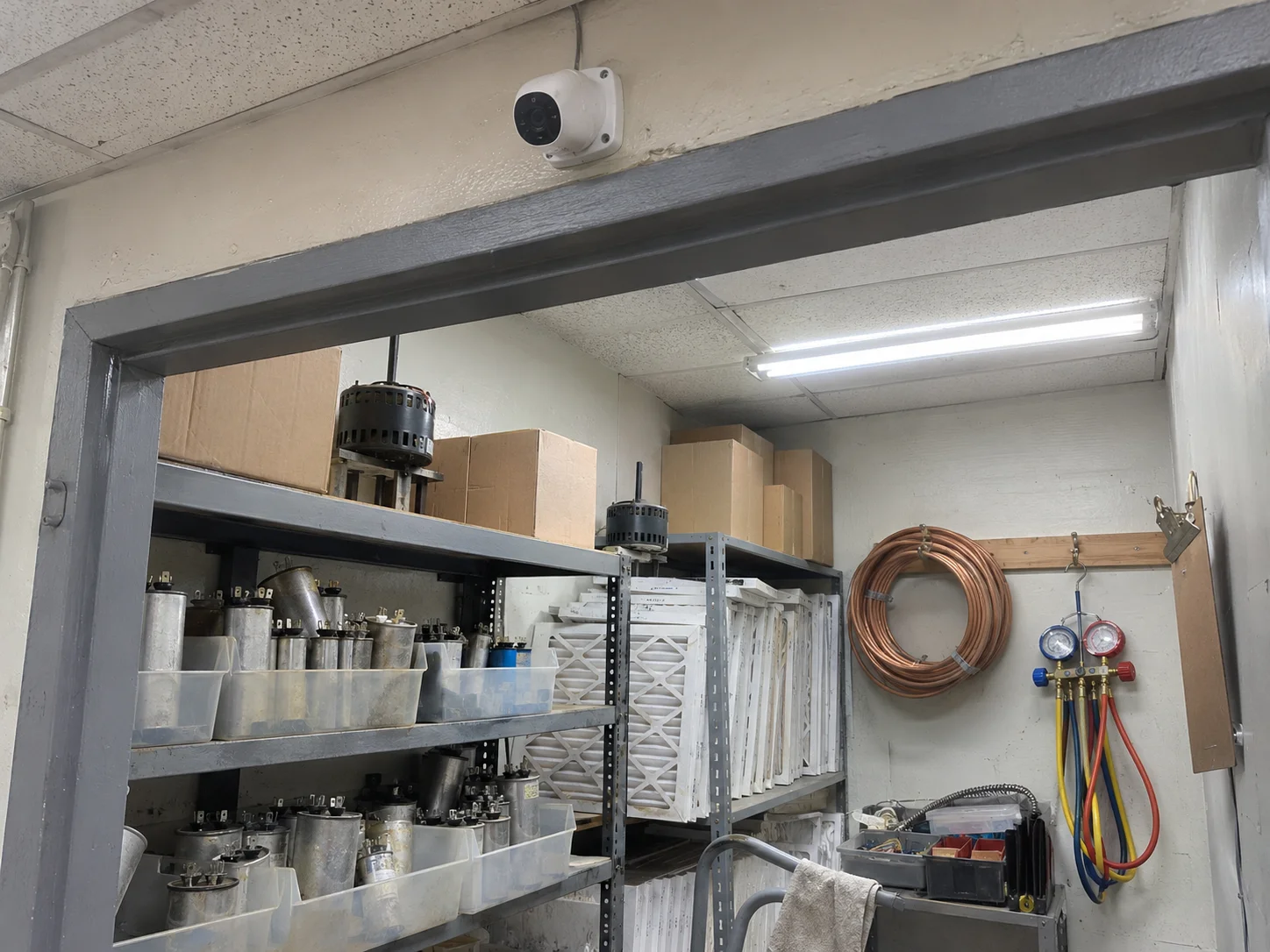
For a small HVAC shop, “the workplace” may include more than the front office. It may include the parts room, warehouse, yard and shop entrance.
Connecticut’s definition covers more than cameras
The statute defines electronic monitoring as the collection of information on an employer’s premises concerning employees’ activities or communications by any means other than direct observation.
The definition lists computers, telephones, wires, radios, cameras, electromagnetic systems, photoelectronic systems and photo optical systems.
That can reach a camera over the parts room door, a camera pointed at the yard gate, a door badge reader, or a punch in app used on technicians’ phones when those systems collect information on the premises.
Security collection in common areas held out for public use is excluded.
There is also an exception when the employer has reasonable grounds to believe employees are violating the law, violating the legal rights of the employer or another employee, or creating a hostile workplace, and monitoring may produce evidence of that conduct. In that situation, monitoring may occur without prior notice.
The Connecticut Department of Labor has published a sample notice. Check the final enacted wording against that notice before posting. The committee reported text and the Day Pitney law firm summary differ slightly on the exceptions.
The Labor Commissioner may levy civil penalties after a hearing. The maximum is $500 for a first offense, $1,000 for a second offense, and $3,000 for a third and each later offense.
Your first step is a one page monitoring inventory
A typical small shop has a camera over the parts room door, a camera on the yard gate, a door badge reader, a punch in app on technicians’ phones, and a van GPS unit.
Each system may have been bought one at a time by a different person. None may be listed in one place.
Start with a one page inventory. Write down what the shop collects and where it collects it.
List every camera, scanner, time clock and tracker. Add the location, the purpose, and who can see the information.
That same paperwork habit matters in other parts of the business. Review your technician noncompete paperwork and your OSHA recordkeeping duties while you are checking employee records. If your shop uses install crews, the question of who counts as an employee also matters. See the Department of Labor test for HVAC 1099 install crews.
Van GPS is a separate open question
Connecticut’s definition concerns information collected on an employer’s premises. That matters when the system is monitoring a shop, yard, warehouse or office.
Nothing in the Connecticut text says the rule reaches a van while it is on the road. Do not treat the new Connecticut notice law as a clear answer about van GPS.
New York and Delaware also have electronic monitoring notice laws, but their wording is different.
New York Civil Rights Law Section 52-c(2) applies to private employers with a place of business in New York that monitor or intercept telephone, email or internet access or usage through an electronic device or system. The employer must give written notice upon hiring, receive a written or electronic acknowledgment, and post the notice conspicuously.
The New York statute does not name GPS, vehicles or location tracking.
Delaware law says an employer may not monitor telephone, email or internet usage unless it gives a one time written or electronic notice with employee acknowledgment, or a daily electronic notice when the employee uses employer email or internet. The civil penalty is $100 per violation.
Delaware’s statute does not name GPS or vehicles either.
No source we reviewed addressed whether vehicle GPS falls under the New York or Delaware wording. That remains an open question. If your shop has a van tracking policy, write it down and have an employment lawyer in your state check it.
Put phone review into the notice when you actually review it
Dial 72 answers a shop’s calls 24/7 and texts the owner a call summary after every call. Dial 72 does not track employees or vehicles.
If a manager uses those summaries to review how the phone was handled, describe that review in the monitoring notice. Say plainly what the shop reviews.
A notice that lists everything the shop looks at is easier to defend. This is a shop practice suggestion, not a legal requirement and not a claim that Dial 72 triggers any of these statutes.
If your shop needs after hours coverage, review the after hours phone coverage options alongside the systems listed in your inventory.
Take these five shop practice steps this week
This is a shop practice judgment, not legal advice.
-
Inventory every camera, scanner, time clock and tracker.
-
For a Connecticut shop, write the notice with the monitoring type and location, post it at each location where monitoring may occur, and add the new hire statement.
-
For New York and Delaware shops, add a written acknowledgment to hiring paperwork covering phone, email and internet use.
-
Write the van tracking policy anyway. State what is collected, when it is collected, and who sees it.
-
Have an employment lawyer in your state check the paperwork.