
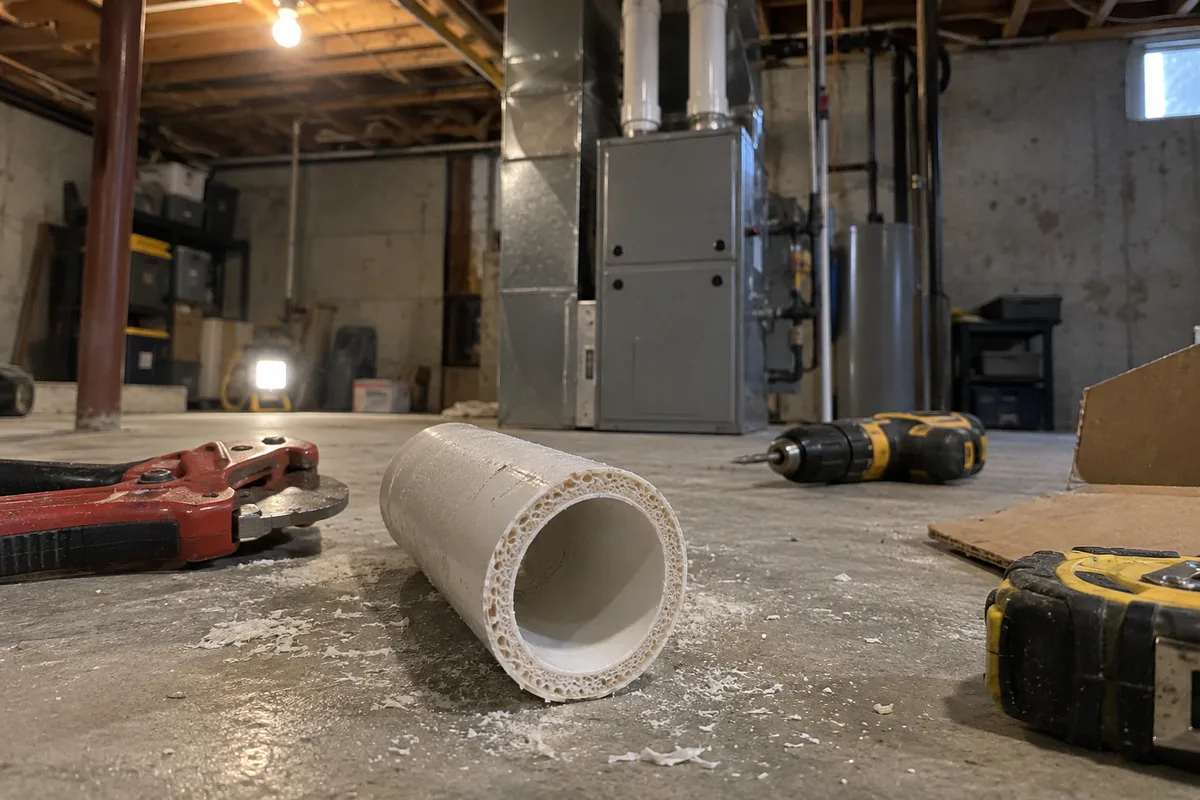
The old condensing furnace is out. The plastic vent looks reusable. It is the right diameter, it runs through the finished basement ceiling or chase, and it does not leak.
Then you read the print line on an exposed section near the furnace. It says cellular core. It may show ASTM F891. A cut end may show the foamed middle layer between solid inner and outer skins.
That is the moment the changeout becomes more than a furnace swap. The pipe that was accepted for the old furnace may not be approved for the new one.
The code does not pick the pipe
2024 IRC Section G2427.4.1, with the same text as IFGC Section 503.4.1, does not provide a general list of acceptable plastic vent pipe. It says the appliance must be listed for use with the venting material, and the appliance manufacturer’s installation instructions must identify the specific plastic piping material.
The pipe must also be labeled to its product standards or listed under UL 1738. The installation manual remains the controlling list for the furnace being installed.
That is the same basic principle behind the manufacturer already made the decision for you. The code sends the material decision to the equipment instructions. Whatever the manual leaves off is not an approved vent material for that furnace.
The standard changed on December 1, 2022
Cellular core PVC is made to ASTM F891. Cellular core is also called foam core. Older condensing furnace manuals commonly listed it as an approved vent material.
The gas furnace design standard, ANSI Z21.47/CSA 2.3, was revised with an effective date of December 1, 2022. The revised standard disallowed ABS cellular or foam core and PVC cellular or foam core in vent systems.
Carrier described the change in Technical Information Communication TIC2022-0011. Carrier says its furnaces are certified to that standard, and that CSA Group asked Carrier to apply the change before July 1, 2022. Carrier removed both cellular core products from the approved vent materials in all current condensing furnace installation manuals.
Allied Air Enterprises made the same change for its brands, including Armstrong Air, AirEase, Ducane, and Concord. Its Product Information Bulletin #394 says cellular core PVC and cellular core DWV pipe are no longer approved for venting on any Allied 90% plus condensing gas furnace effective December 1, 2022.
These are documented changes from two manufacturers. Do not assume every manufacturer uses the same approved list. Read the manual for the furnace going in.
Reusing the old vent is the specific thing that is no longer allowed
The second furnace in a house that already had a condensing furnace is where this gets missed. The tech pulls the old unit, the vent looks perfect, and the print line that nobody had a reason to read before says cellular core or F891.
Carrier says condensing installations performed before December 1, 2022, where the authority having jurisdiction allowed cellular core vent, are considered compliant with the instructions. Carrier also says cellular core is not an approved vent material for any installation performed on or after December 1, 2022.
Allied states the changeout rule directly. Starting December 1, 2022, a new installation changeout using existing cellular core pipe requires the venting to be changed to currently approved vent materials.
The new furnace is a new installation. 2024 IRC M1307.1 requires appliances to be installed according to the conditions of their listing and label and the manufacturer’s instructions. The old furnace manual does not control the new furnace.
The replacement may require more than reconnecting the vent at the cabinet. The existing run may be concealed through a finished basement ceiling, a chase, or an attic. That labor and material do not belong in a quote written as “furnace swap, reconnect existing vent.”
The intake is a different answer
The prohibition described by Carrier applies to the exhaust vent side. Carrier says cellular core ABS and PVC may still be used for the combustion air intake pipe where the authority having jurisdiction allows it.
A vent replacement can also affect the termination work. The new vent still needs a termination location that meets its own clearances, so check where the new vent is allowed to terminate before you carry the old route into the quote.
Solid wall pipe and listed systems remain
The Allied bulletin identifies solid wall pipe and listed vent systems among the remaining approved options. The list includes solid wall Schedule 40 PVC, other specified solid wall materials, specific polypropylene venting systems, and a UL 1738 certified PVC venting system.
That does not make every one of those materials approved for every furnace. The manufacturer’s list for the equipment actually being installed controls.
The code addresses those installation details too. Section G2427.4.1.1 requires plastic pipe and fittings used to vent appliances to be installed according to the appliance manufacturer’s instructions. UL 1738 listed vent systems are installed according to the vent manufacturer’s instructions.
Primer color is the other thing an inspector can see
Where a primer is required, the primer must be a contrasting color. That rule gives an inspector a visible way to see whether a plastic vent joint was primed.
It is not a substitute for checking the approved material. A properly primed joint in cellular core pipe does not make that pipe approved for a new furnace when the furnace manual leaves it off.
Read the print line before the quote goes out
The quickest check happens while the old furnace is still in place. Read the print line on an exposed section of vent near the furnace. If a cut end is visible, look for the foam middle layer between the solid outer and inner skins.
Dial 72 is a 24/7 AI phone receptionist for HVAC shops. When a homeowner calls about an old furnace or asks for a replacement quote, it flags the call as a replacement lead, texts the shop a call summary after the call, and books the visit into the shop’s calendar. It never quotes a price over the phone. A replacement quote booked as a real site visit gives someone the chance to read the print line before the number goes out.
The section numbers here are from the 2024 IRC and the matching IFGC text. Numbering shifts between code editions. Check the edition your jurisdiction actually adopted, then confirm the manual for the specific furnace.
At the quote, read the exposed vent marking. Check the new furnace’s approved vent materials list. If the existing exhaust pipe is cellular core, price a new vent run instead of carrying the old pipe into the installation scope.
