TL;DR: Starting January 1, 2027, a California HOA cannot ban a code-compliant air conditioner or heat pump. The permit remains the gate, especially in older buildings where electrical capacity may not support the equipment.
A California HOA air conditioning law takes effect January 1, 2027. From that date, an HOA cannot stop an owner from installing, replacing, upgrading, or using a cooling system that complies with applicable state and local building codes.
That does not make every HOA installation automatic. If the required electrical, building, or other permit is not granted, the HOA can still stop the work. In an older condo building, that electrical question may decide the job before the board does.
On replacement calls from condos and townhomes, a common pattern in call recordings is that the caller brings up the HOA before price. It is often something like, “I need to check with my board first.” The job then stalls for weeks waiting on the next architectural committee meeting. Those are the replacement leads that quietly die.
What the California HOA air conditioning law voids on January 1, 2027
Assemblymember Chris Ward authored AB 1684. The Governor approved it on September 30, 2026. It became Chapter 887, Statutes of 2026, and adds Section 4738 to the California Civil Code.
The section is part of the Davis-Stirling Common Interest Development Act, which governs HOAs, condos, and planned developments. The bill was not an urgency bill, so California’s normal rule puts its effective date on January 1, 2027. It passed without a single no vote, including Assembly floor passage by 74-0 and Senate floor passage by 38-0.
The law voids any HOA governing-document provision, architectural guideline, deed restriction, or covenant that prohibits or restricts a code-compliant cooling system.
The definition is broad. It includes portable air conditioners, window air conditioners, swamp coolers, other evaporative coolers, cooling fan systems, heat pumps, and any other technology that reasonably creates an internal cooling benefit. The system must meet applicable health and safety standards.
An HOA may not charge the owner a fee tied to the cooling system. It may not require a specific system, equipment type, contractor, or product. It may not claim a rebate, credit, or commission tied to the work. It also may not require removal or block the replacement or upgrade of an existing system.
The permit still decides whether the HOA can stop the work
The practical rule for your shop is simple. Starting January 1, 2027, “the HOA said no” stops being a final answer for a code-compliant install. The permit is the gate.
If the electrical and mechanical permits are granted, a blanket HOA ban does not hold. If a required permit is denied or not granted, the law keeps an exception for the HOA. The HOA may also stop work if it can show that the installation would violate federal, state, or local law.
That makes permit planning part of the sales conversation. Point owners to the heat pump permit fee cap when discussing California permit changes for heat pumps.
For an older condo building, check the unit panel and service, the equipment nameplate MCA and MOCP, and whether the feeder can carry a new heat pump. Use the nameplate MCA and MOCP reference during that check. If the building cannot support the equipment, the permit will not be granted, and the HOA can still say no.
Size the replacement for the condo unit with a Manual J load calculation. A permit plan that shows the equipment, electrical requirements, and load basis gives the owner something concrete to take to the board.
Common area work still creates duties for the owner
The HOA can impose duties when the system affects a common area or an exclusive use common area.
It may require the owner, and later owners of that unit, to pay for damage to the common area or another owner’s unit caused by installing, operating, maintaining, or removing the system. It may require a licensed contractor for installation, maintenance, and repair.
That licensed-contractor requirement does not apply to portable units, window units, evaporative coolers, or systems that do not need a local building permit. The HOA may also require disclosure of the system and those duties to prospective buyers.
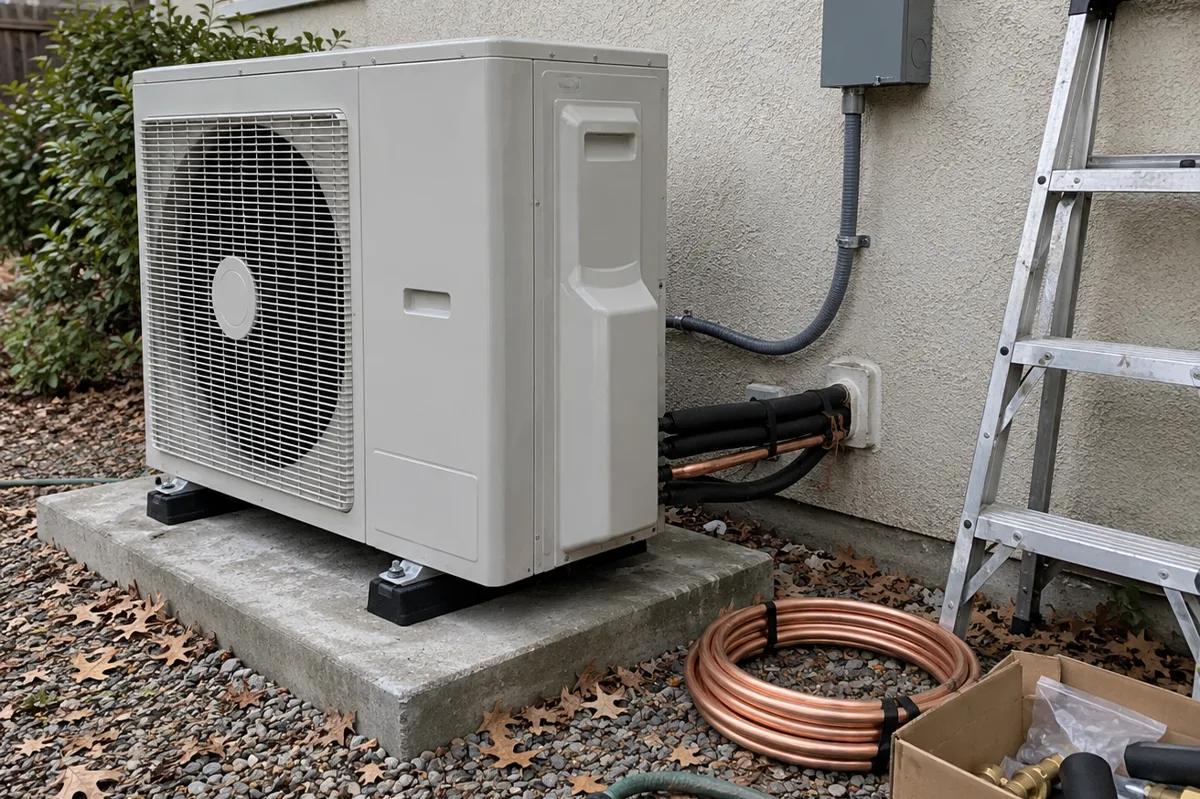
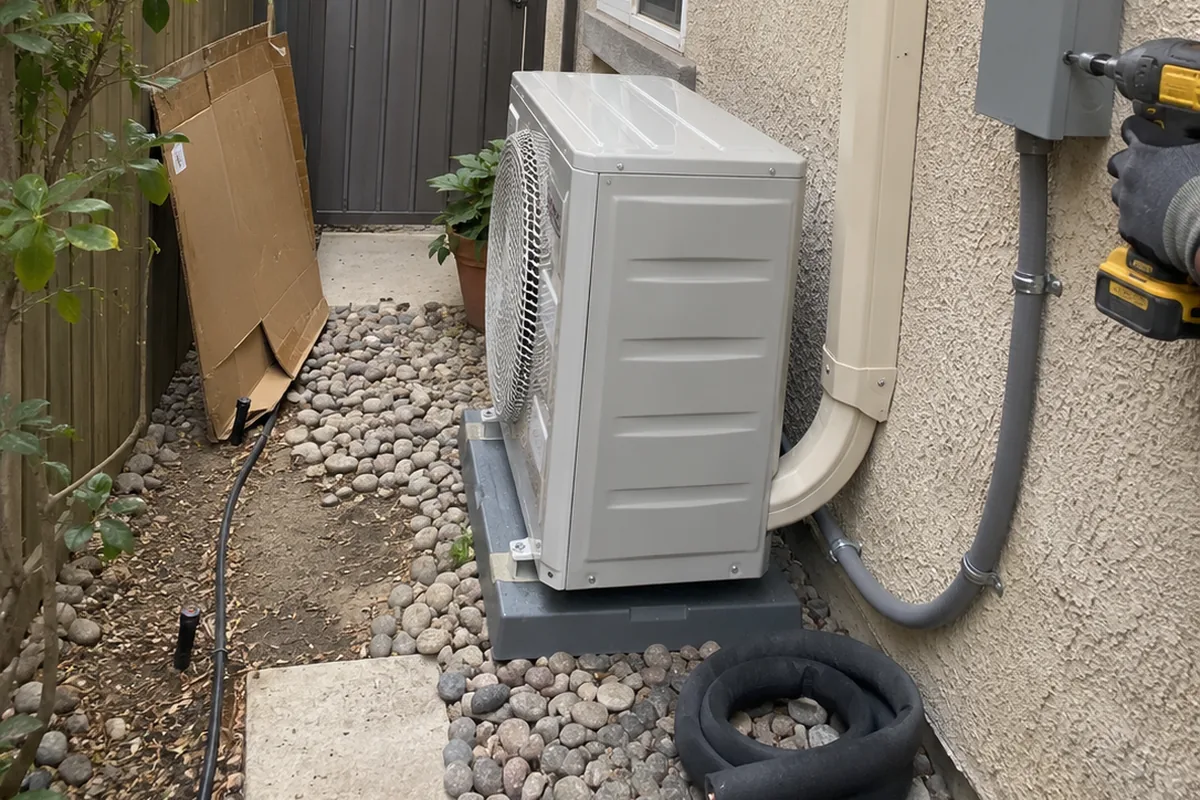
When equipment sits on a roof, wall, or pad, or when a line set crosses common area, put the line set route, penetrations, and condensate disposal in writing. Give the owner a clear document to hand to the board. It helps separate the code-compliant scope from the association’s property concerns.
The HOA cannot steer the job to its preferred contractor or charge the owner a cooling-system fee. A homeowner who lost a job to “board-approved vendor only” may call back after January 1.
HOA groups fought over electrical capacity and shared costs
Supporters framed the bill as a health and safety measure. Assemblymember Chris Ward said staying cool at home is a matter of health and safety, not a luxury. The California Rural Legal Assistance Foundation focused on seniors, children, and people with respiratory illness.
Marin Clean Energy argued that heat-related illness and death affect more Californians directly than any other weather-related hazard. It also argued that heat pumps can help grid reliability through load flexibility.
The California Apartment Association said some HOAs ban visible window units or require a specific contractor. In that view, an owner’s only recourse was a lawsuit that could cost more than the cooling system itself.
Support included AHRI, SMACNA California, the California Apartment Association, Marin Clean Energy, California Rural Legal Assistance Foundation, and Climate Action California.
Opposition came from CAI-CLAC, the California Association of Realtors, and at least one individual HOA, Peninsula Place Homeowners Association. CAI-CLAC first took an “oppose unless amended” position. It asked to preserve reasonable limits involving aesthetics, placement, noise, safety, structure, waterproofing, electrical capacity, and common areas. It also requested architectural approval, owner indemnity, insurance for material risks, and recovery of review costs.
Those requests did not make it into the final law. CAI-CLAC later called the bill “significantly improved,” but kept its central objection. Many associations are 20 years and older and may not have enough electrical capacity for multiple requests. The bill does not say who must upgrade that capacity. CAI-CLAC asked whether it is fair to impose additional costs on all homeowners due to the request of only one.
The final law does not set noise or decibel limits. It does not set aesthetic or placement rules, approval timelines, insurance requirements, or indemnity requirements. Local noise ordinances and building code still apply, so quiet equipment placement still matters.
An HOA that willfully violates Section 4738 owes actual damages plus a civil penalty of up to $2,000. An owner who wins in court recovers reasonable attorney’s fees and costs. Tell owners in a dispute to read Civil Code 4738 or speak with their own attorney. Your job is the code-compliant installation and the permit.
Dial 72 answers every call 24/7 in English and Spanish, books to your calendar, and texts you a summary of each call. It flags replacement leads, so an after-hours caller who says their HOA just blocked a heat pump replacement is flagged with the HOA detail in the text summary. Your estimator can call back with the permit plan instead of letting the lead go to voicemail. See how Dial 72 works.
Quick answers
Can an HOA ban my customer’s air conditioner after January 1, 2027?
Not if the system complies with applicable state and local building codes and receives every permit required by law.
Can the HOA require a specific contractor?
No. It cannot require a specific contractor, product, system, or equipment type.
Can an HOA still reject a heat pump?
Yes, if the required permit is not granted or the work would violate federal, state, or local law.
What should your shop check first?
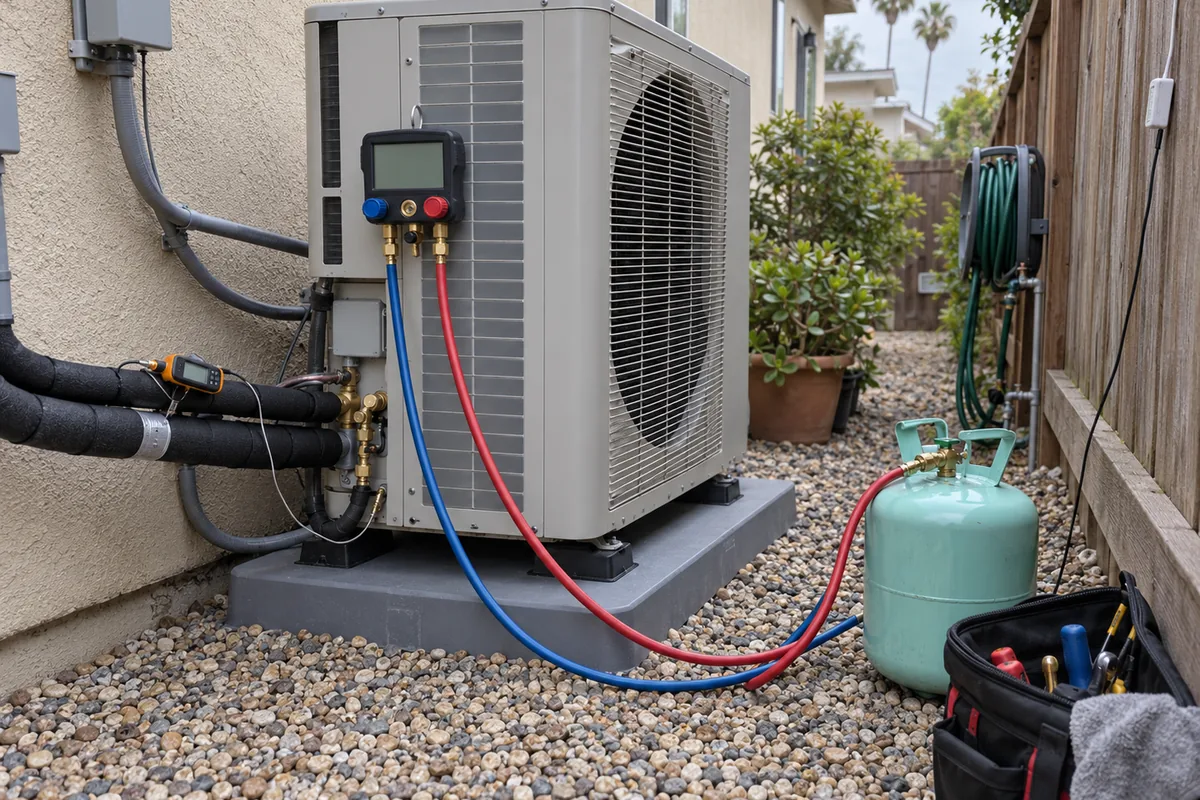
Check the panel, service, feeder, nameplate MCA and MOCP, permit requirements, equipment location, line set route, and condensate disposal before quoting the job.