
A free HVAC CRM can mean two very different products. HubSpot, Zoho CRM, Bitrix24 and EspoCRM are built around a person and a sales pipeline. Jobber, Housecall Pro, Kickserv, ServiceM8, Workiz and ServiceTitan are built around a job at an address.
Neither one is built around the call that has to happen before either record exists. That gap matters more than which of the two categories you end up buying.
A generic CRM remembers the person, not the equipment
A generic CRM treats the contact as the main record. You track a person, a lead, a deal, calls, tasks and messages. That makes sense when the thing you need to find again is a customer and a sales opportunity.
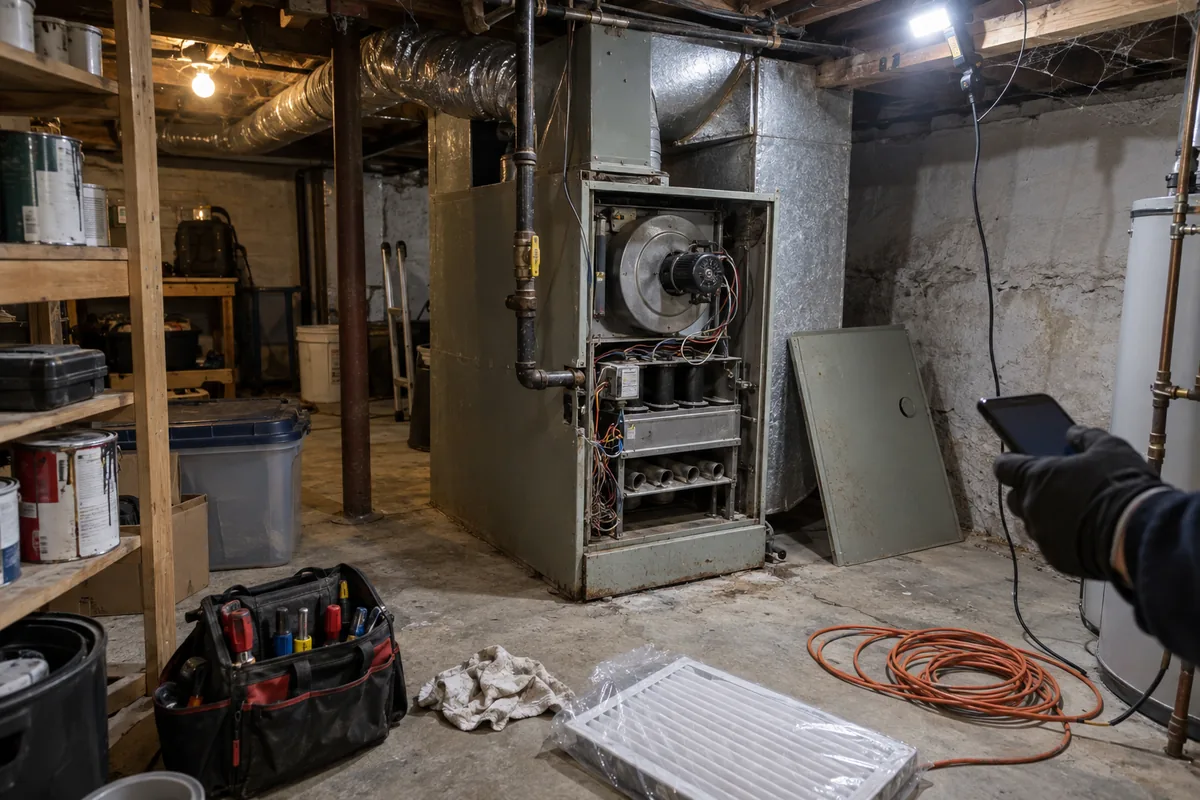
An HVAC shop usually needs to find something else. You need the furnace at an address. You need its model and serial number, install date, refrigerant type, what was replaced last spring, and whether the homeowner is on a maintenance plan.
When the tenant moves out, the contact changes. The equipment does not. A CRM built around the person can lose the thing you actually service.
Field service software starts with the job and the address instead. Jobber describes client profiles kept “up to date and detailed, complete with job and communication history,” with the “full history of a client’s past jobs” and profiles you can customize “to save the details that matter most to your business.” It also keeps past emails and texts, including automated notifications, booking confirmations and on-my-way texts.
That is the kind of record an HVAC operation needs when the next call is about the same equipment rather than just the same person.
The free generic CRMs are real, and the seat cap arrives fast
The free plans on the generic side are genuinely free, not trials. These were checked at each vendor’s own pricing page in September 2026.
HubSpot states that “with up to two users, 1,000 contacts, and no limits on customer data, HubSpot’s free CRM functionality is 100% free, with no expiration date.” Paid Starter pricing begins at $7 per seat per month on an annual commitment, or $20 per seat otherwise.
Zoho CRM says “forever free, for 3 users,” with contact management, workflow automation and standard reports included. Its paid tiers are worth pricing at their own page rather than from a comparison table.
Bitrix24 is “100% free for 1-2 users,” with basic CRM, shared calendars and chat. The vendor calls it a way to explore Bitrix24 before upgrading. Paid Basic covers five users at $69 per month, or $49 per month billed annually.
EspoCRM is free to download and self-host, though you supply and maintain the server. Their hosted cloud runs $15.00 per user per month on Basic with a three user minimum, and $25.00 per user per month on Enterprise with a five user minimum.
Look at where those caps sit. A one truck shop is usually the owner plus whoever answers the phone, which is already two seats. Add a dispatcher and the free plan is finished. The seat count decides the bill more often than the feature list does, which is the same trap that runs through how these platforms are actually metered. It’s a different seat problem than the phone itself has: Dial72 doesn’t meter by headcount, so a Starter plan covers the owner working solo and a Pro plan covers a multi-truck office the same way, on a flat rate either time.
ServiceM8 is the free exception on the field service side
ServiceM8 has the one genuinely free plan among the field service platforms: $0 for 30 jobs a month, one user. The vendor’s own wording is that “the Free Plan is completely free for solo operators,” covering jobs, quotes, invoices, clients and the schedule.
That fits a solo operator. It does not fit a two person office. Paid tiers run Starter at $29 for 50 jobs, Growing at $79 for 150, Premium at $149 for 500, and Premium Plus at $349 for 1,500 or more, all with unlimited users.
Notice the meter changed. On the generic CRM side the free plan runs out when you hire someone. Here it runs out when you get busy. Whichever field service platform ends up on the truck, it’s worth knowing that Dial72’s Growth and Pro tiers connect directly into Housecall Pro, Jobber or ServiceTitan, so picking a job platform and covering the phone are not two separate research projects that have to happen from scratch.
Three popular free claims are not on the vendors’ pricing pages
This is worth checking yourself, because the comparison articles ranking for CRM for HVAC contractors are currently wrong about it.
Third party lists say Kickserv has a permanently free plan for up to two users. Kickserv’s own pricing page shows no free plan at all. Start is $60 per month for five users, or $48 billed annually, with a 30 day trial worded on the page as “TRY Start free for 30 days.”
The same lists claim a free Workiz Lite plan capped at 20 jobs a month. Workiz’s pricing page shows no Lite plan. Standard, Pro and Ultimate all sit behind Request pricing buttons with no published figure, alongside a seven day free trial with no credit card required.
Housecall Pro has no permanently free plan either. Basic is $79 monthly or $59 annually for one user, Essentials $189 or $149 for five, Max $329 or $299 for eight. Its offer is 14 days of full Max access.
A free plan and a free trial are different products. One is a tier you can sit on indefinitely. The other is a countdown before a bill. Read the vendor’s own page on the day you buy, and apply the same skepticism to anything else marketed as included at no cost.
The calls that never got answered never enter any of them
Here is the pattern worth naming before you pick anything. A shop buys HVAC CRM software to stop losing customers. Then the calls nobody picked up never enter it.
The CRM ends up accurate and complete about the work that got booked, and completely silent about the work that rang out. A clean pipeline can be a report on survivors. That is why what a missed no heat call actually costs belongs in this decision rather than next to it, and why the real comparison is often office labor against software, not one platform against another.
That is the gap Dial72 covers. It answers in under a second, 24/7, triages by your rules so that no heat or no cool in extreme weather, vulnerable people or medical equipment escalate to your on call tech, and books everything else straight into your calendar while the caller is still on the line. The call summary arrives by text, in English or Spanish. A replacement lead gets flagged as high value with a request for a callback rather than a price quoted over the phone, which is the handling those leads actually need.
None of that turns a generic CRM into field service software, and it isn’t meant to compete with either one. It just keeps the call from disappearing before either kind of record gets a chance to exist.
Choose the record, then answer the phone regardless
Decide what your system of record is organized around before you shop.
If the thing you need to find again is a person and a deal, a generic CRM is the right category and its free tier is real. If the thing you need to find again is a furnace at an address, you want the field service side, where there is essentially one free plan and it is built for a solo operator.
Then count your seats against the cap. Owner plus phone answerer is two, and two is where most of these free plans stop. Prices in this category move, so confirm the current figure at the vendor’s own page before you sign up, and do not take a comparison site’s word for which plans are free.
None of that changes who picks up when the phone actually rings, which is the one job neither category was built to do. Dial72 answers in under a second, 24/7, on a flat monthly rate, and links up with whichever job platform you land on. Get the phone covered first. The CRM decision is easier once it isn’t also carrying the weight of every call nobody answered.
