
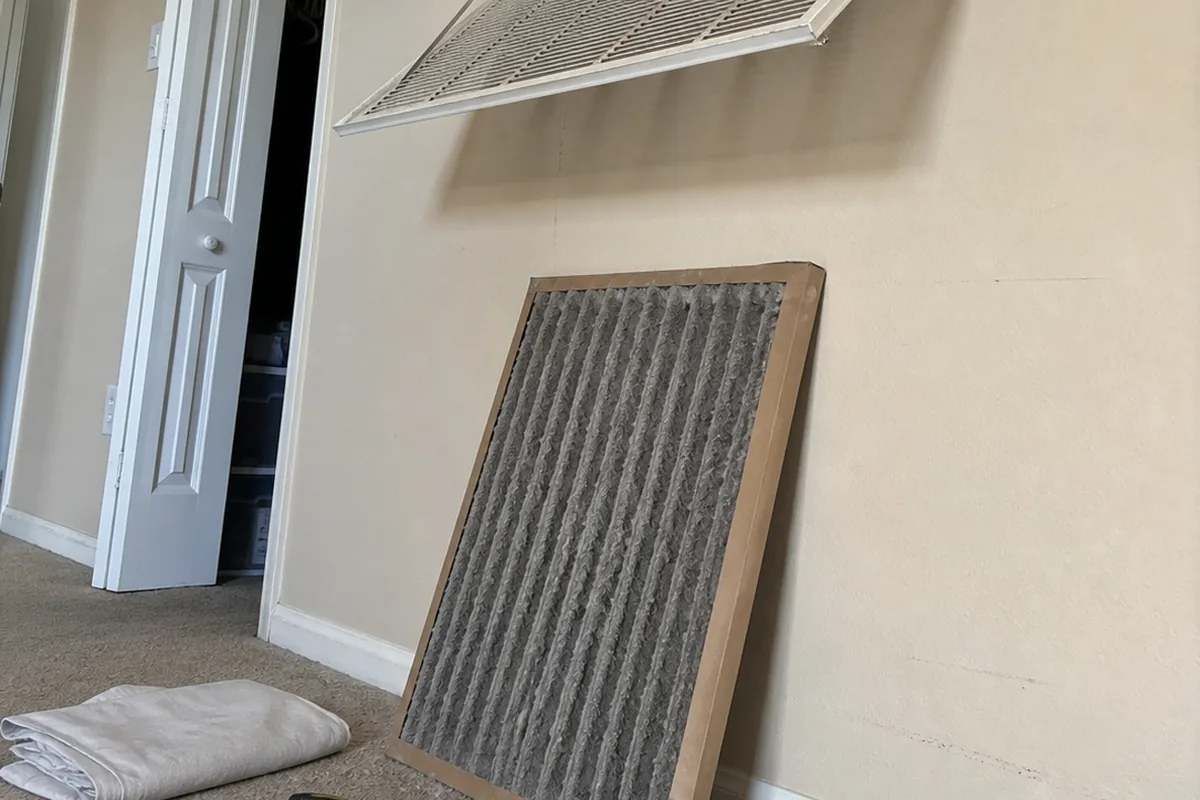
ASHRAE 62.2-2025 moved the residential filtration floor from MERV 6 to MERV 11, and that change can increase pressure drop, reduce airflow, and cut delivered capacity when the filter and duct system are not selected together.
That does not mean MERV 11 applies identically to every residential system. Check the current standard and the locally adopted code to determine how the requirement applies to the project in front of you.
For a shop, the practical issue is bigger than changing a filter note on a proposal. A more restrictive filter can expose a return system that was already marginal. If the equipment cannot move the required air through the filter, grille, cabinet, return duct, coil, and supply system, the customer may get less capacity, more noise, or both.
“Just put a better filter in it” is not a specification. It is an invitation to a callback.
What actually changed in the 2025 edition
ASHRAE identifies ANSI/ASHRAE Standard 62.2 as the residential ventilation and indoor air quality standard for nontransient residential occupancies. Its scope includes dwelling-unit ventilation, local mechanical exhaust, and source control.
ASHRAE published the current edition, ANSI/ASHRAE Standard 62.2-2025, in July 2025. According to ASHRAE, it supersedes the 2022 edition and incorporates 16 addenda to that edition. Web pages and project documents may still identify the 2022 edition as current, but ASHRAE’s current published edition is 2025.
For filtration, the headline change is straightforward: ASHRAE raised the residential filtration floor from MERV 6 to MERV 11.
The exact scope and any applicable exceptions need to be checked in the standard itself. Do not turn the headline into a universal rule for every piece of residential equipment. Confirm what the standard says for the system type, then confirm what the adopted code requires for the project.
ASHRAE also identifies several other changes in the 2025 edition:
- An optional IAQ Procedure path for the dwelling-unit ventilation rate
- Local exhaust required in toilet rooms
- A new exception for shorter separation between an air intake and dwelling-unit exhaust
- Ozone requirements for air-cleaning devices
- Equivalent diameter replacing hydraulic diameter in prescriptive duct sizing
- Ground cover over exposed earth
- An informative appendix on managing infectious aerosols
Those changes deserve attention during a full standards review, but they do not change the immediate filtration lesson: the filter belongs inside the system design, not at the end of the sales conversation.
Why a higher MERV is not a drop-in swap
ASHRAE Standard 52.2 defines MERV through a filter test method. MERV 11 is a rating on that scale. It is not a brand, a product tier, or proof that a particular filter will work in a particular cabinet.
A higher filtration rating changes what the blower has to work against. When filter pressure drop rises, available airflow can fall. On a system that already has a tight return, an undersized filter area, a restrictive grille, or limited blower capability, the filtration change can push performance in the wrong direction.
That sequence matters:
- The filter adds resistance.
- Total system resistance increases.
- Airflow can decrease.
- Delivered heating or cooling capacity can decrease.
- Comfort complaints and service calls follow.
The filter rating alone does not tell you how the complete installation will perform. Filter dimensions, available face area, media construction, cabinet design, loading condition, blower setup, coil condition, grilles, and duct restrictions all affect the result.
The same MERV rating can appear on filters with different physical configurations. That is why a shop should select the filter assembly, not merely write “MERV 11” on the equipment schedule.
Replacement work needs extra care. A new filter can be clean and correctly rated while the existing return path remains too restrictive. If the old system only worked because it used a less restrictive filter, the new filtration floor can reveal the weakness quickly.
New construction is not exempt from the problem. Equipment selection and a Manual J load calculation do not eliminate the need to design the air side. A correctly selected unit can still underdeliver when the filter and duct system prevent the required airflow.
What an inspector actually enforces
ANSI/ASHRAE Standard 62.2 is a voluntary consensus standard published by ASHRAE. It is not automatically an enforceable code requirement simply because ASHRAE published a new edition.
The enforceable requirement is the locally adopted code, which lags the current edition of the standard. That distinction matters when a proposal, plan reviewer, inspector, program document, or customer refers broadly to “ASHRAE 62.2.”
Start by identifying the edition referenced by the adopted code or governing project requirements. Then verify any local amendments and the application to that specific job. Do not assume the publication date of the current ASHRAE edition changed the enforceable rules in every jurisdiction.
This is a practical example of why shops need a working distinction between standards versus adopted code. The standard tells you ASHRAE’s current technical position. The adopted code tells you what the authority having jurisdiction can enforce.
A shop may choose to design around the current filtration floor even where an older edition remains enforceable. That is a business and design decision. It should still be documented clearly so installers, service technicians, customers, and inspectors know which requirement and filter assembly the job was built around.
What a shop should do about it
Treat filtration as an air-system design item from the start.
For each job, define the required filtration level, select a filter assembly, and evaluate the full return and supply path with that assembly included. If the existing filter location does not offer enough area, the answer may be a different cabinet, a revised return arrangement, or another system-level correction. The answer is not automatically a denser filter in the same slot.
A workable shop process looks like this:
-
Confirm the governing requirement. Identify the edition of the standard referenced by the locally adopted code or project documents. Check the standard for how the MERV 11 floor applies.
-
Record the actual filter specification. Document the rating, dimensions, media type, cabinet, and approved replacement arrangement. “High efficiency filter” is not enough information for installation or service.
-
Evaluate the whole air path. Include the return grille, filter cabinet, return duct, blower, coil, supply duct, registers, and any visible restrictions.
-
Verify installed operation. Do not assume the design survived field installation. Check system operation with the specified filter installed and the blower configured for the equipment and application.
-
Create a replacement plan. Give the customer a clear filter specification. Make sure the service record identifies what belongs in the cabinet so a different filter is not substituted based only on nominal size.
-
Recheck when conditions change. A filter loads during use. Equipment, coils, ducts, and grilles also need to remain in serviceable condition. Build filtration into maintenance and diagnostic procedures.
-
Train sales and service around the same rule. A salesperson should not promise a filter upgrade without an air-side review, and a service technician should not solve an indoor air quality complaint by increasing filter rating alone.
For existing customers, the right conversation is simple: better particle filtration may be desirable, but the system has to support the selected filter. If it cannot, the shop should explain the required air-side changes before making the swap.
For new installations, specify the filter early enough that the return layout can accommodate it. Waiting until startup turns a design decision into a field correction.
The 2025 change is not just a new line in a standard. It is a reminder that filtration, airflow, and capacity are connected. Shops that treat them as one system can explain the requirement clearly and avoid creating problems in the name of improving filtration.
Quick answers
What is the current edition of ASHRAE 62.2? ASHRAE published ANSI/ASHRAE Standard 62.2-2025 in July 2025. According to ASHRAE, it supersedes the 2022 edition and incorporates 16 addenda to it.
What MERV does ASHRAE 62.2-2025 require? ASHRAE moved the residential filtration floor from MERV 6 to MERV 11. Check the standard and the locally adopted code for how that floor applies to the specific system.
Is ASHRAE 62.2 automatically a code requirement? No. ASHRAE 62.2 is a voluntary consensus standard. The enforceable requirement is the locally adopted code, which lags the current edition.
Does higher MERV reduce airflow? A higher-rated filter can increase pressure drop, which can reduce airflow if the blower and duct system cannot accommodate the added resistance. The installed filter assembly and complete air path need to be evaluated together.
What is MERV, and who defines it? MERV is a filter rating defined by ASHRAE Standard 52.2, the filter test method. It is a rating on ASHRAE’s scale, not a brand or product tier.
