
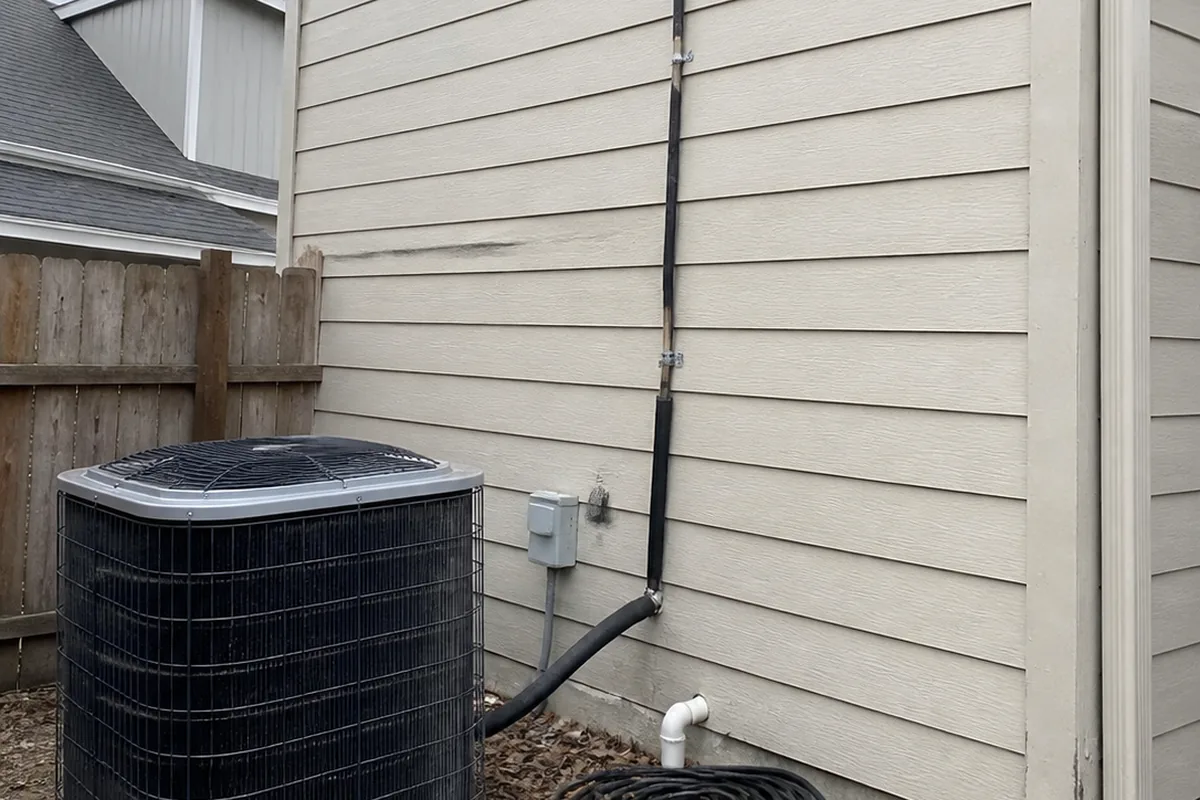
An outdoor unit and an indoor coil, or an outdoor unit and a furnace or blower coil combination, don’t earn a SEER2 rating on their own. AHRI, the Air-Conditioning, Heating, and Refrigeration Institute, certifies specific matched combinations and lists them, with their certified ratings and reference numbers, in its public directory. That AHRI Certified Reference Number is the standard third-party documentation behind whatever the 16 SEER2 sticker on the outdoor unit claims once it’s sitting next to whatever coil or air handler a tech grabbed off the truck. Swap either half for a different model, even one from the same manufacturer’s lineup, and the rating on the box no longer describes the system in the ground.
What “matched” actually means
AHRI runs a certification program most of the trade never has to think about until a mismatch causes a problem. Manufacturers submit specific outdoor-unit-and-indoor-coil (or outdoor-unit-and-furnace/blower) combinations for certification, and only the listed combinations carry a rated SEER2, EER2, and HSPF2 number tied to an AHRI Certified Reference Number. That number, not the rating printed on either individual box, is what a permit inspector, a manufacturer’s warranty department, or a rebate program is actually checking when they ask for documentation of efficiency.
Anyone can look one up directly at ahridirectory.org by model number. It takes under a minute and it’s free.
What actually happens when the pieces don’t match
Pairing an outdoor unit with a coil or air handler it wasn’t certified against doesn’t average out to something respectable, because a mismatched combination has no basis for claiming the SEER2 rating of a different, certified match. What actually happens instead depends on the specific setup: improper matching can show up as capacity problems, poor refrigerant management, airflow restriction, weak humidity control, lower real-world efficiency, or reduced equipment reliability, alone or in some combination.
None of that shows up on an invoice. It shows up months later as a comfort complaint, an equipment that doesn’t run the way the quote implied, or a homeowner asking why their electric bill doesn’t look like the efficiency number they were quoted.
The warranty exposure most estimates don’t mention
Warranty terms vary by manufacturer and by model, but some manufacturers expressly require an AHRI-rated or otherwise manufacturer-approved matched system as a condition of extended or parts coverage. A claim on a system that doesn’t meet that condition is exactly the kind of thing a warranty department can use to deny or limit a claim. It’s worth knowing which of your equipment lines actually carry that requirement before it comes up on a denied claim instead of on a spec sheet.
The rebate picture changed in 2025, matching didn’t stop mattering
For years, AHRI and CEE (Consortium for Energy Efficiency) documentation was commonly used to verify that an installed system actually met the efficiency tier a program required, including the federal Section 25C Energy Efficient Home Improvement Credit, though eligibility for that credit also depended on separate CEE and IRS requirements, not an AHRI certificate alone. That federal credit expired for equipment placed in service after December 31, 2025, under the 2025 tax law that wound it down early, so it’s no longer part of the pitch on a new install.
That doesn’t retire the AHRI number. Plenty of utility and state-level rebate programs still require it, manufacturers still write warranties against it, and inspectors in jurisdictions that check efficiency compliance still ask for it. The federal credit was one buyer on the AHRI certificate. It was never the only one.
Where this earns a shop something
Putting the AHRI Certified Reference Number on the estimate, next to the equipment line item, is a small thing that reads as a big thing to a customer who’s already gotten a quote that just says “16 SEER2 system” with nothing backing it up. It’s documented support instead of an unsupported efficiency claim, though it’s worth being straight with the customer about what it does and doesn’t cover: an AHRI match proves the certified combination and its rating, not that the field installation ends up with correct airflow, refrigerant charge, ductwork, sizing, or commissioning. It’s the same move as attaching a load calculation to a quote instead of a guess: cheap to do, and it’s exactly the kind of detail that separates a shop that documents its work from one that hopes nobody checks.
Quick answers
Is installing a mismatched system illegal? Not automatically. Some jurisdictions that enforce energy code compliance will flag it at inspection, but the bigger exposure is warranty and performance, not a citation.
Does a matching AHRI number guarantee a rebate? No. It’s usually a requirement, not a guarantee. Check the specific utility or state program’s current rules before quoting a rebate amount to a customer.
Where do I check if two units are actually AHRI matched? ahridirectory.org, searchable by model number, free, no account required.
