If the tech drives the van home by choice and nothing is required of them on the way, federal guidance says the drive to the first job and back home is not paid time. That answer depends on a short list of conditions, and three common shop habits break it.
The four conditions must all be true. The take-home arrangement must be strictly voluntary and not a condition of employment. The vehicle must be the type normally used for commuting. The employee must pay nothing to drive it or park it at home or elsewhere. The work sites must stay within the employer’s normal commuting area.
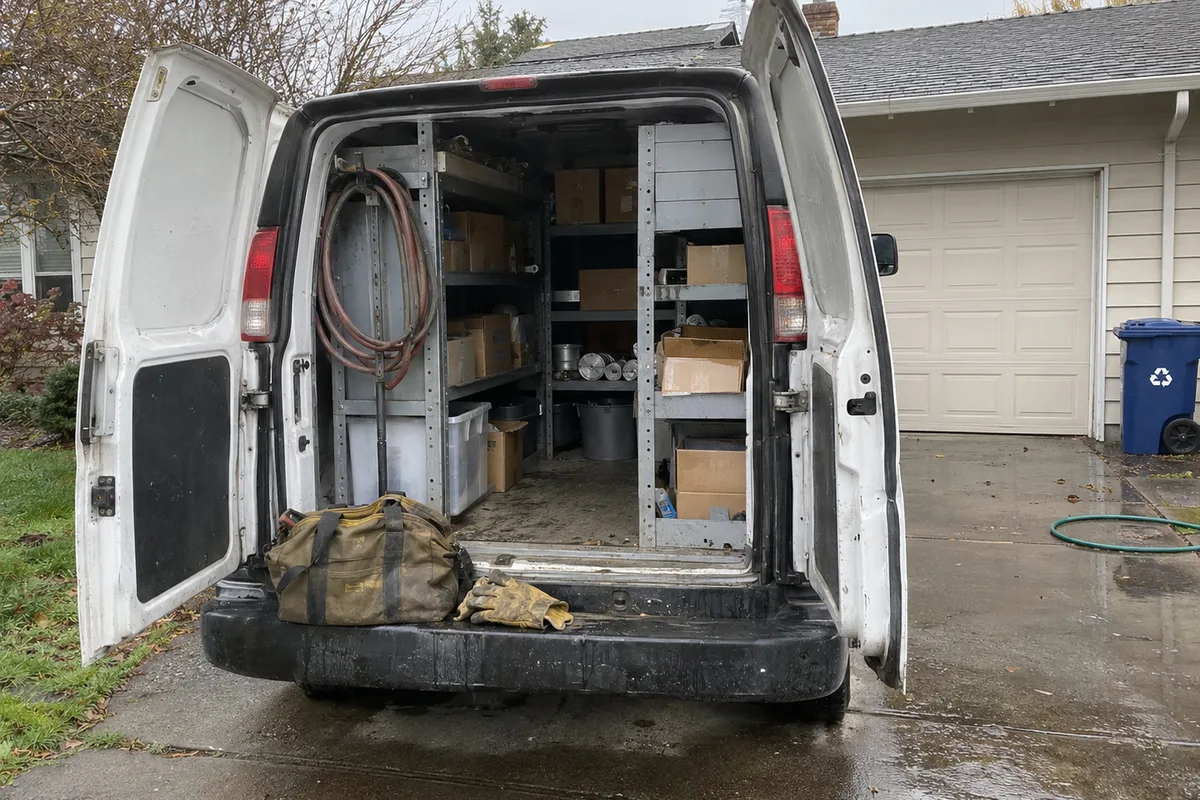
That comes from the U.S. Department of Labor’s Field Operations Handbook, section 31c10. The setup is familiar to HVAC shops. A tech takes a modified van or truck home with parts, tools and equipment, calls the dispatcher from the driveway, gets the day’s assignments, and drives straight to the first customer’s home. At the end of the day, the tech calls the dispatcher, reports that the last call is done, and drives home to park and lock the vehicle.
DOL Fact Sheet #22 describes ordinary travel from home before the regular workday and back home afterward as nonwork travel. Travel from one job site to another during the workday is different. That travel is part of the principal activity and must be counted as hours worked.
The first dispute starts with a driveway call
Picture a composite shop. The techs text or call the dispatcher from the driveway, drive straight to the first job, and spend the day moving from customer to customer. The owner assumes the clock starts at the first customer’s door. The techs assume it started with the driveway call.
That is a pattern owners describe. The disagreement is usually about a written policy that does not exist.
The DOL scenario includes a dispatcher call from home, but the guidance does not state here whether that call time is paid or unpaid. Keep start-and-end-of-day dispatch calls short. Do not assign real work on them. Ask your state labor agency or wage-and-hour counsel how your state treats that time.
A van is not optional when the job depends on it
A shop fails the first condition when the take-home van is not really voluntary. That includes a tech who has no other way to reach the first call or a tech who is told the van must be kept at home.
The federal guidance also depends on the van being a normal commuting vehicle. If the arrangement requires a different kind of use, the facts need a closer review.
Write down whether the take-home arrangement is optional. Say what happens when a tech declines it. If the policy makes the van necessary for reaching the first job, calling it “voluntary” will not fix the problem.
Employee costs can change the answer
The third condition is simple. The employee must incur no costs for driving the vehicle or parking it at home or somewhere else.
A parking permit or fee, payment for the driveway or garage, or other out-of-pocket cost can break that condition. The issue is not whether the amount is large. The issue is whether the employee pays something to keep or use the van.
Put that rule in the take-home policy. Review how parking and storage are handled before treating the drive as ordinary commuting.
The emergency truck creates a separate travel question
The van may be taken home for the employee’s convenience, but after-hours emergency work can change the facts. FOH section 31c01 says the frequency of emergency calls may show whether the vehicle is really for the employee’s convenience or primarily for the employer’s benefit.
Section 31c06 gives a separate example. If an employee goes home after the day’s work and is called out at night to travel a substantial distance for an emergency customer job, all time spent on that travel is working time. A planned Saturday job is not treated as an emergency call merely because the employee was told about it in advance.
Dial 72 answers the shop’s phones 24/7, texts the owner a summary of each call, and escalates true emergencies after hours. Every escalated call that sends a tech out from home is also a record of how often the van is being used for emergencies. For an owner who keeps those summaries, that is the kind of frequency record FOH 31c01 points to. The summaries are a log, not legal advice, and they do not make a take-home policy compliant.
If after-hours coverage is the issue, review your on-call rotation and after-hours coverage options.
Shop stops and heavy equipment create a different fact pattern
A tech who is told to stop at the shop or yard first is not in the same fact pattern as a tech who drives straight from home to the first customer.
The same is true when the tech loads heavy, burdensome equipment. FOH section 31c04 says carrying light hand tools with no appreciable burden is not hours worked. Travel while carrying heavy, burdensome equipment is hours worked.
At that point, the clock question needs review by your state labor agency or wage-and-hour counsel. Do not assume the ordinary commuting answer still applies.
Put these five rules in the handbook
- Write the take-home policy down and state that it is optional. Make sure techs pay nothing to keep the van at home.
- Keep work sites inside the normal commuting area. Treat travel beyond that area as a separate question.
- Decide when the clock starts for the first call and put that rule in the handbook.
- Record after-hours call-outs separately and pay that travel when the federal guidance treats it as working time.
- Check your state labor rules. State requirements can be stricter than federal DOL guidance.
If hours go up, review the regular-rate and overtime math. Keep the vehicle policy separate from questions about the HVAC van itself.
The Fact Sheet and the Field Operations Handbook are agency guidance, not statute. This reflects DOL guidance as published, not legal advice.